Calendula
Calendula officinalis
Yes — calendula (pot marigold) is safe for cats. The ASPCA lists Calendula officinalis as non-toxic to cats and dogs. Do not confuse it with the Tagetes marigolds in seed packets, which are a different genus and are not ASPCA-cleared — read the Latin name before you trust the verdict.
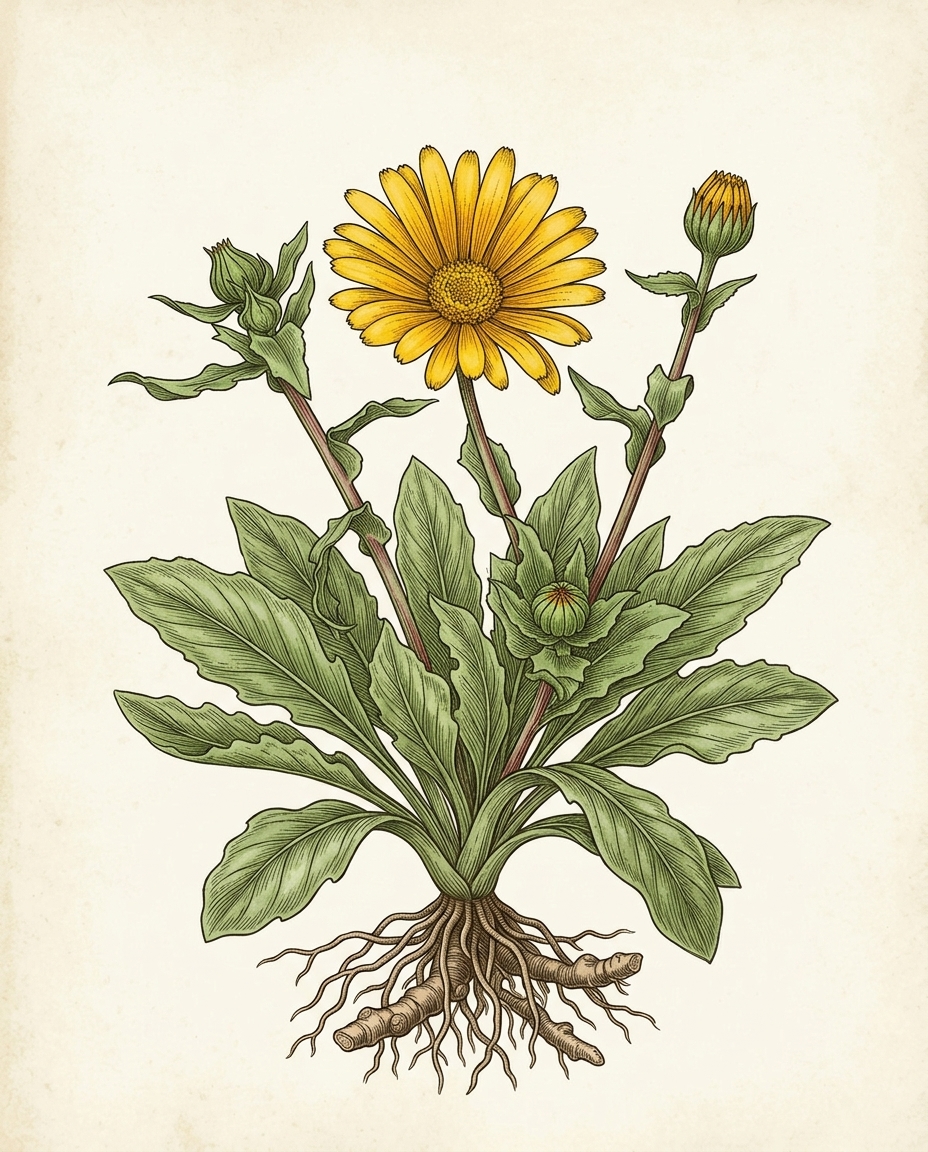
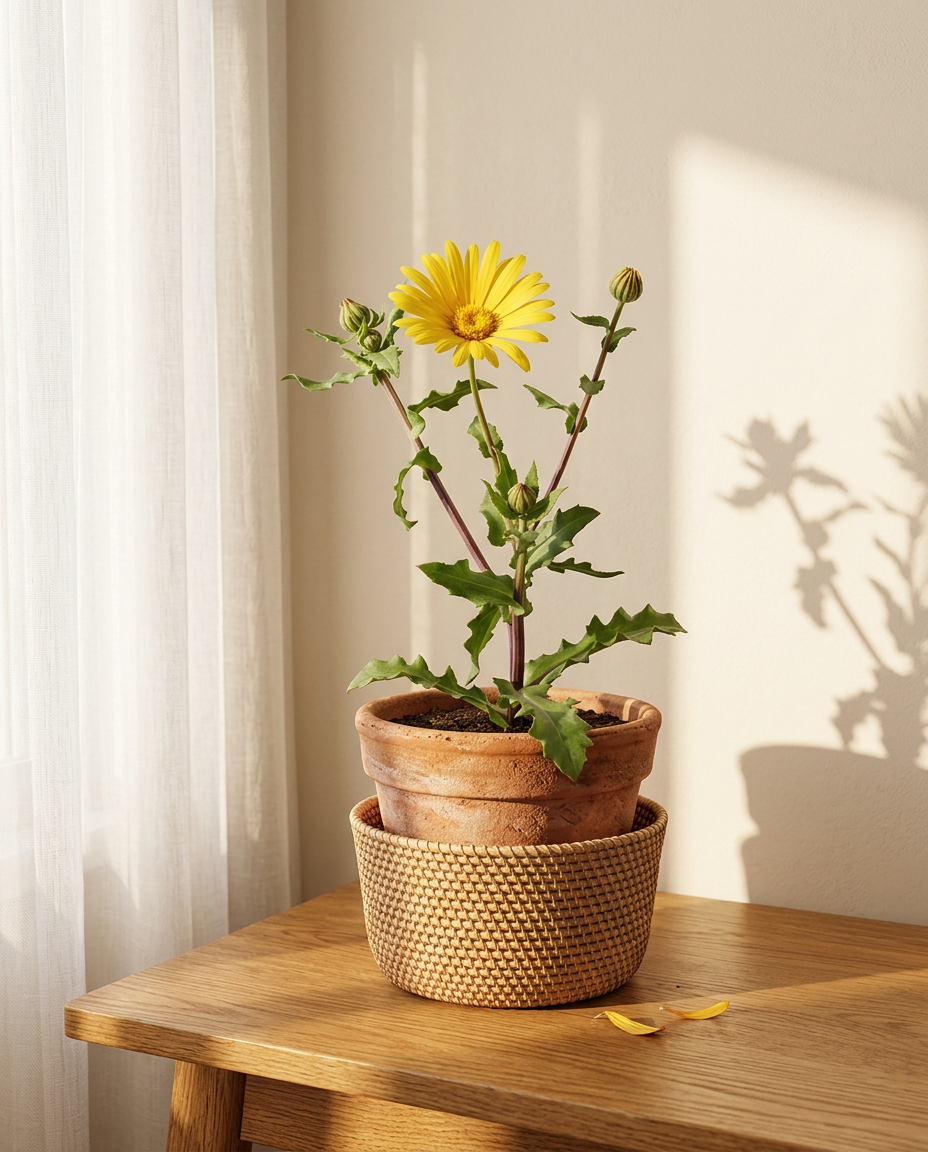
Plate ICalendula officinalis — pot marigold. The ASPCA lists it as non-toxic to cats. This is not the Tagetes marigold.
Calendula is safe— but it is not the Tagetes marigold.
Yes — calendula is safe for cats. The ASPCA lists pot marigold (Calendula officinalis) as "Non-Toxic to Dogs, Non-Toxic to Cats." The plant and its edible petals pose no poisoning risk.
But there is a naming trap to clear up first, because it is the single most common source of confusion with this plant.
Calendula is not the Tagetes "marigold"
Two unrelated garden plants are both called "marigold," and only one of them is the ASPCA-listed safe plant:
- Calendula / Pot Marigold — Calendula officinalis — SAFE (this page). This is the plant the ASPCA lists as non-toxic. It is an edible, skin-soothing cottage-garden herb.
- Tagetes Marigold — Tagetes spp. — NOT ASPCA-CLEARED. The French and African "marigolds" sold in most seed packets belong to the genus Tagetes. They are not on the ASPCA non-toxic list and are widely reported to cause mild mouth, stomach, and skin irritation. Treat them as the one to avoid. See our marigold page for the full Calendula-versus-Tagetes breakdown.
The lesson is the same as with so many common names: read the Latin name. Calendula is safe; Tagetes is not cleared.
ASPCA Data
According to the ASPCA, pot marigold is listed under plants non-toxic to cats:
Non-Toxic to Dogs, Non-Toxic to Cats.
(The ASPCA entry lists dogs and cats; it does not list horses either way.) There are no toxic principles for cats — calendula is completely safe.
A gentle, edible herb
Calendula has a long history as a culinary and skin-care herb — the petals colour and garnish food and feature in soothing balms. For a cat, that means the plant is not just non-toxic but genuinely gentle: a nibbled petal or leaf is harmless. As always, a cat has no nutritional need for plant matter, and a large quantity of any greenery can cause mild, self-limiting stomach upset from the volume alone.
Growing calendula around cats
Calendula is one of the easiest annuals: full sun, average free-draining soil, regular water, and deadheading to keep the flowers coming for months. It is happy in borders, pots, or a sunny windowsill, and makes a reliably cat-safe companion plant.
The bottom line
Calendula — pot marigold, Calendula officinalis — is a safe, ASPCA-verified plant for homes and gardens with cats. Just keep it straight from the Tagetes "marigold," which is a different genus and not ASPCA-cleared. For other daisy-family plants and how they compare, see our marigold page; note that both chamomile and chrysanthemum, despite the family resemblance, are toxic to cats.
What we have actually seen.
Non-toxic plant
Calendula — leaves, stems, and the edible flowers — is non-toxic to cats. A cat that nibbles a petal or leaf faces no poisoning risk.
Pot marigold, not Tagetes
The ASPCA listing is for pot marigold, Calendula officinalis. The French and African "marigolds" of seed packets are Tagetes — a different genus that is not ASPCA-cleared and is widely reported mildly toxic.
Edible, gentle herb
Calendula petals are a traditional culinary and skin-care herb. They are harmless to cats, though a cat has no nutritional need for them.
Bulk plant matter can upset digestion
As with any non-toxic plant, eating a large amount of leaves or flowers may cause mild, self-limiting stomach upset — from volume, not from any toxin.
Four common varieties.
Calendula officinalis (The ASPCA-listed species)
The classic orange or yellow cottage-garden annual, grown for its edible petals and skin-soothing extracts. Non-toxic to cats.
Calendula officinalis 'Pacific Beauty' (Long-stemmed, free-flowering)
A popular seed strain bred for tall stems and a long bloom season. Same species and the same safe verdict.
Keeping the plant alive.
Full sun
Calendula flowers best in full sun. It tolerates a little shade but blooms more sparsely.
Regular, moderate
Keep soil moist but not soggy. Deadhead spent flowers to keep the plant blooming for months.
Average, free-draining
Undemanding in any reasonable garden or potting soil that drains well. No special feeding needed.
Beds, pots, sills
Easy from seed in borders, containers, or a sunny windowsill. A reliable, cat-safe companion plant.
- ASPCA Animal Poison Control Center. Toxic and Non-Toxic Plants: Pot Marigold.Accessed June 2026 · aspca.org