Strawberry
Fragaria spp.
Yes — strawberry is safe for cats. The ASPCA lists it as non-toxic to cats, dogs, and horses. The plant and the fruit pose no poisoning risk, though a strawberry is a treat at most — cats are obligate carnivores with no nutritional need for fruit.
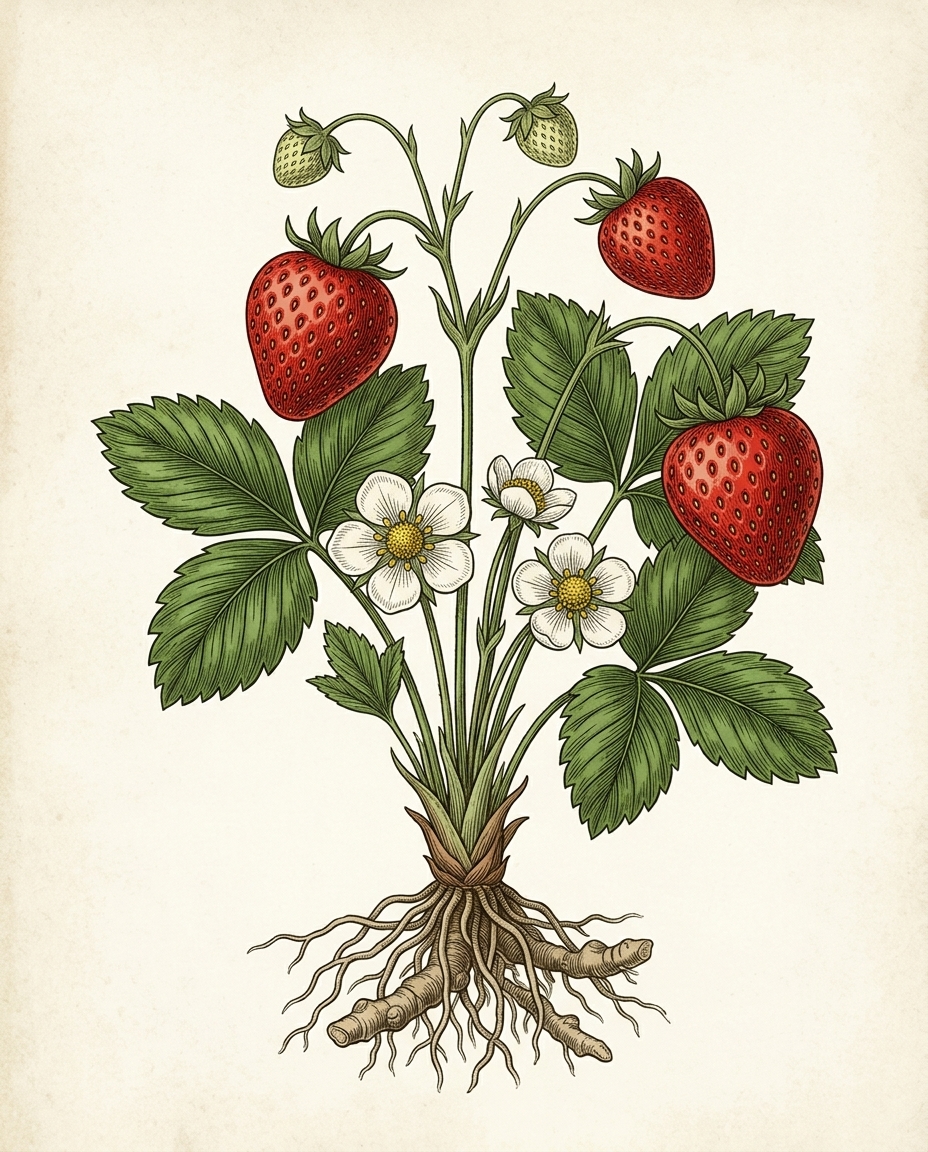
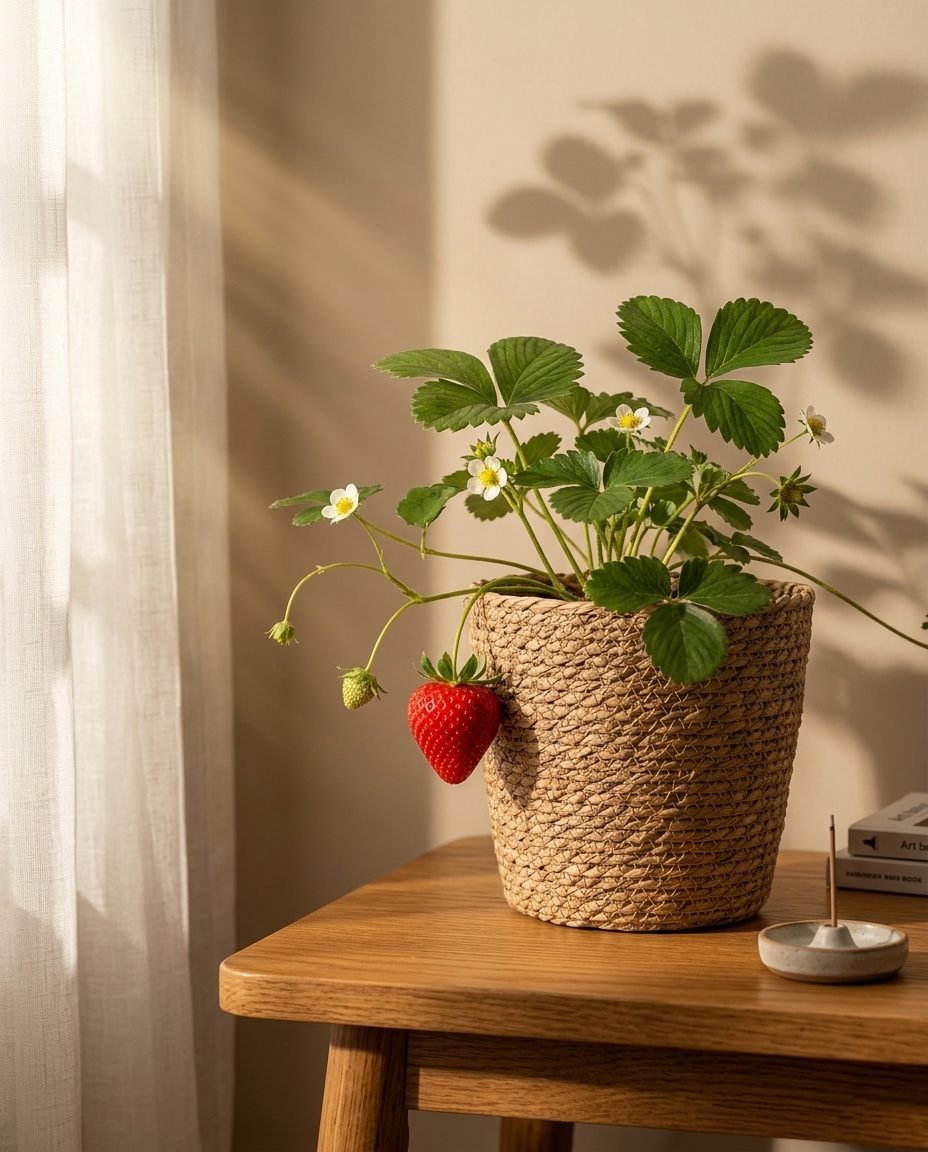
Plate IFragaria — the garden strawberry. Plant, leaves, and fruit are all non-toxic to cats per the ASPCA.
Strawberry is safe— but a treat, not a meal.
Yes — strawberry is safe for cats. The ASPCA lists it as "Non-Toxic to Dogs, Non-Toxic to Cats, Non-Toxic to Horses." The whole plant and the fruit are non-toxic.
Strawberry (Fragaria spp.) is a low, spreading perennial in the rose family (Rosaceae). Whether you grow it in a garden bed, a pot, or a hanging basket, a cat that nibbles a leaf or steals a piece of berry is in no danger.
ASPCA Data
According to the ASPCA, strawberry is listed under plants non-toxic to cats:
Non-Toxic to Dogs, Non-Toxic to Cats, Non-Toxic to Horses.
There are no toxic principles. The plant is completely safe for homes and gardens with cats.
Feeding strawberry to a cat
Safe does not mean necessary. Cats are obligate carnivores — they thrive on meat protein and have no dietary requirement for fruit. A strawberry is, at most, an occasional treat:
- Tiny portions. Offer a small slice, not a whole berry. The fruit is roughly 5 g of sugar per 100 g, and a cat's body is not built to process much sugar.
- No nutritional need. Strawberry will not provide anything essential that a complete cat food does not already supply.
- Watch digestion. Too much fruit can cause loose stool or a mildly upset stomach — from the sugar and fibre, not from any toxin.
Cats cannot taste sweetness
Here is a quirk of feline biology: cats lack functional sweet taste receptors. The gene for the sweet receptor is non-functional in cats, so the sugary appeal that draws us to a strawberry simply is not there for them. If your cat shows interest, it is usually the texture, the smell, or the moisture — not the sweetness. Many cats sniff a strawberry and walk away.
Growing strawberry around cats
Strawberries are easy and rewarding to grow:
- Light — full sun, 6+ hours, for good fruiting.
- Water — keep the soil evenly moist while fruiting; avoid waterlogging.
- Soil — rich, slightly acidic, and free-draining; mulch keeps fruit clean.
- Placement — pots and hanging baskets work well and keep ripening berries out of casual reach.
Because the plant is non-toxic, you do not need to fence it off for safety — only, perhaps, to protect your harvest.
The bottom line
Strawberry is a safe plant and a safe (if pointless) treat for cats. Grow it freely, share the occasional small bite if your cat is curious, and do not be surprised if they are unimpressed — there is no sweetness for them to enjoy. For other safe edibles, see tomato plant (fruit safe, foliage is the concern) and the herb basil.
What we have actually seen.
Non-toxic plant and fruit
The whole strawberry plant — leaves, flowers, stems, and the berry — is non-toxic to cats. A cat nibbling a leaf or a piece of fruit faces no poisoning risk.
Cats cannot taste sweetness
Cats lack functional sweet taste receptors, so the appeal of a strawberry is usually its texture or moisture, not its sugar. Many cats ignore it entirely.
A treat, not a food
Cats are obligate carnivores with no dietary requirement for fruit. Strawberry adds sugar and water but little a cat needs; offer only the occasional small piece.
Digestive upset if overfed
Too much fruit can cause loose stool or mild stomach upset simply from the sugar and fibre, even though the plant is not toxic. Moderation matters.
Four common varieties.
Fragaria × ananassa (The common cultivated berry)
The large-fruited supermarket and garden strawberry. Non-toxic; grown in beds, pots, and hanging baskets.
Fragaria vesca (Small, intensely flavoured fruit)
Compact wild strawberry with tiny berries. Also non-toxic; popular as an edging or container plant.
Keeping the plant alive.
Full sun
Strawberries need 6 or more hours of direct sun for good fruiting. A bright sill or sunny patio works for container plants.
Consistent moisture
Keep soil evenly moist, especially while fruiting. Avoid waterlogging, which causes crown and root rot.
Rich, well-draining
Fertile, slightly acidic, free-draining soil. Mulch keeps fruit clean and roots cool.
Pots, beds, or baskets
Grows happily in containers and hanging baskets, which also keeps ripening fruit out of a cat's casual reach.
- ASPCA Animal Poison Control Center. Toxic and Non-Toxic Plants: Strawberry.Accessed June 2026 · aspca.org
If you liked this, also safe.