Tomato
Plant.
Lycopersicon spp.
The tomato plant is toxic to cats per the ASPCA. The leaves, stems, and unripe green fruit contain solanine. The ripe red fruit is the only part you can share with a curious cat.
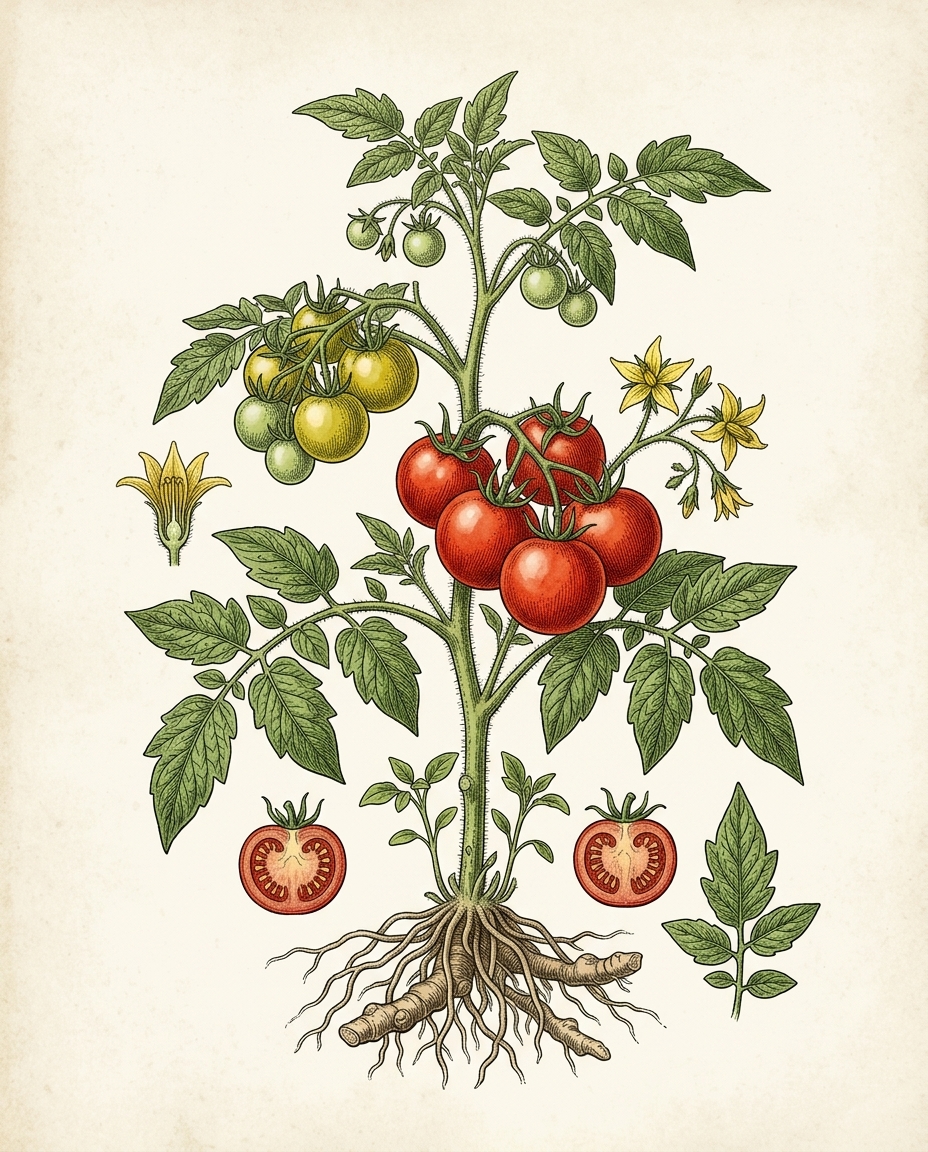
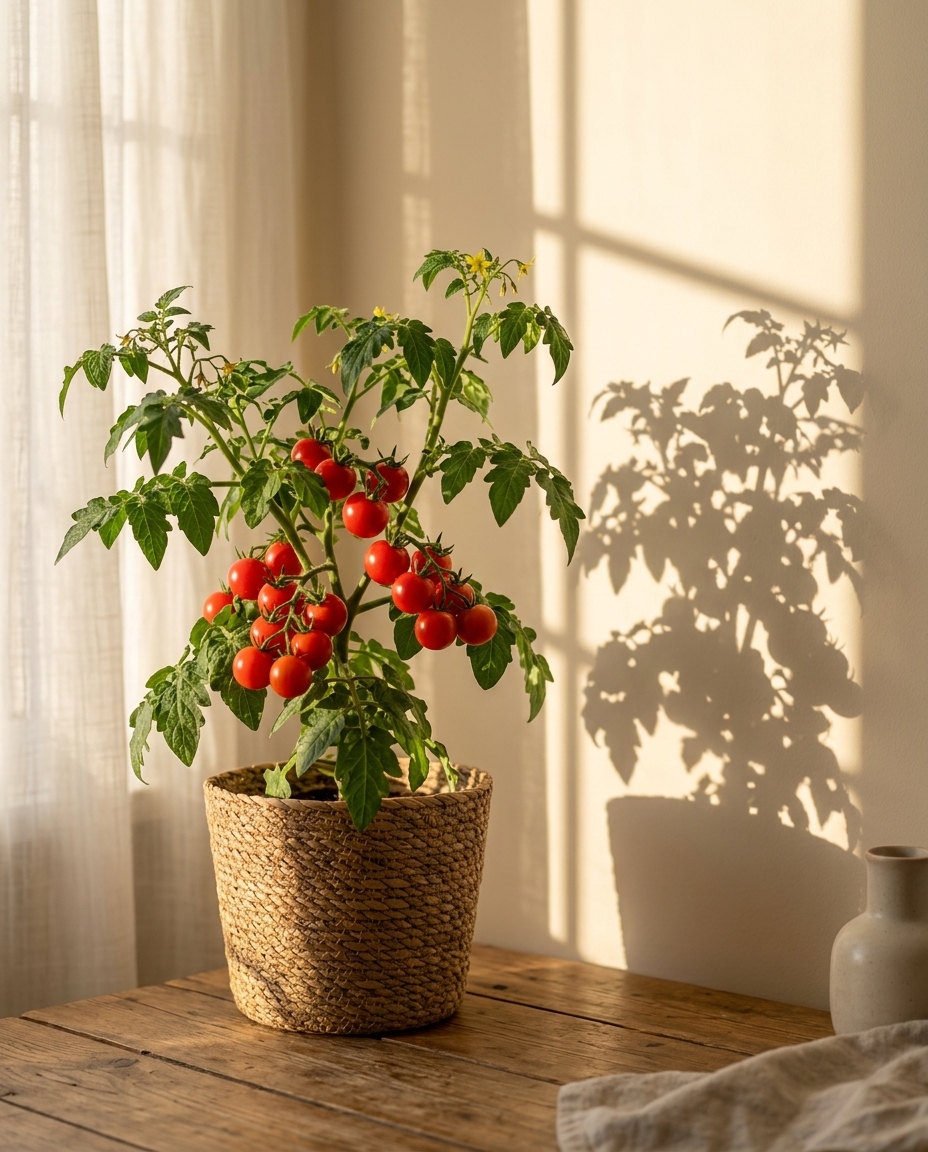
Plate ILycopersicon species — the kitchen-garden tomato. A Solanaceae cousin to nightshade and potato. The same alkaloid family runs through every green part of the plant.
Three plants that look the part, without the risk.
Edible kitchen-garden greens without the solanine — these three are ASPCA-confirmed safe for a windowsill herb pot a cat can sniff.
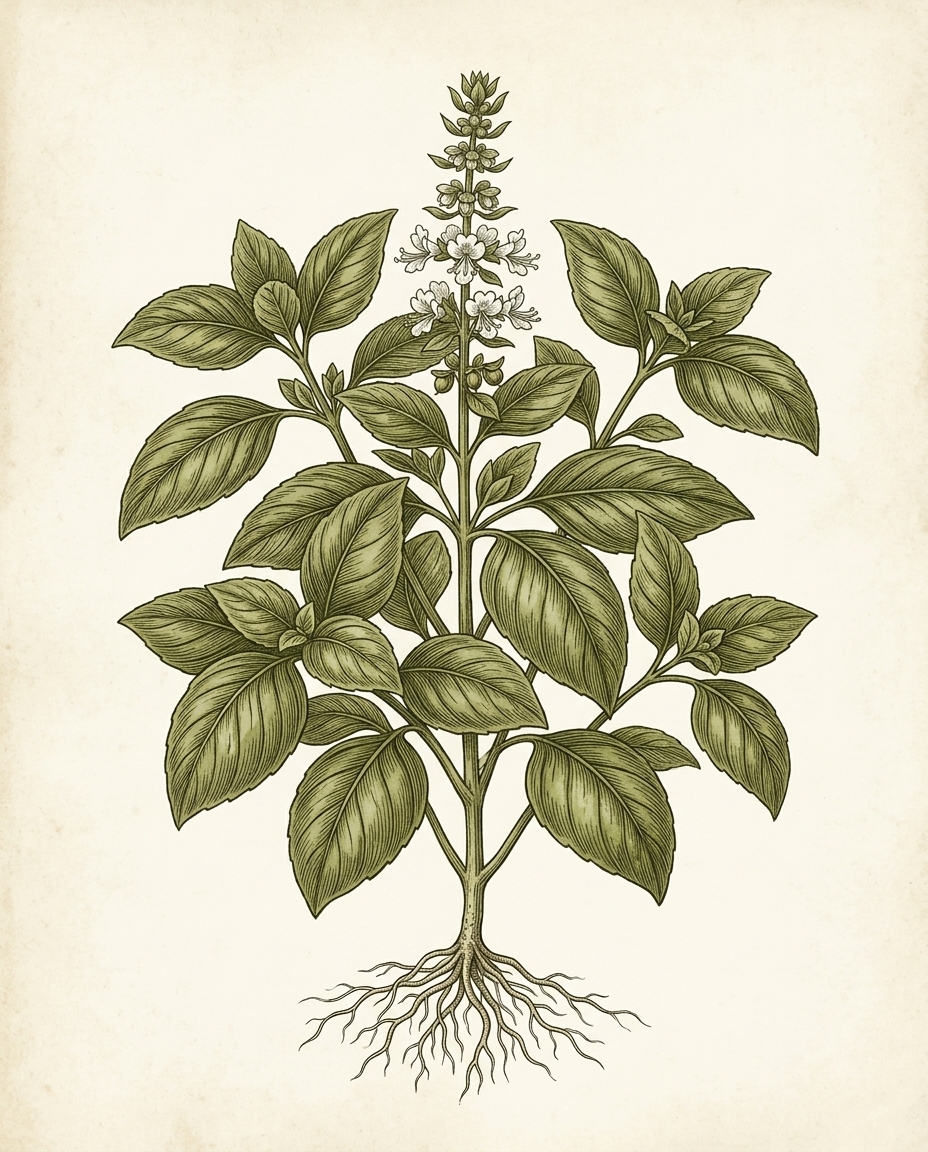
Basil
The classic tomato companion — and ASPCA non-toxic for cats. Grow it in the same windowsill pot.
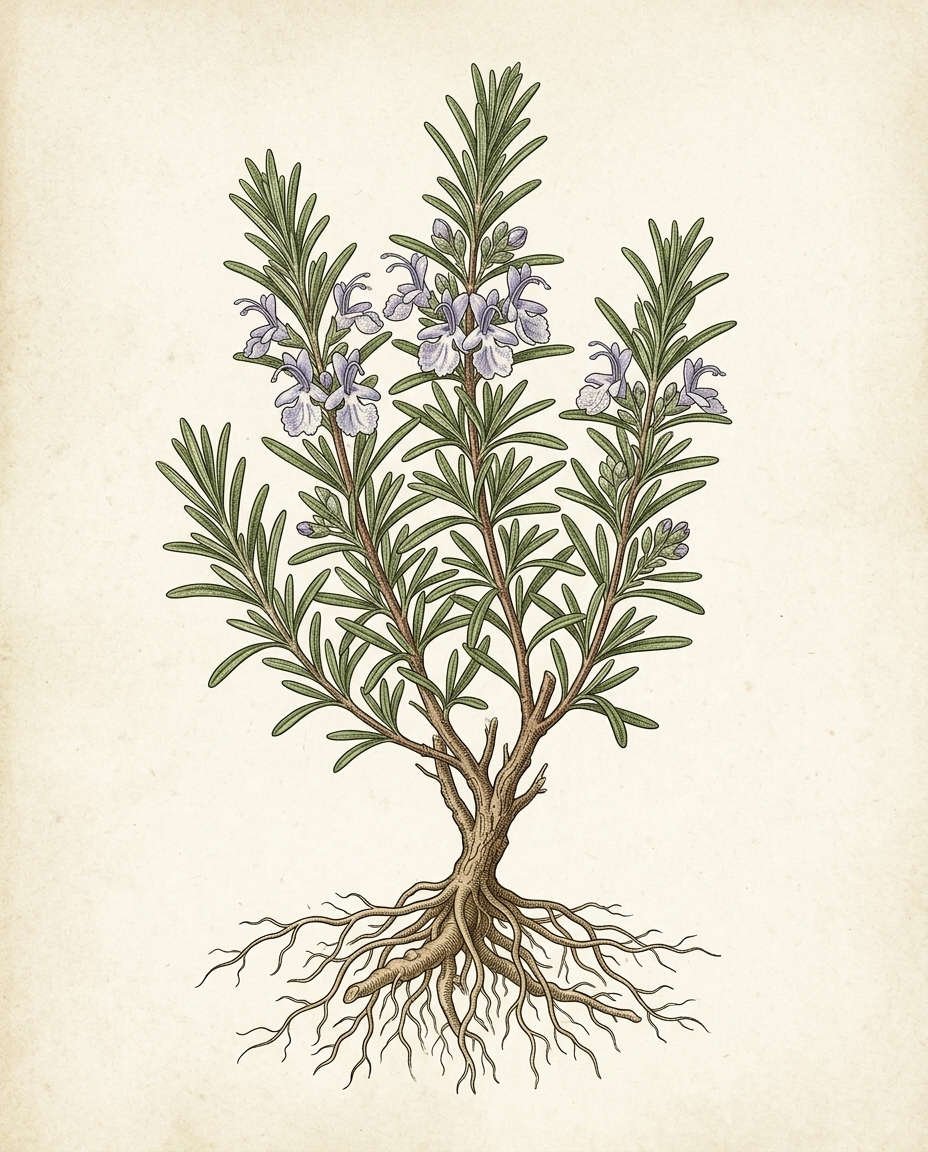
Rosemary
Aromatic, woody, hard to kill. ASPCA non-toxic.
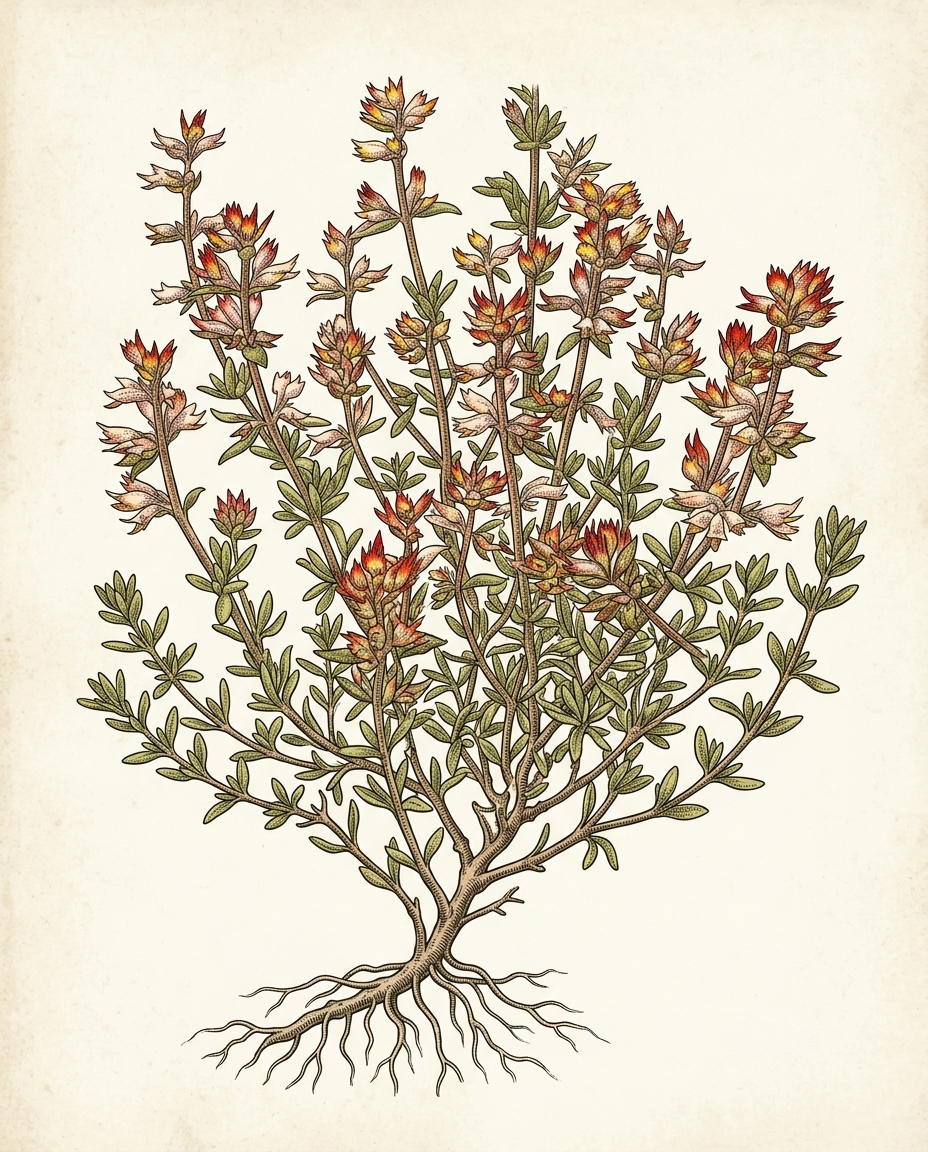
Thyme
Low-growing kitchen herb, ASPCA non-toxic (English thyme — not Spanish thyme, see page).
What it does to a cat.
Yes — the tomato plant is toxic to cats. But the tomato fruit, when ripe, is not. The ASPCA lists Lycopersicon species as toxic to cats, dogs, and horses. The toxic principle is solanine, the same glycoalkaloid that runs through other members of the Solanaceae family (potato, eggplant, nightshade). It is concentrated in the leaves, stems, and unripe green fruit. The ASPCA explicitly notes that the ripe fruit is non-toxic.
This is one of the few plant pages where the answer is not "keep it away from your cat." It is "keep your cat away from the vine, but the fruit you grew is fine to share."
Why the green parts and the ripe fruit are different
Solanine is a defensive alkaloid the plant produces in tissue that needs protection from herbivores — leaves, stems, and unripe fruit. As a tomato ripens and turns red, the solanine breaks down. In a fully ripe red tomato, solanine concentrations are far below the threshold for toxicity in a cat. In a green tomato or a tomato leaf, they are not.
A related compound called tomatine appears in the unripe fruit specifically. Tomatine and solanine produce similar clinical signs: hypersalivation, vomiting, drowsiness, and at higher doses CNS depression with slow heart rate and dilated pupils.
What it actually looks like
Most reported cases in cats involve leaf or stem chewing — a curious cat in a kitchen-garden patio or a windowsill pot. The first sign is drooling within an hour or two. Vomiting and diarrhea follow. Most cases resolve within 24 to 48 hours with supportive care.
Large exposures — particularly green-fruit ingestion — can produce weakness, unsteadiness, slow pulse, and dilated pupils. These warrant a vet visit even if the cat seems otherwise alert.
What to do if your cat ate tomato plant
For a leaf or green-fruit ingestion, monitor at home and offer water. Most cats are uncomfortable but recover. Call a vet if vomiting persists, if the cat is unsteady or unusually drowsy, or if you saw a substantial amount eaten. ASPCA Animal Poison Control is available 24/7 at (888) 426-4435.
Cat-safe kitchen-garden substitutes
For a windowsill herb pot you can grow alongside cooking, basil, rosemary, and thyme are all ASPCA non-toxic and live in the same conditions as tomato. (One caveat: the "Spanish thyme" sold as Plectranthus amboinicus is ASPCA toxic and is covered on the thyme page — buy English thyme, Thymus vulgaris, if you want a safe pot.)
For cats that love the texture of greenery itself, catnip and oat or wheat cat-grass are non-toxic redirection plants.
What we have actually seen.
Hypersalivation and drooling
First sign within hours of ingesting leaf or green fruit. Solanine is intensely bitter; many cats spit and salivate before vomiting.
GI upset
Vomiting and diarrhea, sometimes severe. The toxin irritates the GI lining at every level.
Drowsiness and weakness
Solanine has CNS depressant effects at higher doses. Cats may seem unsteady or unusually quiet.
Slow heart rate, dilated pupils
Reported in significant exposures. Warrants a vet visit even if the cat seems otherwise okay.
- ASPCA Animal Poison Control Center. Toxic and Non-Toxic Plants: Tomato Plant.Accessed June 2026 · aspca.org · Lycopersicon spp · Toxic Principles Solanine · ripe fruit explicitly non-toxic
- Pet Poison Helpline. Solanaceae (tomato, potato, nightshade) toxicity in companion animals.Clinical reference · 2024
- Merck Veterinary Manual. Solanine and glycoalkaloid toxicosis.Standard small-animal toxicology reference