Peony
Paeonia officinalis
Peonies are toxic to cats per the ASPCA. The supermarket-bouquet staple is a mild-to-moderate GI hazard — paeonol causes vomiting, diarrhea, depression. Worst in bark and roots.
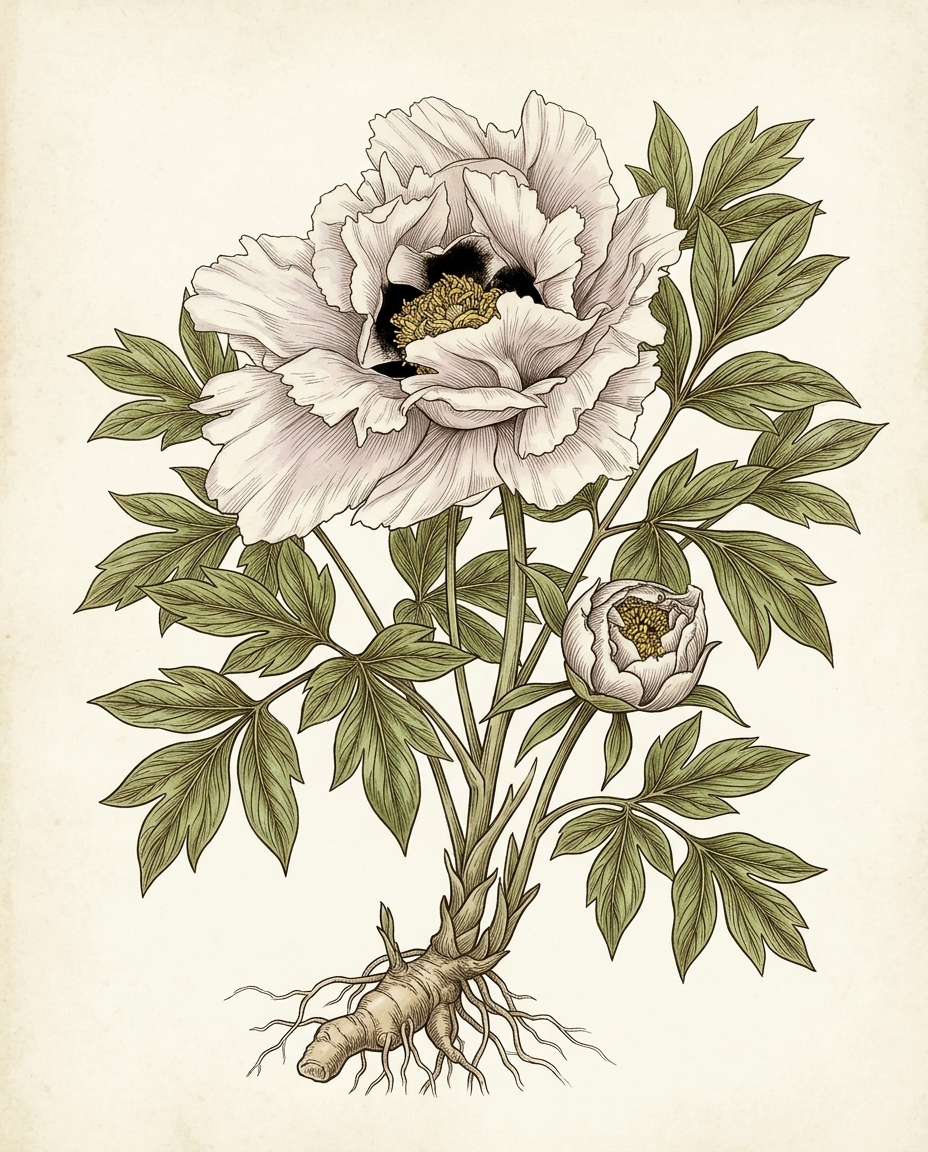

Plate IPaeonia officinalis — the garden peony. Fully-double ruffled flower head; deeply lobed compound leaves; deep rhizomatous root. ASPCA toxic — paeonol throughout, worst in bark and roots.
Three plants that look the part, without the risk.
Same ruffled-double-flower bouquet impact without the paeonol — these cut flowers cover the supermarket-peony role with ASPCA non-toxic verdicts.
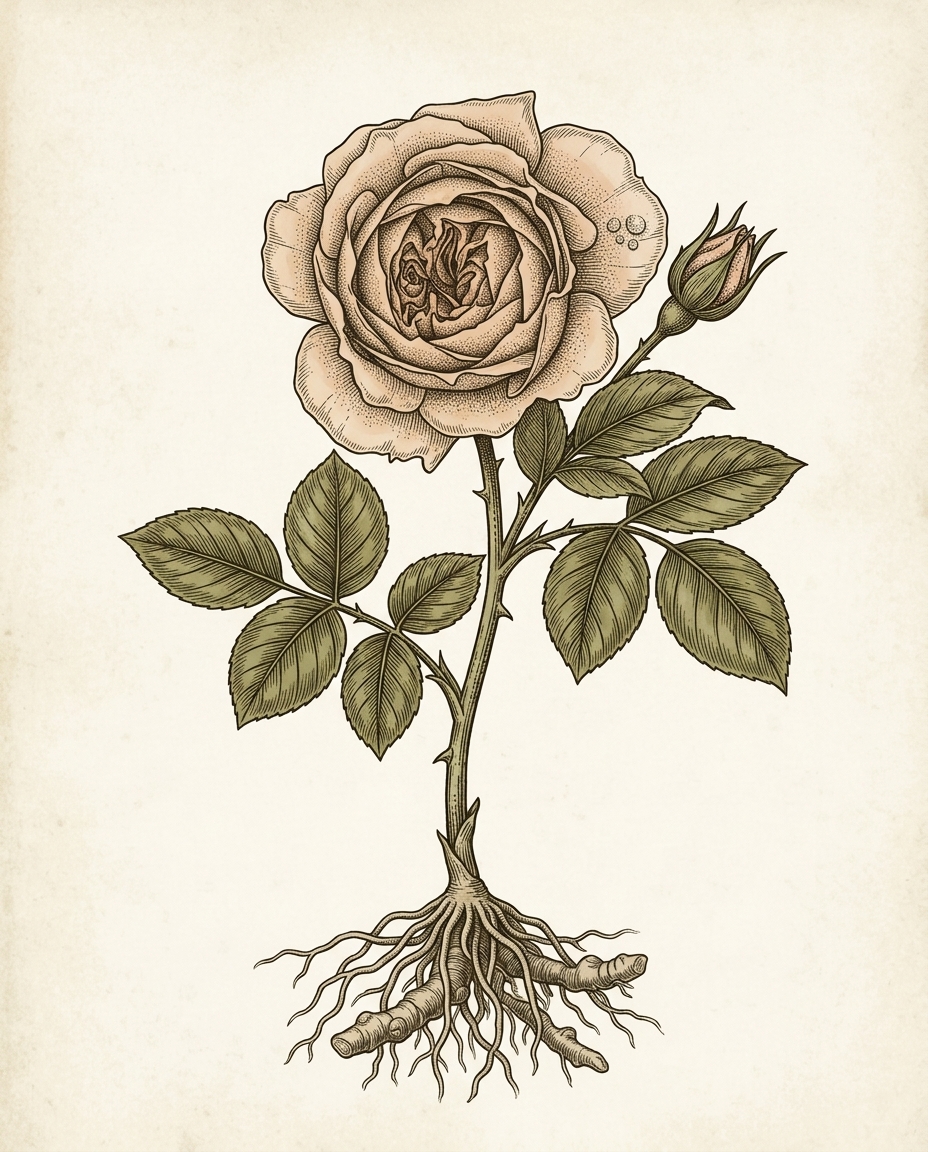
Rose
For fully-double ruffled blooms in the same bouquet role, garden roses are the cleanest swap. ASPCA non-toxic; longer vase life than peony.
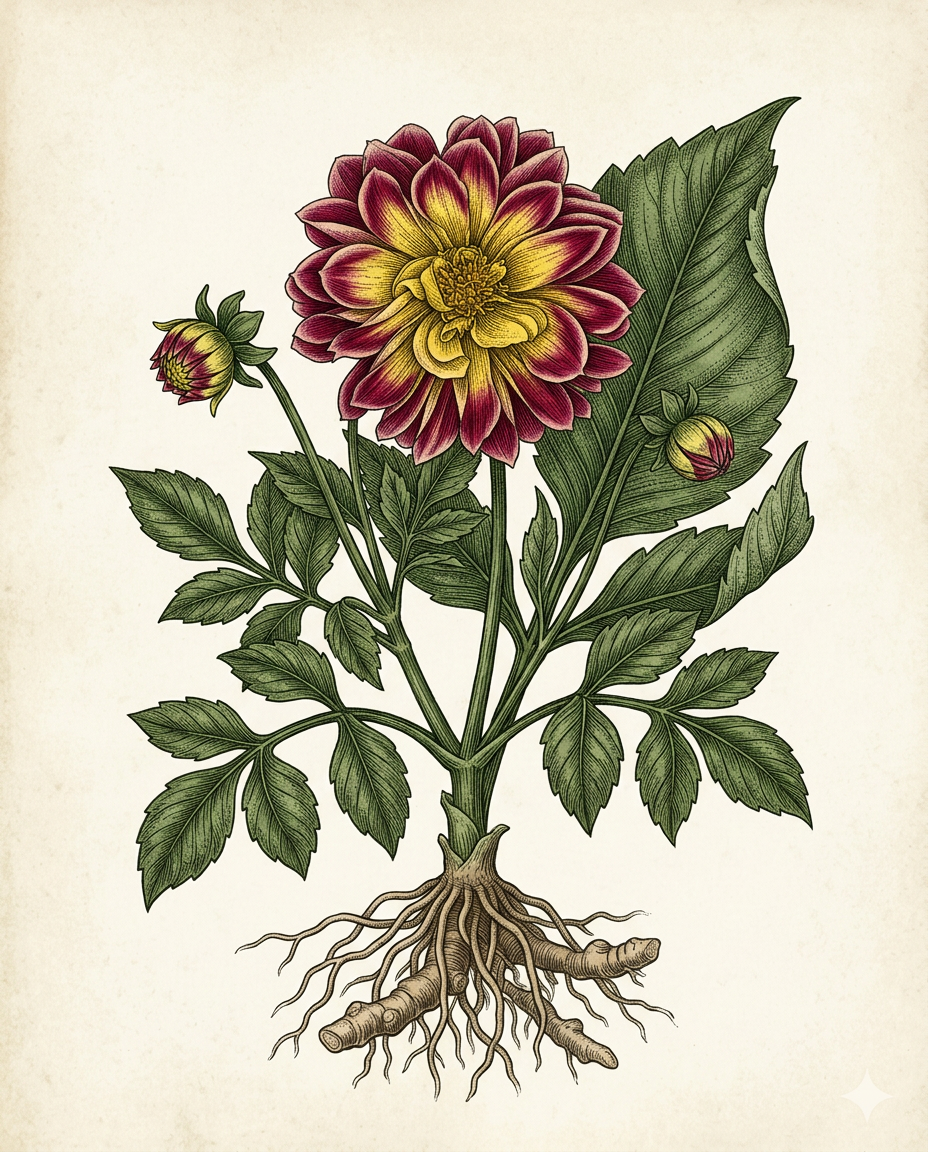
Dahlia
For large fully-double late-summer arrangements, Dinnerplate and Decorative dahlias replace peonies at scale. ASPCA non-toxic.
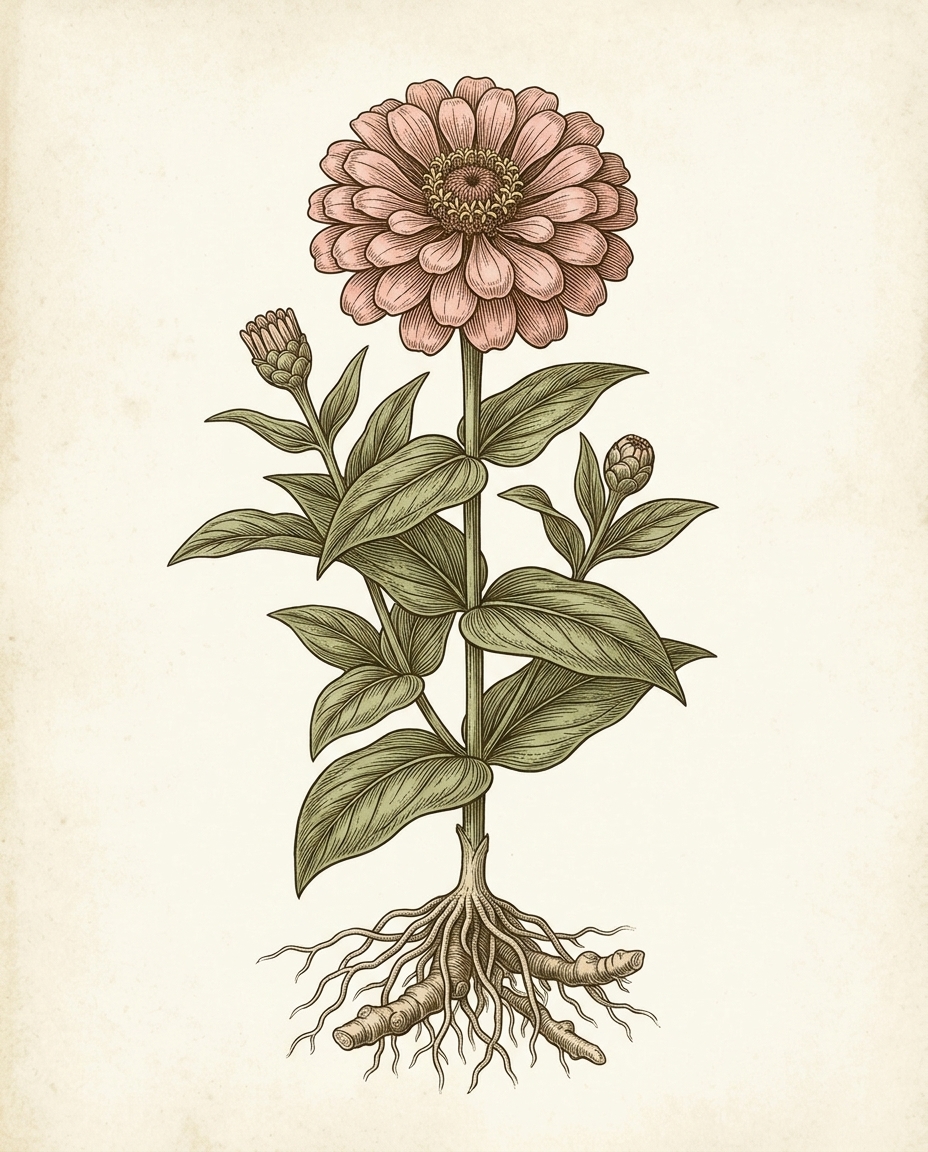
Zinnia
For fringed double petals at a fraction of the florist price, Benary's Giant zinnia is the affordable swap. ASPCA non-toxic.
What it does to a cat.
Peonies are toxic to cats. The ASPCA lists Paeonia officinalis as toxic to cats, dogs, and horses. The toxic principle is paeonol — a phenolic compound concentrated in bark and roots, present at lower levels in flowers and leaves.
The ASPCA's verdict, verbatim: Scientific Name: Paeonis officinalis · Family: Paeniaceae · Toxicity: Toxic to Dogs, Toxic to Cats, Toxic to Horses · Toxic Principles: Paeonol · Clinical Signs: Vomiting, diarrhea, depression. The verdict extends in practice to Paeonia spp. broadly — the garden peony, the tree peony (P. suffruticosa), and the Itoh intersectional hybrids all carry paeonol.
Why this page exists
Peonies are in every grocery-store florist from May through June, and they sit in the cultural category of "bouquet flowers" — the assumption being that anything you can pay $8 for next to the asparagus must be safe. The ASPCA has always listed them as toxic, but the verdict gets buried because:
- The toxicity is mild relative to the deadly category (lilies, lily-of-the-valley, oleander).
- The clinical signs (vomiting, depression) are nonspecific. Most cat owners never connect a sick cat with last week's bouquet.
- The plant is genuinely beautiful, and the season is short, so the impulse to buy them outweighs the cautious search.
We list it as toxic because the ASPCA does, the verdict is unambiguous, and the realistic harm pattern (a chewy cat, a kitchen-counter vase, mild GI upset for a day) is real if quiet.
Where the toxin is
Paeonol concentration is highest in bark and roots — which for a tuberous-rooted herbaceous peony means underground, not normally accessible. The realistic exposures are:
- Flowers and leaves from a vase or border. Mild dose, mild GI signs.
- Root exposure from a digger cat or from peony tubers temporarily left at the surface during division and replanting. Higher dose, more pronounced symptoms.
Tree peonies have woody bark, also a paeonol reservoir — but cats don't usually chew bark.
What it does to a cat
- Vomiting (most common): onset 1 to 4 hours after ingestion. The first sign, often the only sign in mild grazing.
- Diarrhea: in moderate exposures, following vomiting.
- Depression: lethargy, withdrawal, reduced responsiveness for 24–48 hours. The hallmark of peony exposure relative to milder GI plants.
- Anorexia: cats may refuse food for a day or longer.
Most cases resolve in 24 to 48 hours without veterinary intervention. If your cat is lethargic for more than two days, dehydrated, or has persistent vomiting that prevents water intake, go to the vet. Call the ASPCA Animal Poison Control Center at 888-426-4435 for dose-based guidance.
Cat-safe alternatives to peonies
For the May/June bouquet role specifically:
- Garden roses — the cleanest swap. Fully-double ruffled blooms, ASPCA non-toxic, much longer vase life than peony (which drops petals in 4–5 days). Available in every colour peonies come in.
- Tulips — wait, tulips are also toxic. Skip them in a cat household.
- Dahlias — for late-summer when peony season is past. Dinnerplate and Decorative cultivars deliver the same fully-double impact at larger scale. ASPCA non-toxic.
- Zinnia 'Benary's Giant' — the affordable swap. Fringed double petals at a fraction of the florist premium.
For the full safe-flower list, see the safe-plants index. For other cut flowers to avoid, the toxic-plants list covers lilies, carnations, chrysanthemums, and the rest.
What we have actually seen.
Vomiting
Most common sign. Onset 1–4 hours after ingestion. Self-limiting in mild exposures (petal-grazing).
Diarrhea
Often follows vomiting in moderate-to-severe exposures.
Depression
Lethargy, withdrawal, reduced responsiveness for 24–48 hours.
Anorexia
Cats may refuse food for a day or longer after a moderate ingestion.
- ASPCA Animal Poison Control Center. Toxic and Non-Toxic Plants: Peony.Accessed June 2026 · aspca.org · Paeonia officinalis · Toxic Principles: Paeonol · Clinical Signs: Vomiting, diarrhea, depression
- Pet Poison Helpline. Paeonia ingestion in companion animals.Clinical reference · 2024
- Merck Veterinary Manual. Phenolic-compound toxicosis in cats.Standard veterinary toxicology reference