Yew
Taxus spp.
Yew is deadly to cats per the ASPCA. Every part except the fleshy red aril contains taxine alkaloids that can stop the heart with no warning. A few chewed needles can be fatal.
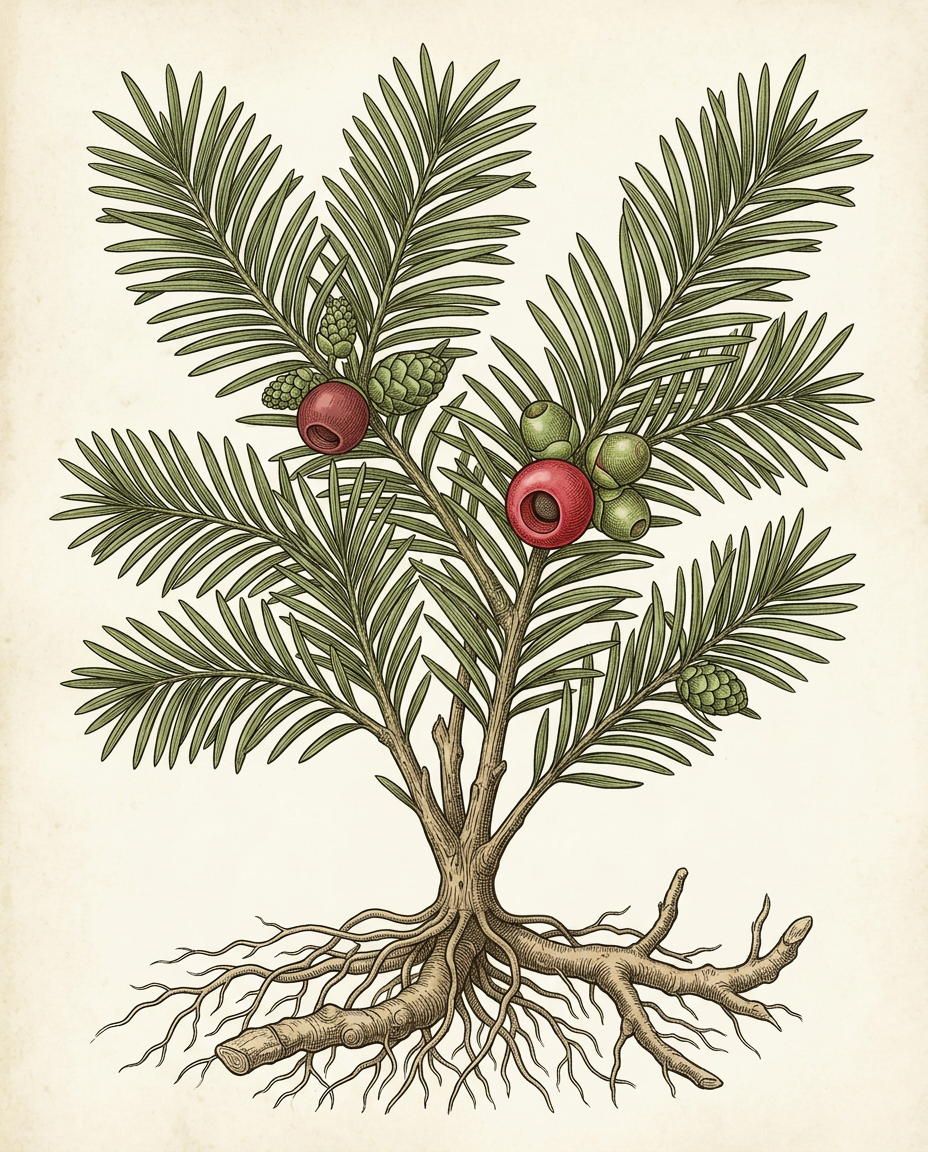

Plate ITaxus species — the churchyard yew. Slow-growing evergreen with soft needles and scarlet arils. Beautiful, ancient, and one of the most reliably fatal plants for cats.
Three plants that look the part, without the risk.
Dark evergreen foliage without the taxine — these three deliver the same year-round structure for a cat-safe garden or interior.
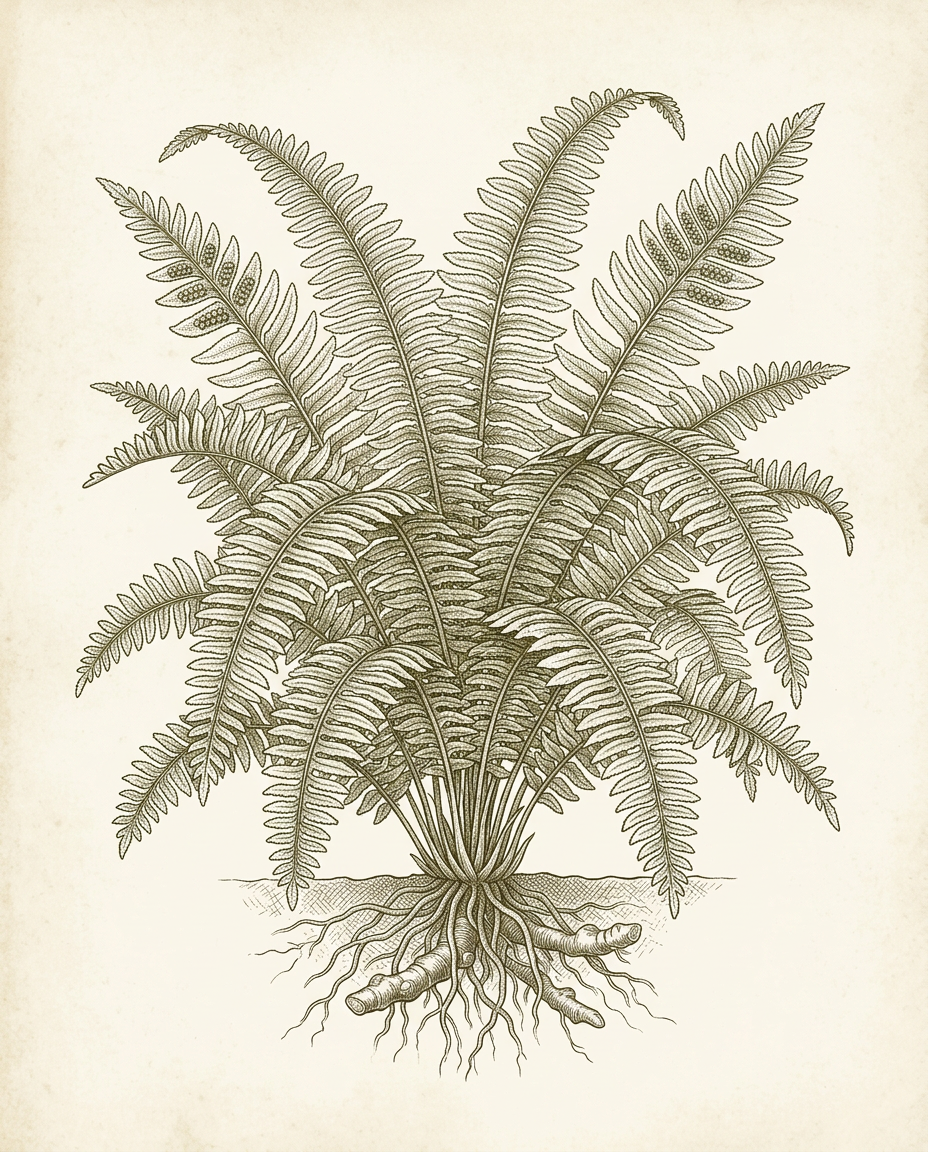
Boston Fern
Soft evergreen fronds that read as needled foliage. ASPCA non-toxic and tolerates indoor conditions.
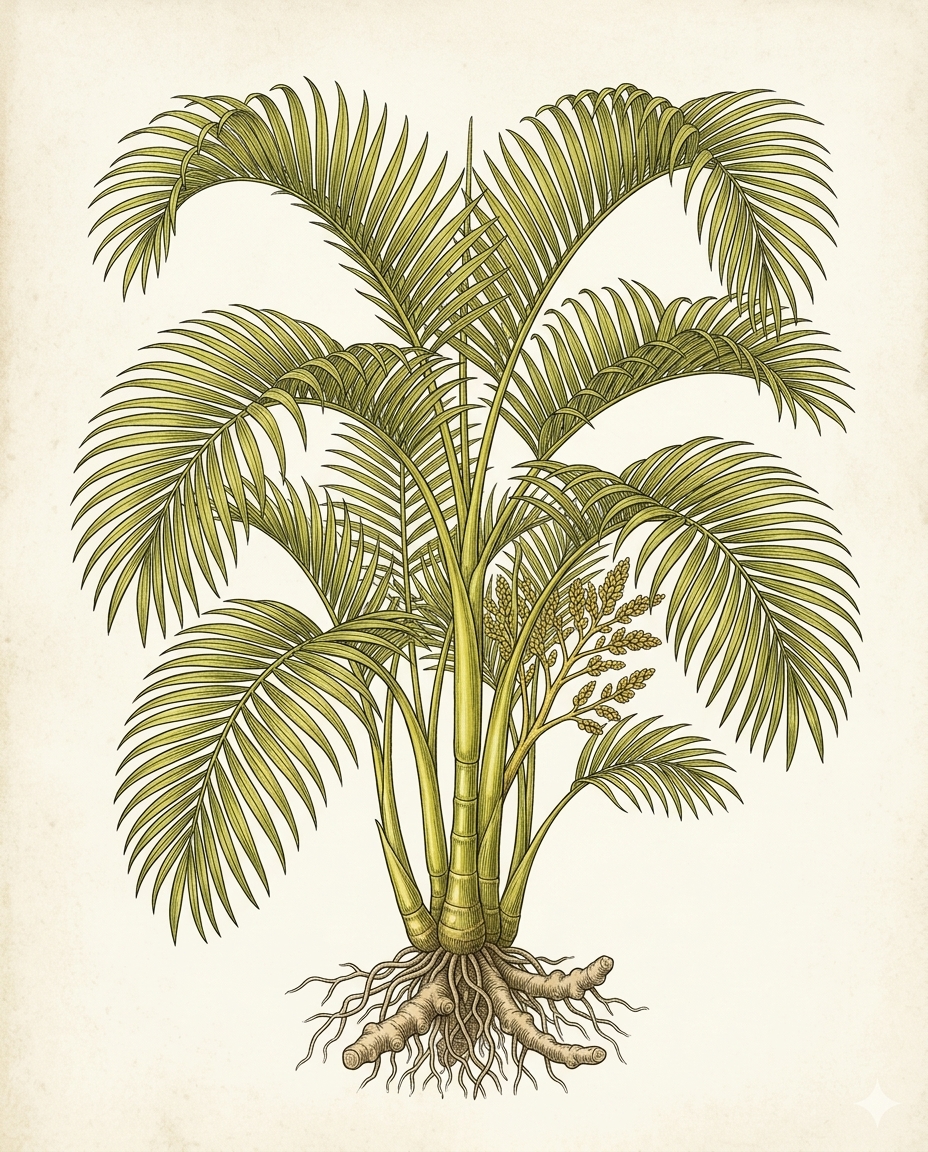
Areca Palm
Feathery, evergreen fronds for the same dense green effect at room scale. ASPCA non-toxic.
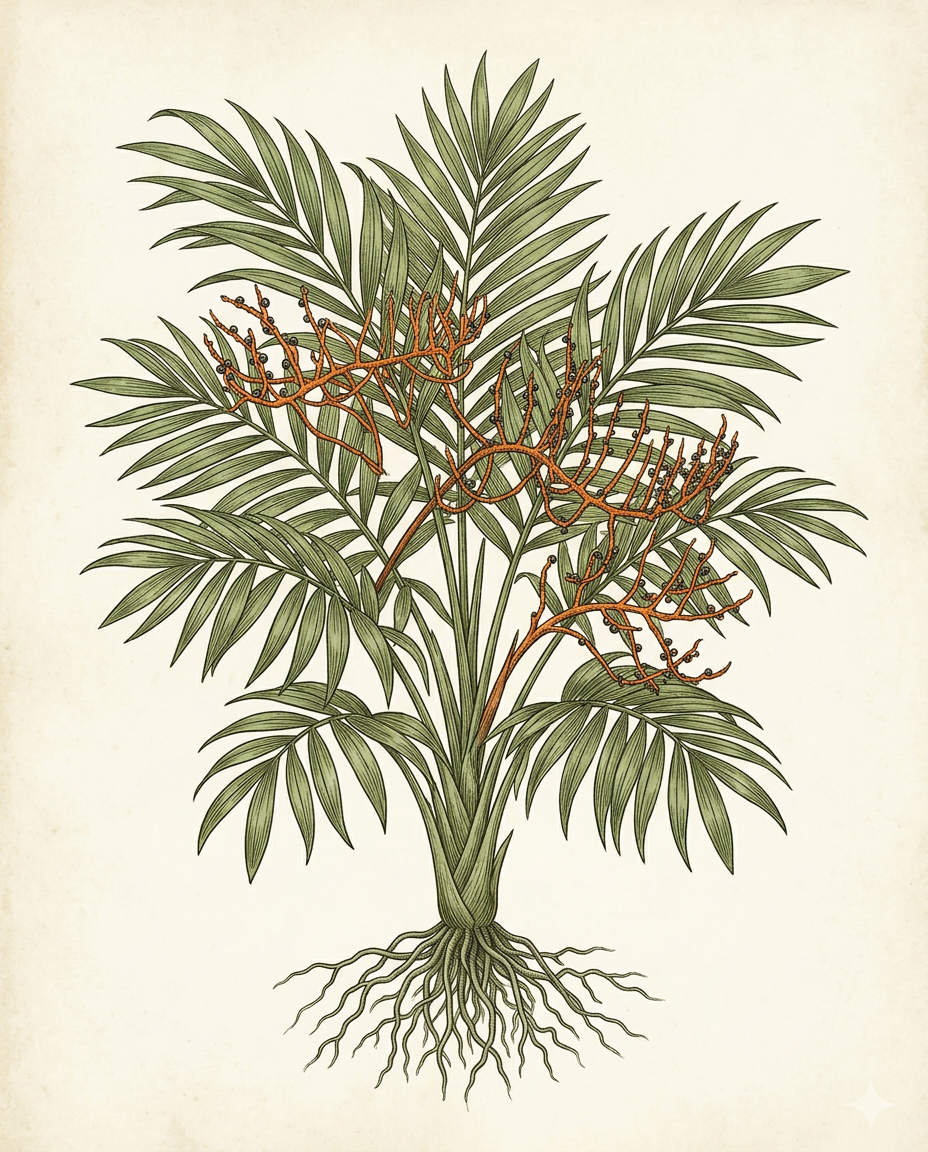
Parlor Palm
Compact, fine-needled foliage. ASPCA non-toxic, shade tolerant, easy.
What it does to a cat.
Yes — yew is toxic to cats, and in the gravest sense. The ASPCA lists Taxus species — English yew, Japanese yew, Pacific yew, Anglo-Japanese yew — as toxic to cats, dogs, and horses. The toxic principles are the taxine alkaloids A and B, plus a volatile oil. The clinical picture is short and brutal: sometimes no symptoms at all, then sudden cardiac arrest.
Yew poisoning has a reputation among veterinary toxicologists for one thing above all: livestock and pets are sometimes found dead next to the plant with no symptoms observed before death. There is rarely a clear window to act.
Why the aril is the only safe part — and why that doesn't help
The fleshy red aril (the berry-like covering of the seed) is the one part of the plant without taxine. Every other part — needles, bark, branches, and the seed itself inside the aril — is loaded with it. The seed is the most concentrated source in the whole plant. So a cat eating the "berry" usually swallows the deadly seed as well. Treat the whole plant as fatal.
What taxine does
Taxine A and B block sodium and calcium channels in cardiac muscle. Conduction fails, the heartbeat becomes erratic, cardiac output collapses. There is no antidote. Treatment is supportive: IV fluids, atropine, antiarrhythmics, and intensive monitoring — and outcomes depend more on how quickly the cat reaches care than on what care is given.
What to do if your cat ate yew
Go to a vet immediately. Do not wait for symptoms — by the time you see tremors or breathing trouble, an arrhythmia is already in motion. Bring a sample. ASPCA Animal Poison Control is available 24/7 at (888) 426-4435.
Cat-safe substitutes
For indoor evergreen foliage, Boston fern, parlor palm, and areca palm are all ASPCA non-toxic and fill the same dense-green role at room scale.
For the other deadly heart-toxic plants we cover, see our oleander and foxglove profiles. Different toxin family — same end point.
What we have actually seen.
Sudden death with no warning
Taxine alkaloids can produce cardiac arrest before any other symptoms appear. Cats are sometimes found dead near the plant.
Tremors and dyspnea
Where symptoms develop before arrest, expect muscle tremors, difficulty breathing, and weakness within one to three hours.
Vomiting
GI signs are inconsistent and often mild. Their absence does not mean the cat is safe.
Seizures
Reported in advanced poisoning, particularly in dogs. Possible in cats.
- ASPCA Animal Poison Control Center. Toxic and Non-Toxic Plants: Japanese Yew.Accessed June 2026 · aspca.org · Toxic Principles taxine A and B, volatile oil
- Pet Poison Helpline. Taxus toxicity in companion animals.Clinical reference · 2024
- Merck Veterinary Manual. Yew toxicosis.Standard small-animal toxicology reference