Wisteria
Wisteria spp.
Wisteria is toxic to cats per the ASPCA. The seed pods carry the highest concentration of lectin and wisterin glycoside — vomiting with blood is a common sign of seed-pod ingestion.

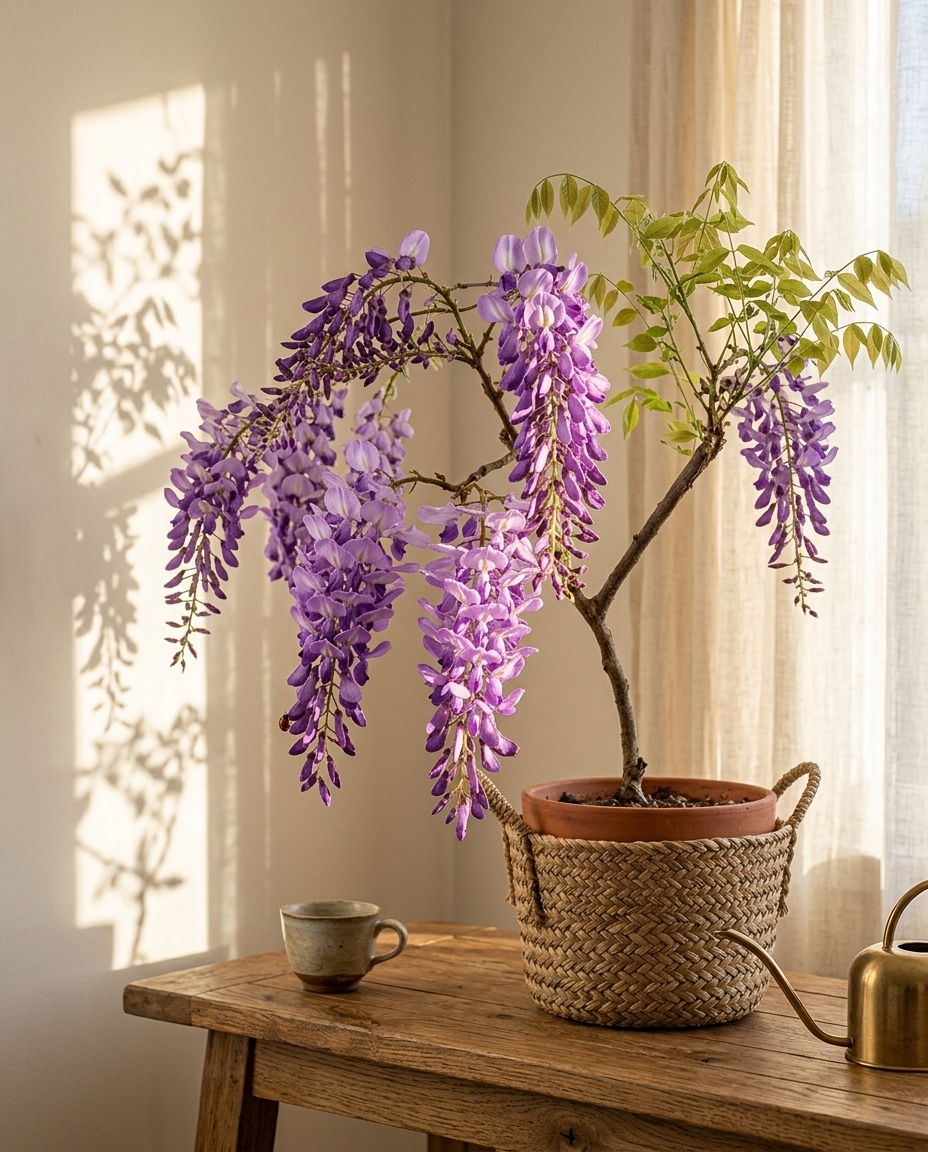
Plate IWisteria spp. — the cascading purple climber. Pendant racemes of pea-shaped flowers; pinnate compound leaves; twining woody stems. ASPCA toxic — lectin and wisterin glycoside, highest in seed pods.
Three plants that look the part, without the risk.
Same purple-cascade pergola look without the seed-pod lectin — these climbing flowers cover the same garden role at ASPCA non-toxic verdicts.

Rose (climbing)
Pole and pergola roses give the same vertical-garden role with ASPCA non-toxic chemistry. Long bloom season; many colours.
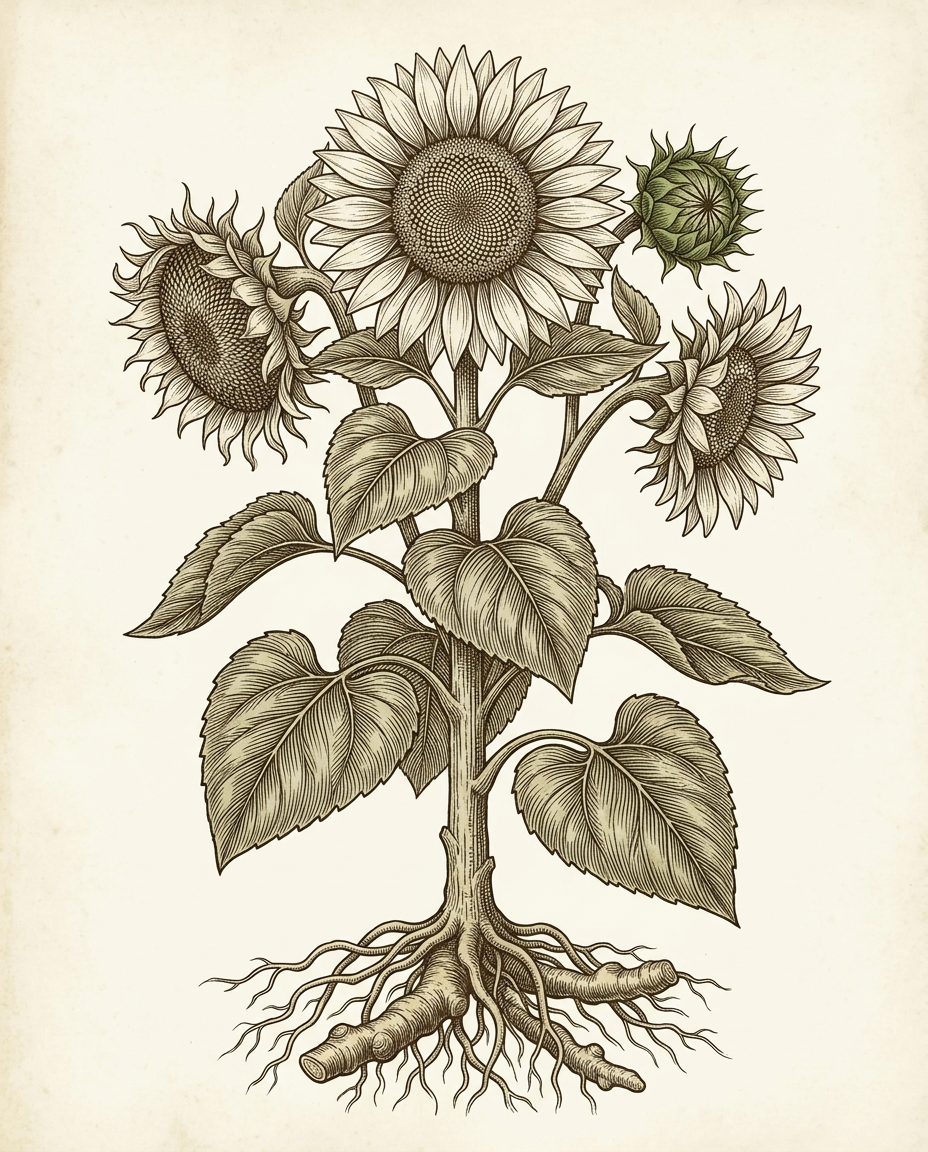
Sunflower (row of)
For tall vertical garden colour without a climber, a row of sunflowers replaces wisteria's height impact. ASPCA non-toxic.
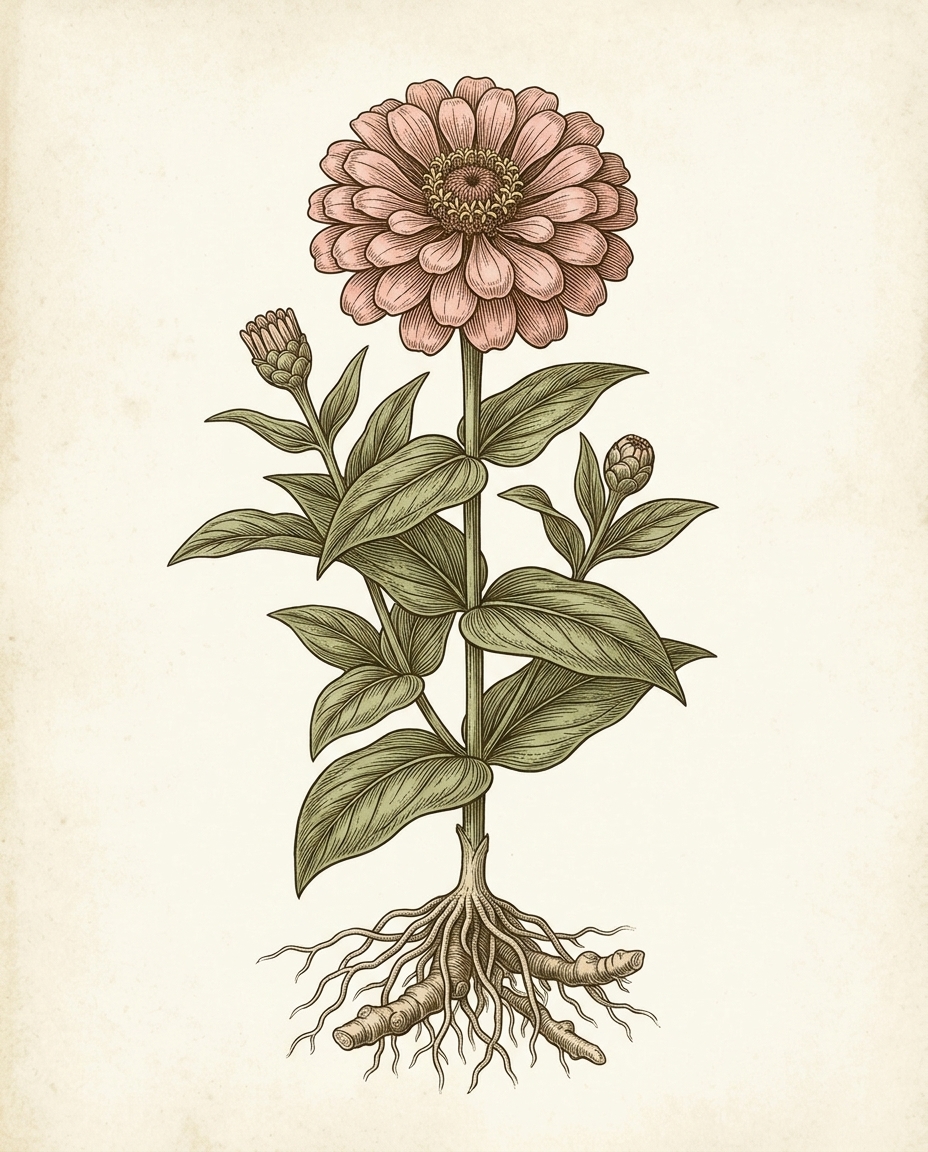
Zinnia (border)
For long-lasting garden colour at smaller scale, zinnias deliver more bloom volume than a wisteria. ASPCA non-toxic.
What it does to a cat.
Wisteria is toxic to cats. The ASPCA lists Wisteria spp. as toxic to cats, dogs, and horses. The toxic principles are lectin and wisterin glycoside, concentrated heaviest in the seed pods.
The ASPCA's verdict, verbatim: Scientific Name: Wisteria spp. · Family: Fabaceae · Toxicity: Toxic to Dogs, Toxic to Cats, Toxic to Horses · Toxic Principles: Lectin, wisterin glycoside · Clinical Signs: Vomiting (sometimes with blood), diarrhea, depression. The verdict is genus-wide — Wisteria sinensis (Chinese wisteria), Wisteria floribunda (Japanese wisteria), and Wisteria frutescens (American wisteria) are all covered.
Seed pods are the worst case
A wisteria in full flower in May is mostly a low-grade hazard — leaves and flowers contain the toxins at moderate concentration, and grazing them produces vomiting and diarrhea. But the dangerous season is late summer through autumn, when the flowers fade and seed pods form: dried bean-shaped pods, 10 to 15 cm long, dangling from the vine and eventually dropping to the ground.
Wisteria is in the pea family (Fabaceae), and the pods look exactly like dried bean pods — to a curious cat patrolling a pergola or a fence line, they read as objects of investigation. The lectin and wisterin concentration in the seeds is at its peak in the dried pod. Seed-pod ingestion is the realistic worst-case wisteria exposure, and it warrants an immediate vet call.
What it does to a cat
- Vomiting, sometimes with blood: the bloody component distinguishes wisteria from milder plant GI toxins. Onset within 30 minutes to 2 hours of ingestion.
- Diarrhea, sometimes with blood: follows vomiting in moderate-to-severe exposures.
- Depression: lethargy, withdrawal, reduced responsiveness for 24–48 hours.
- Dehydration: cumulative effect from sustained vomiting and diarrhea. The escalation risk.
If your cat shows any of these signs after access to a wisteria — and especially after pod-season exposure — go to the vet. Don't wait it out. Call the ASPCA Animal Poison Control Center at 888-426-4435 for dose-based guidance. Treatment is supportive: anti-emetics, IV fluids for dehydration, monitoring for hemolysis or organ effects in severe exposures.
Managing a wisteria with an outdoor cat
If you have a wisteria you don't want to remove:
- Pod season is autumn. That's when the toxin density is at its worst and the pods are most accessible (on the ground, not 5 metres up on the vine).
- Bag the fallen pods and bin them. Don't sweep them into a compost pile a cat can access.
- Prune for flower display only — Wisteria responds well to summer pruning that limits seed-pod formation. Cutting flower racemes after bloom prevents pod set.
- Watch for chewed pods. A split or chewed pod with seeds missing on the ground means a cat (or dog) found one.
Cat-safe alternatives to wisteria
The climbing-flower-pergola role is hard to substitute on the ASPCA non-toxic list — most popular climbers (jasmine, English ivy, clematis hybrids) carry their own asterisks. The best options:
- Climbing roses on a pergola — ASPCA non-toxic, bloom-heavy through summer, hardy through most US zones. The closest functional swap.
- A row of tall sunflowers for vertical height impact in late summer.
- A grape vine if you can find a fruiting cultivar suited to the climate — grapes are flagged for dogs but listed for cats with caveats; check current ASPCA before planting.
For the full toxic-plants reference, browse the toxic plants list.
What we have actually seen.
Vomiting (sometimes bloody)
Most common sign. The ASPCA listing specifically notes vomiting "sometimes with blood" — this distinguishes wisteria from milder GI toxins. Onset 30 min – 2 h.
Diarrhea
Often follows vomiting. May also contain blood in moderate-to-severe exposures.
Depression
Lethargy and reduced responsiveness over 24–48 hours following ingestion.
Dehydration
Cumulative effect of vomiting and diarrhea. Can become serious in 24–48 hours without supportive care.
- ASPCA Animal Poison Control Center. Toxic and Non-Toxic Plants: Wisteria.Accessed June 2026 · aspca.org · Wisteria spp. · Toxic Principles: Lectin, wisterin glycoside · Clinical Signs: Vomiting (sometimes with blood), diarrhea, depression
- Pet Poison Helpline. Wisteria ingestion in companion animals.Clinical reference · 2024
- Merck Veterinary Manual. Lectin toxicosis in companion animals.Standard veterinary toxicology reference