Tahitian Bridal
Veil.
Tradescantia multiflora
Tahitian bridal veil is toxic to cats. The ASPCA says it can cause mild gastrointestinal signs and dermatitis. It is a Commelinaceae plant — the same family as Tradescantia (inch plant) — and shares the same sap-driven irritant mechanism. The upset is mild, but the plant is best kept away.
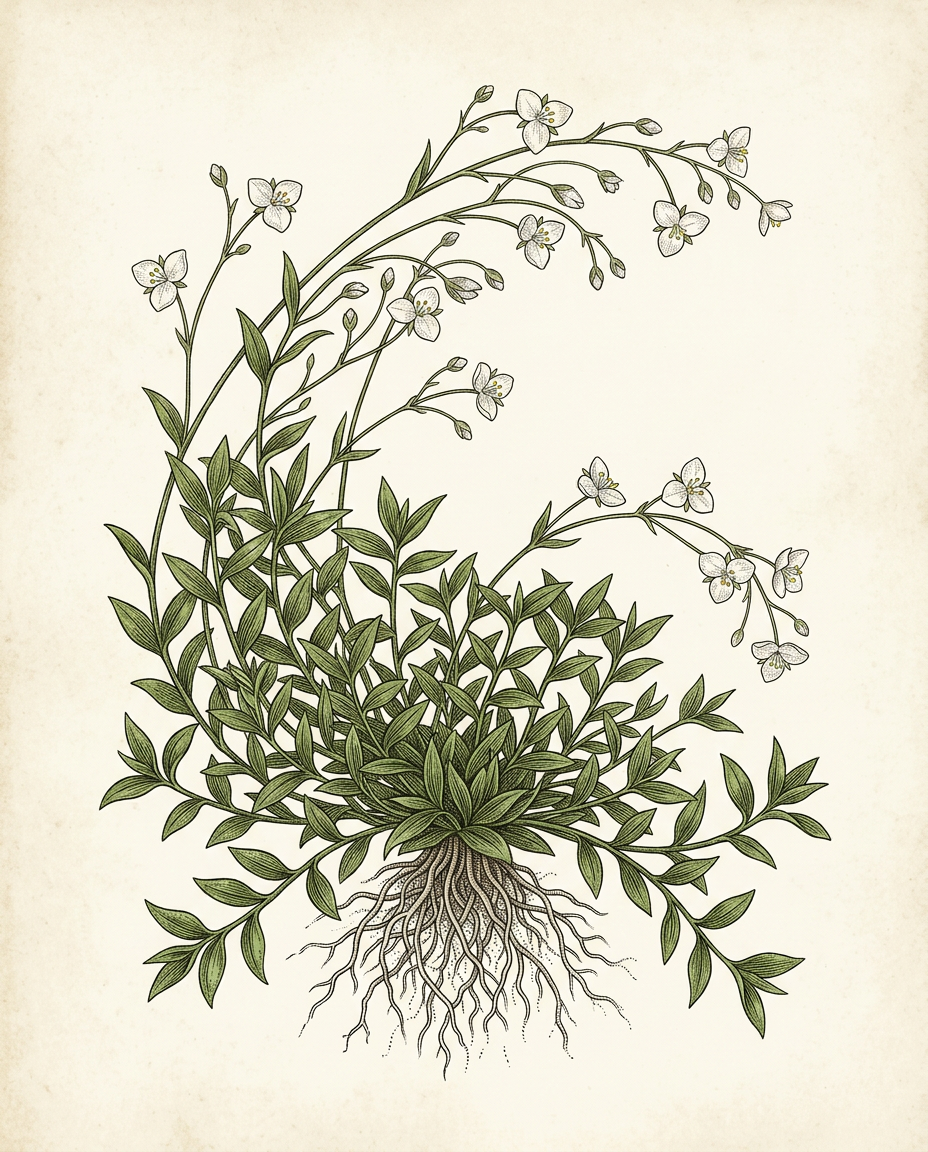
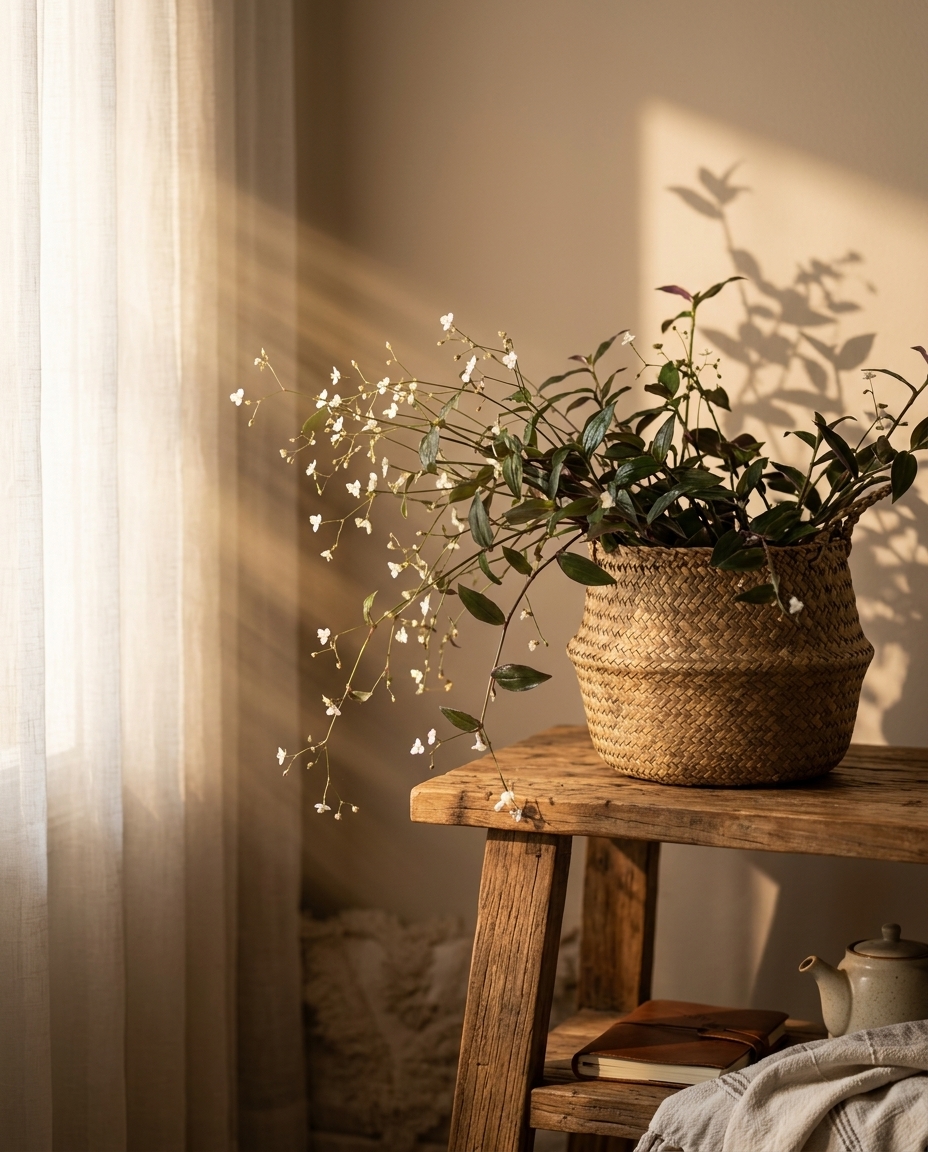
Plate ITradescantia multiflora — Tahitian bridal veil. The ASPCA lists it as toxic to cats: mild GI signs and dermatitis.
Three plants that look the part, without the risk.
If you want a soft trailing plant for a hanging basket without the irritant Commelinaceae sap, these ASPCA non-toxic plants are safe around cats.
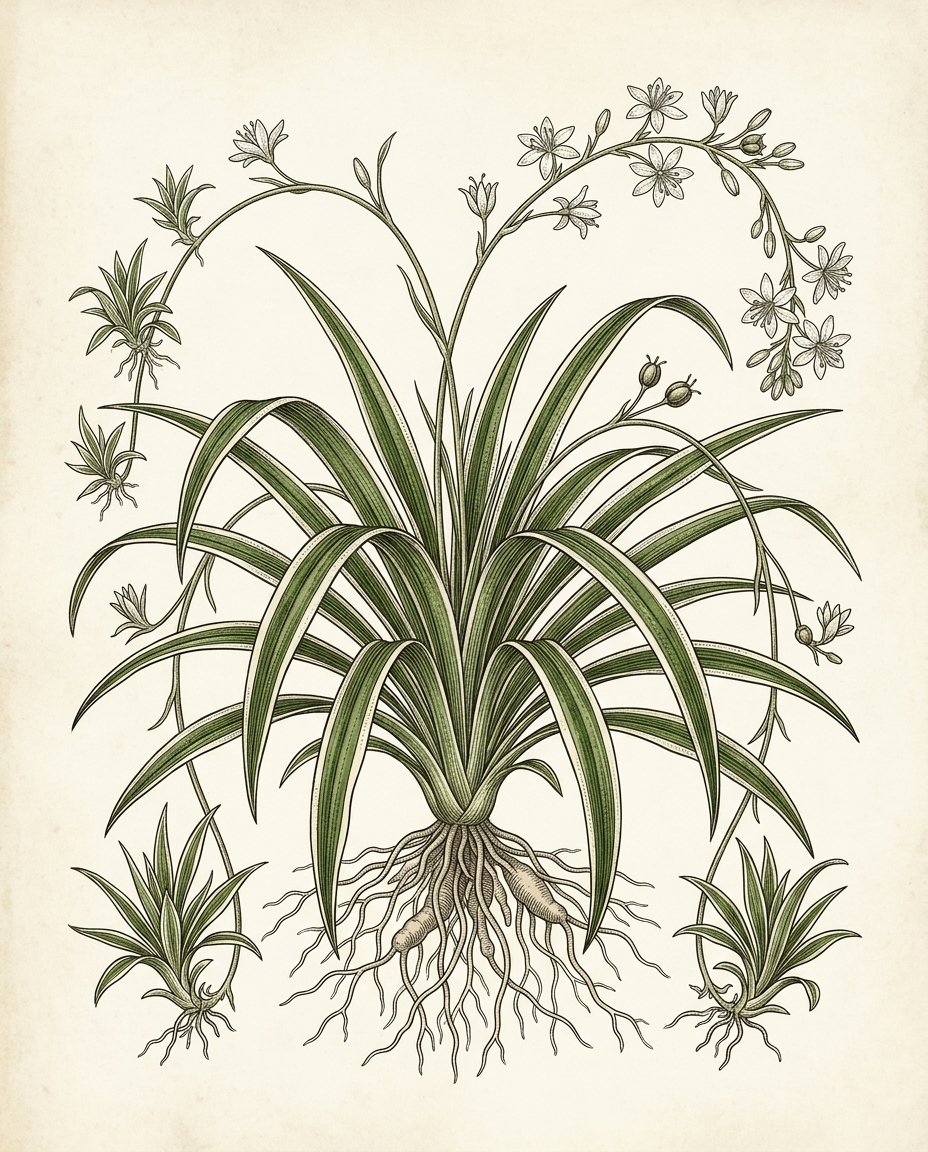
Spider Plant
A classic non-toxic trailer with arching variegated leaves and dangling plantlets — the safe hanging-basket workhorse.
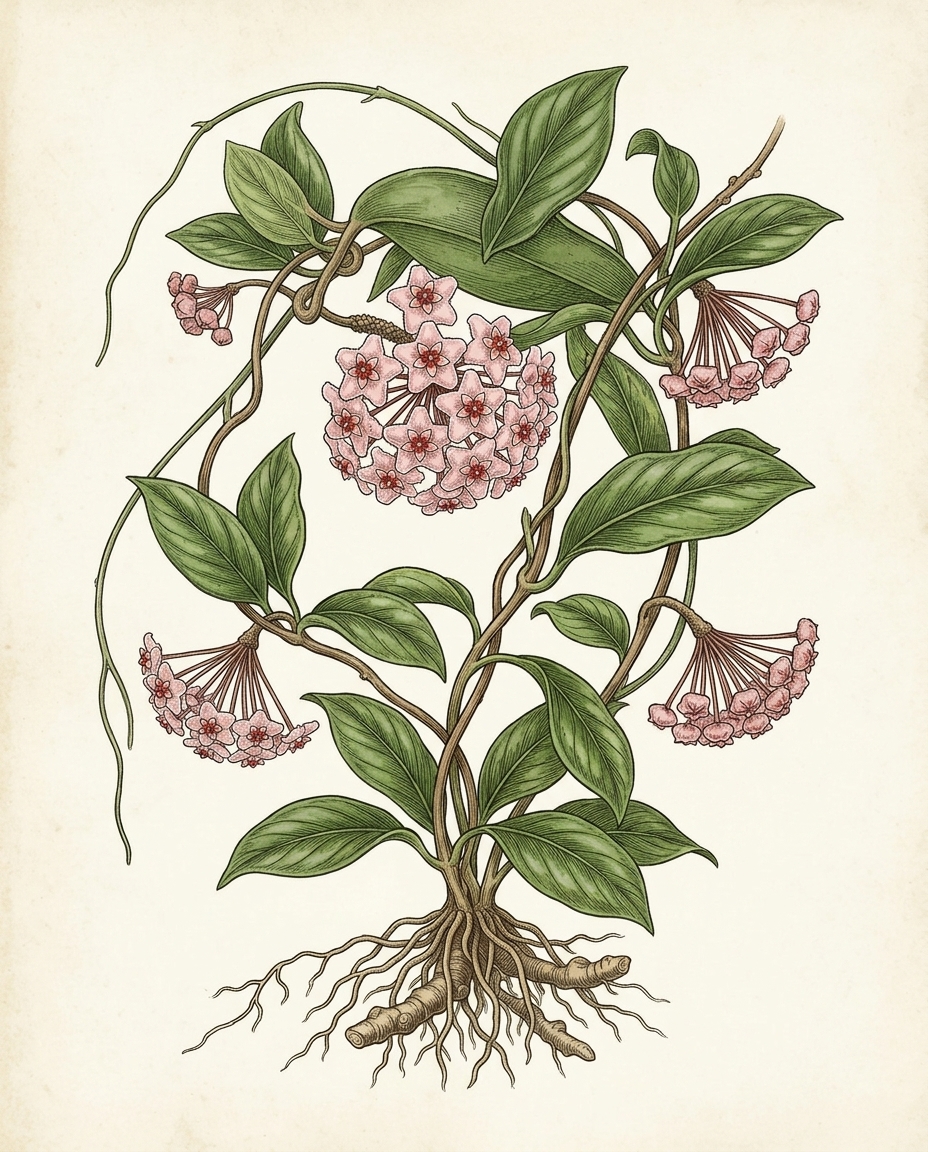
Hoya / Wax Plant
A non-toxic trailing vine with waxy leaves and fragrant flower clusters — a safe, long-lived basket plant.
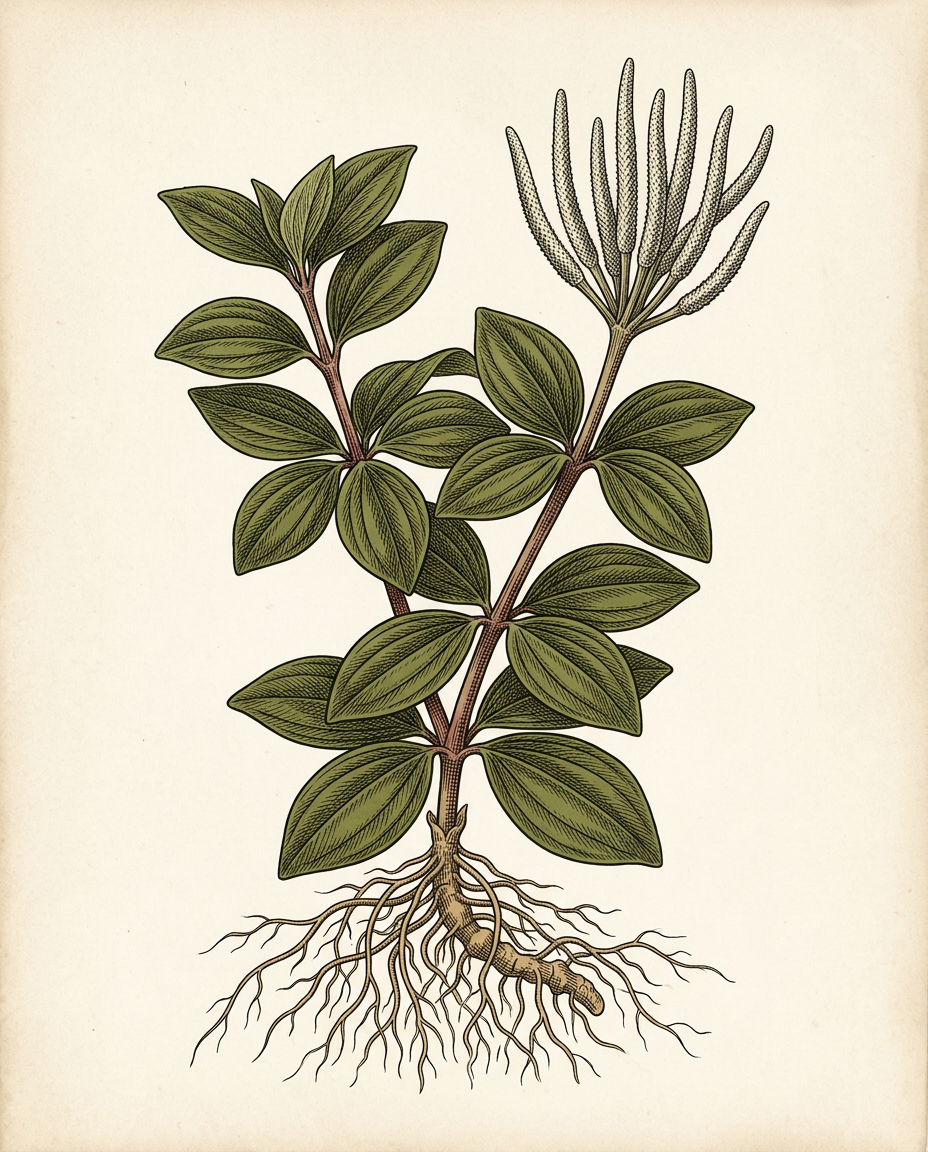
Peperomia
A compact, non-toxic foliage plant that trails gently and tolerates the same bright-indirect spots.
What Tahitian bridal veil does to a cat.
Tahitian bridal veil is toxic to cats. The ASPCA states that it "Can cause mild gastrointestinal signs and dermatitis." The reaction is usually minor and self-limiting — but it is a genuine irritant, and the plant is best kept out of a cat's reach.
Tahitian bridal veil (Tradescantia multiflora, listed in some references as Gibasis geniculata) is a delicate trailing houseplant in the family Commelinaceae — the spiderwort family — grown for its fine stems and a haze of tiny white flowers in hanging baskets.
ASPCA Data
According to the ASPCA, Tahitian bridal veil is listed under plants toxic to cats:
Can cause mild gastrointestinal signs and dermatitis.
The signs are mild compared with truly dangerous houseplants, but they are real: stomach upset if the plant is eaten, and skin or mouth irritation from contact with the sap.
Why it is toxic — and the family pattern
The mechanism here is the irritant sap common to the Commelinaceae. Two things follow from that:
- Dermatitis. Contact with broken stems can redden and itch a cat's skin, and mouthing the plant irritates the lips and gums.
- Gastrointestinal upset. Eaten, it causes mild vomiting, drooling, or loose stool.
This is the same mechanism behind its close relative the inch plant. Tahitian bridal veil is a Tradescantia, and so is the inch plant — see our Tradescantia (inch plant) page, which is also toxic by the same sap-driven irritation. If you know one bothers cats, expect the same from the other.
A useful rule of thumb: treat any Commelinaceae plant with milky or sticky sap as an irritant to cats. The family is consistent enough that the assumption is the safe one.
What to do if your cat eats it
Tahitian bridal veil is a mild toxin, so a small nibble is rarely an emergency:
- Remove the plant and rinse the mouth if your cat will allow it.
- Watch for drooling, vomiting, loose stool, or skin redness.
- Call your vet or ASPCA Animal Poison Control at (888) 426-4435 if a large amount was eaten or if symptoms persist.
Safe trailing alternatives
If you wanted a soft trailer for a hanging basket, several ASPCA non-toxic plants give you the look without the irritant sap: the spider plant, the hoya / wax plant, and peperomia are all safe around cats.
The bottom line
Tahitian bridal veil is toxic to cats — mild gastrointestinal signs and dermatitis from the irritant Commelinaceae sap, the same mechanism as the inch plant. It is rarely serious, but with a safe, non-toxic trailer like a spider plant available, there is little reason to keep it within a cat's reach.
What we have actually seen.
Mild gastrointestinal signs and dermatitis
Per the ASPCA, Tahitian bridal veil can cause mild gastrointestinal signs and dermatitis in cats. The upset is usually minor and self-limiting rather than dangerous.
Sap-driven skin and mouth irritation
Like its Tradescantia relatives, the plant carries an irritant sap. Contact with broken stems can redden and itch a cat's skin, and mouthing the plant irritates the lips and gums.
Same mechanism as the inch plant
Tahitian bridal veil and the common inch plant (Tradescantia) share the same family and the same sap chemistry. If you know one irritates cats, expect the same of the other.
A tempting trailer
Grown in hanging baskets, the fine trailing stems dangle invitingly. Hang it high, because the dangling growth is exactly what draws a batting paw and a curious bite.
- ASPCA Animal Poison Control Center. Toxic and Non-Toxic Plants: Tahitian Bridal Veil.Accessed June 2026 · aspca.org