Marijuana
Cannabis sativa
Yes — marijuana is toxic to cats. The ASPCA lists Cannabis sativa as toxic to cats, dogs, and horses. THC (tetrahydrocannabinol) is the toxic principle, affecting the nervous system. Cats are particularly sensitive because of their small body size and high number of cannabinoid receptors. Ingestion of any part of the plant — leaves, buds, or edibles — is a veterinary emergency.
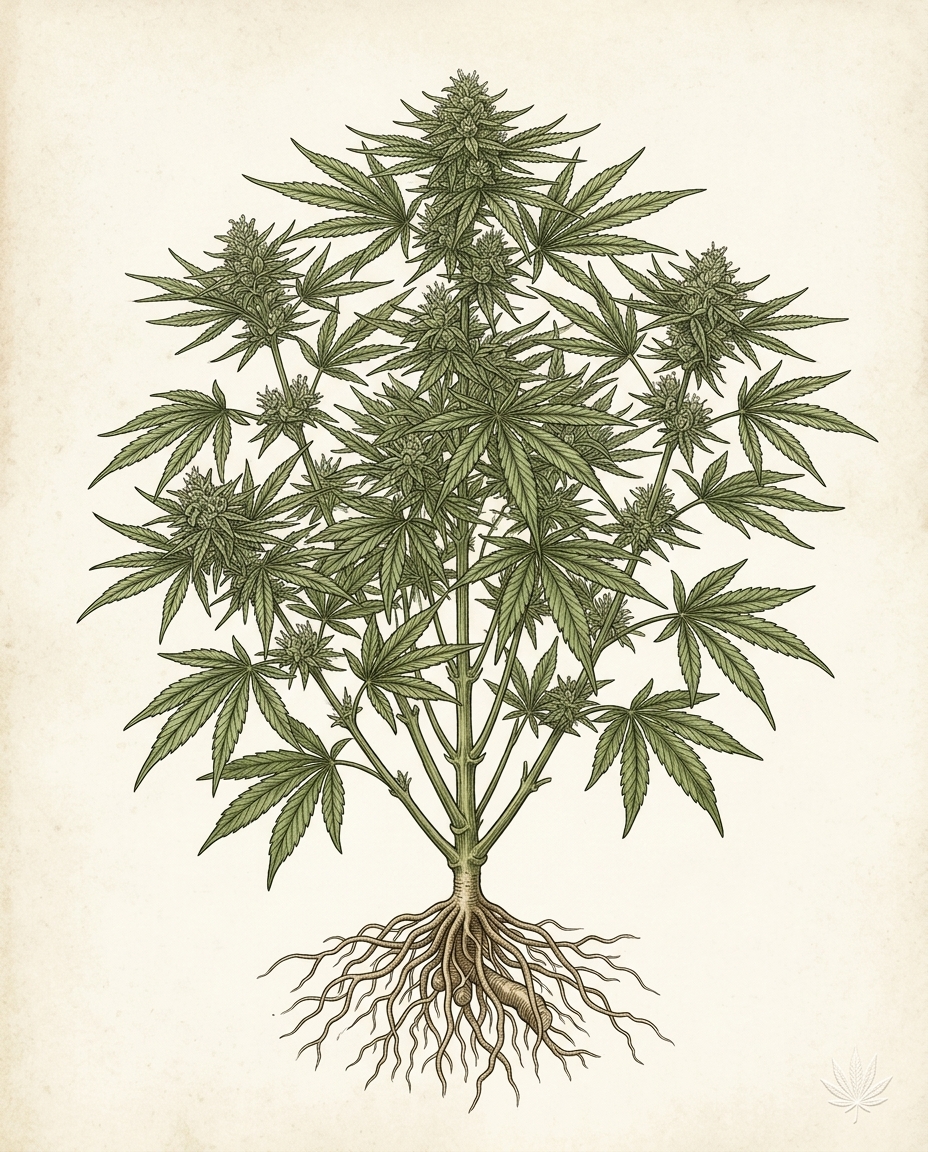
Plate ICannabis sativa — marijuana. The ASPCA lists it as toxic to cats: THC affects the nervous system. Also known as Indian Hemp and Hashish.
Three plants that look the part, without the risk.
If you want a cat-safe plant for a sunny garden spot, these ASPCA non-toxic plants are good alternatives to marijuana.
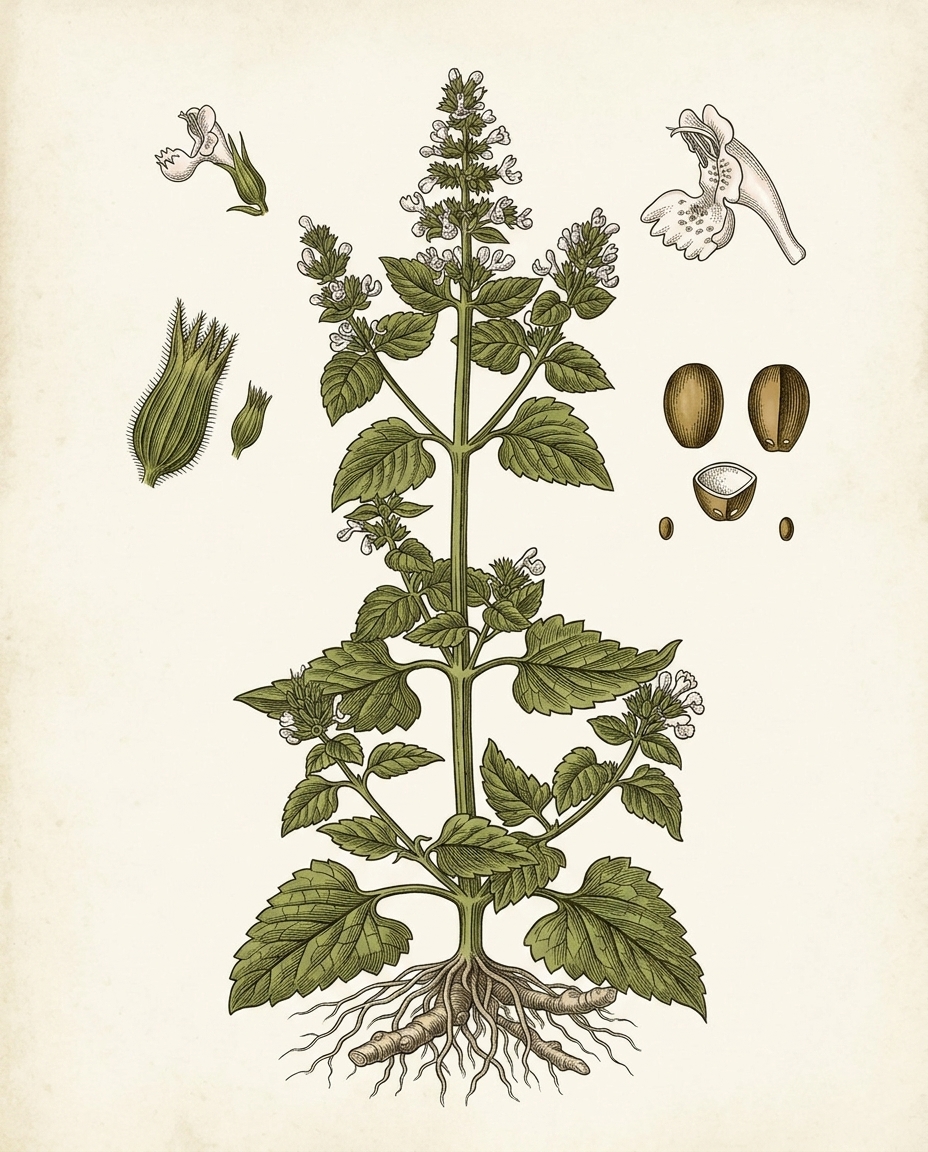
Catnip
A non-toxic herb that cats actively enjoy. Catnip gives a plant-curious cat a safe, enjoyable reaction — the cat-safe alternative to cannabis that cats actually prefer.
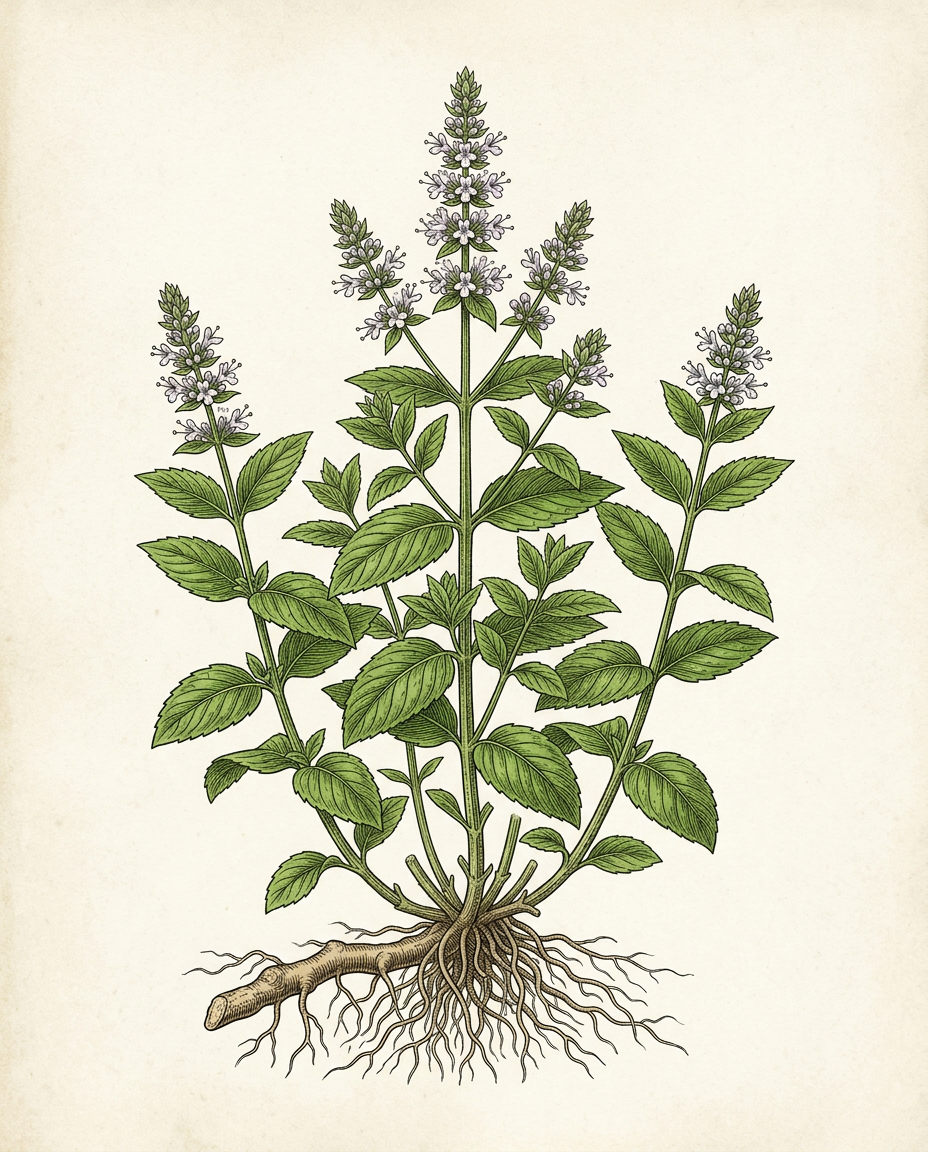
Mint
A non-toxic aromatic herb with a vigorous spreading habit. A cat-safe garden perennial that thrives in the same sunny conditions as cannabis.
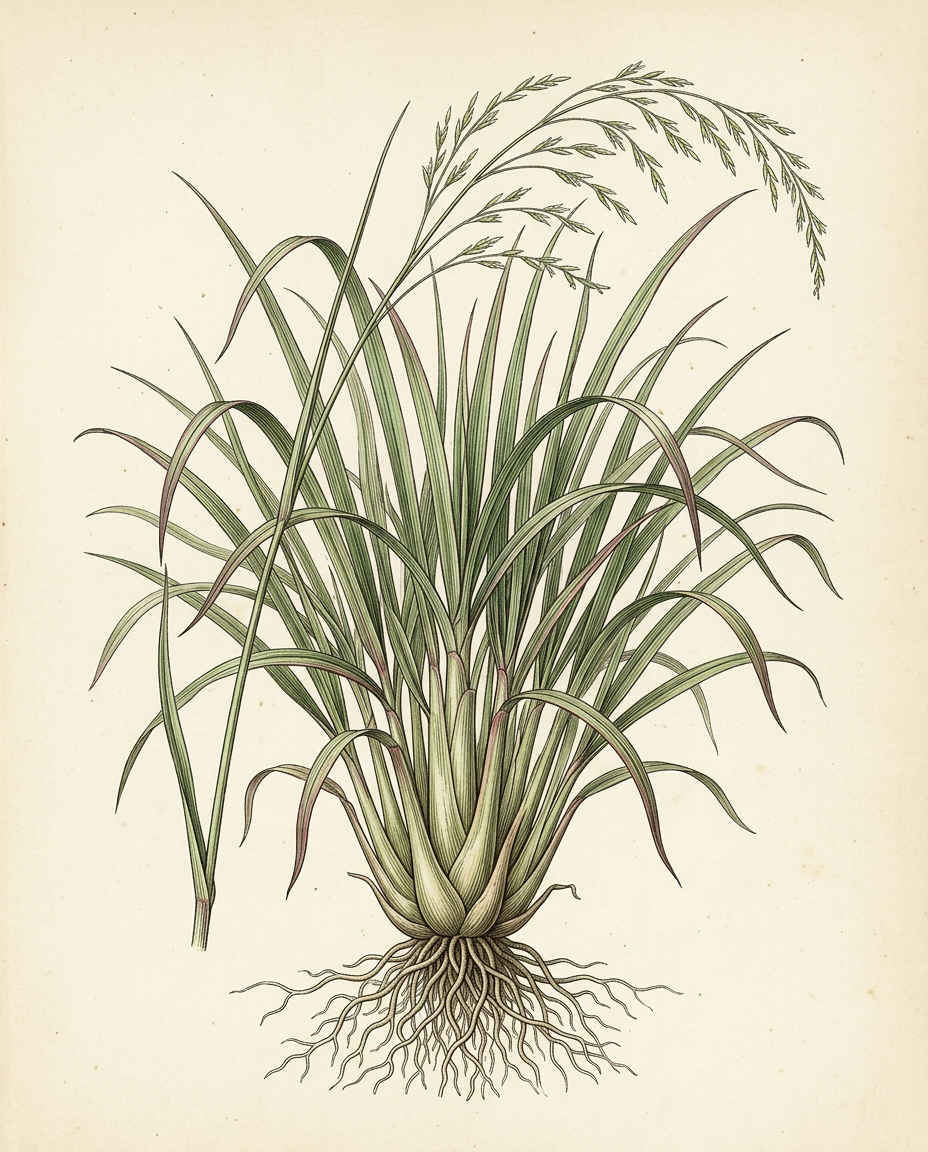
Hops substitute — Lemongrass
A non-toxic tall, grass-like herb that fills the same garden niche as a cannabis plant. Safe for cats and useful in the kitchen.
What marijuana does to a cat.
Yes — marijuana is toxic to cats. The ASPCA lists Cannabis sativa as Toxic to Dogs, Toxic to Cats, Toxic to Horses. The toxic principle is THC (tetrahydrocannabinol), which affects the nervous system. Cats are particularly sensitive because of their small body size and high concentration of cannabinoid receptors. Any ingestion is a veterinary emergency.
Marijuana (Cannabis sativa, family Cannabaceae) is also known by the ASPCA-listed common names Indian Hemp and Hashish. In states where cannabis is legal, outdoor grows are increasingly common, and free-roaming cats can encounter and chew the plants. Indoor exposure — from dried plant material, edibles, or concentrates — is the more frequent poisoning route.
ASPCA Data
According to the ASPCA, marijuana is listed under plants toxic to cats:
Toxic to Dogs, Toxic to Cats, Toxic to Horses.
The toxic principle is THC (tetrahydrocannabinol), which binds to cannabinoid receptors in the brain and nervous system.
Why THC is dangerous for cats
THC affects the nervous system by binding to cannabinoid receptors in the brain. Cats are particularly sensitive for two reasons:
- Small body size. The same dose that mildly affects a human can be a large overdose for a 4 kg cat.
- High receptor density. Cats have a high concentration of cannabinoid receptors, making them neurologically more responsive to THC.
Symptoms of marijuana toxicity in cats include depression, ataxia (loss of coordination), dilated pupils, drooling, vomiting, and in severe cases, seizures and coma.
Edibles are especially dangerous
Marijuana edibles — brownies, cookies, butter — are a double threat:
- Concentrated THC. Edibles contain far more THC per gram than raw plant material.
- Other toxic ingredients. Edibles often contain chocolate or raisins, which are independently toxic to cats.
- Fat increases absorption. The butter or oil in edibles increases how much THC the body absorbs, making the poisoning more severe.
Keep all cannabis edibles in sealed containers, out of a cat's reach.
Outdoor grows
In legal cannabis states, outdoor grows are a growing exposure route. Free-roaming cats can chew marijuana plants in gardens. If you grow cannabis outdoors, fence the area or keep cats indoors. The ASPCA listing covers the living plant — Cannabis sativa, also known as Indian Hemp and Hashish — not just processed products.
What to do if your cat eats marijuana
THC toxicity is a veterinary emergency:
- Call your vet or ASPCA Animal Poison Control at (888) 426-4435 immediately. Do not wait for symptoms — THC can progress to seizures and coma.
- Tell the vet what form was eaten (plant material, edible, concentrate), how much, and when.
- Treatment may require hospitalisation for 24 to 72 hours, because THC is fat-soluble and stored in body fat, releasing slowly.
Cat-safe garden alternatives
If you want a cat-safe plant for a sunny garden spot, catnip is the obvious choice — it is non-toxic and cats actively enjoy it. Catmint (Nepeta) and lemongrass are also ASPCA-listed non-toxic and thrive in similar conditions.
The bottom line
Marijuana is toxic to cats — THC affects the nervous system, and cats are highly sensitive. Edibles are especially dangerous because they concentrate THC and often contain chocolate. In legal states, outdoor grows are an additional risk. Keep all cannabis products — plant, edible, and concentrate — away from cats, and call your vet immediately if ingestion occurs. Marijuana belongs in the same high-toxicity category as tobacco and the castor bean plant.
What we have actually seen.
THC affects the nervous system
The toxic principle in marijuana is THC (tetrahydrocannabinol), which binds to cannabinoid receptors in the brain and nervous system. Cats are particularly sensitive because of their small body size and high concentration of cannabinoid receptors. Symptoms can include depression, ataxia (loss of coordination), dilated pupils, drooling, vomiting, and in severe cases, seizures and coma.
Edibles are especially dangerous
Marijuana edibles — brownies, cookies, butter — concentrate THC and often contain chocolate, which is independently toxic to cats. A cat that eats a marijuana edible receives a double dose of toxins. The fat in edibles also increases THC absorption, making the poisoning more severe.
Outdoor grows in legal states
In states where cannabis is legal, outdoor grows are common. Free-roaming cats can encounter and chew marijuana plants in gardens. The ASPCA lists Cannabis sativa — also known as Indian Hemp and Hashish — as toxic to cats, dogs, and horses.
Slow recovery — THC is stored in fat
THC is fat-soluble, meaning it is stored in the body's fat tissues and released slowly. Recovery from marijuana toxicity in cats can take 24 to 72 hours as the THC is gradually metabolised. Hospitalisation and supportive care are often required.
- ASPCA Animal Poison Control Center. Toxic and Non-Toxic Plants: Marijuana.Accessed June 2026 · aspca.org