Iris
Iris species
Iris is toxic to cats per the ASPCA. The toxic principle is pentacyclic terpenoids, concentrated in the rhizome — a real hazard for diggy cats encountering iris bulbs underground.
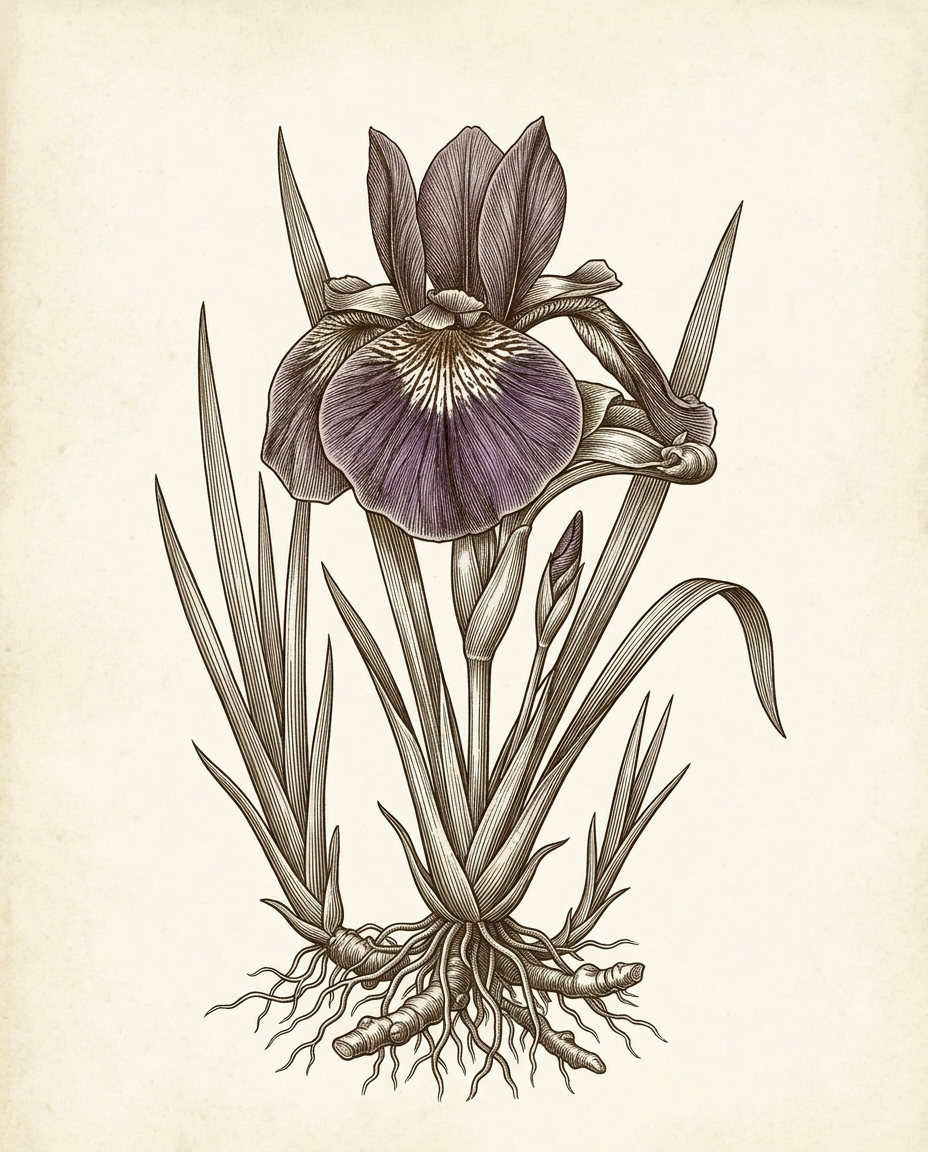
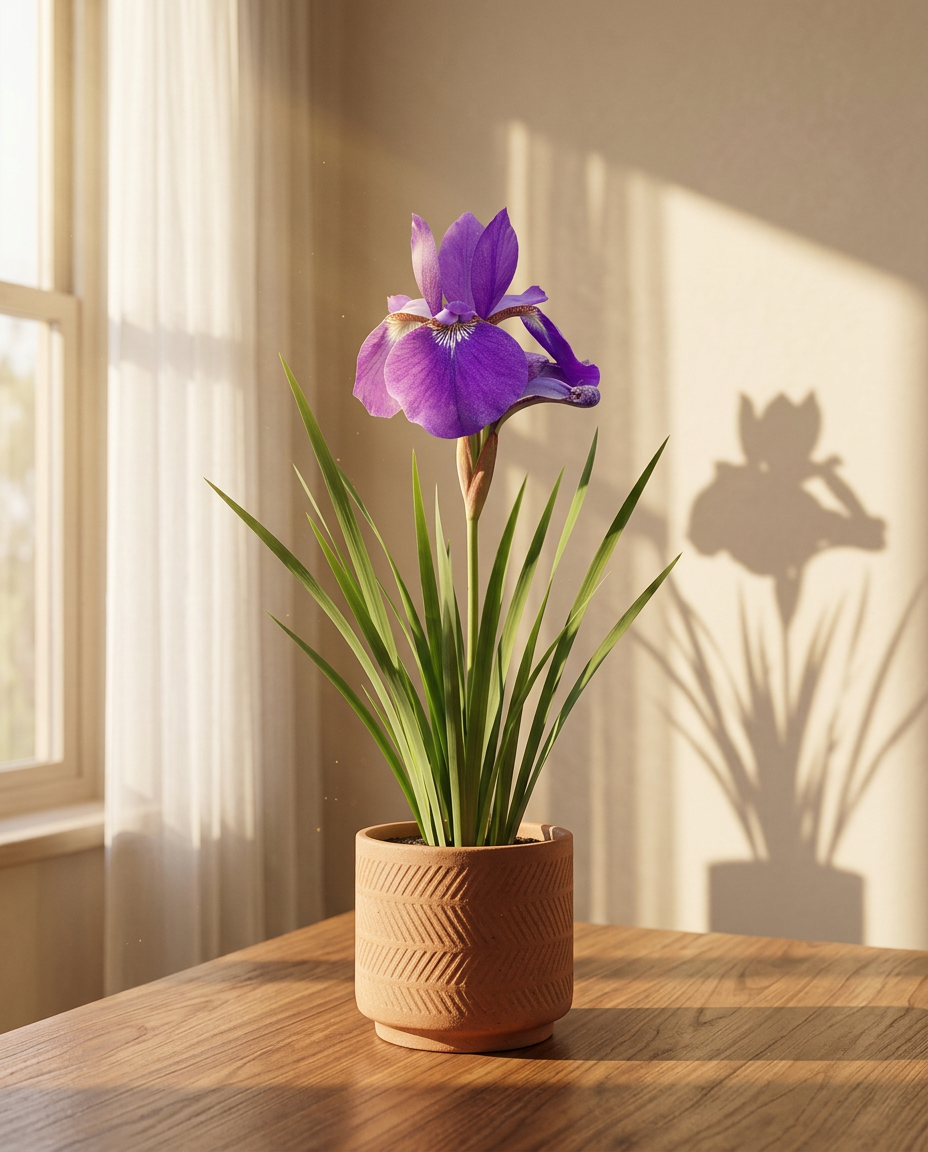
Plate IIris species — the spring-border perennial. Three upright standards and three falling falls above a sword-leaf fan; horizontal rhizome at the soil surface. ASPCA toxic — terpenoids in rhizome.
Three plants that look the part, without the risk.
Same upright-standards/falling-falls spring bloom without the rhizome terpenoid — these substitutes give the iris silhouette with ASPCA non-toxic verdicts.
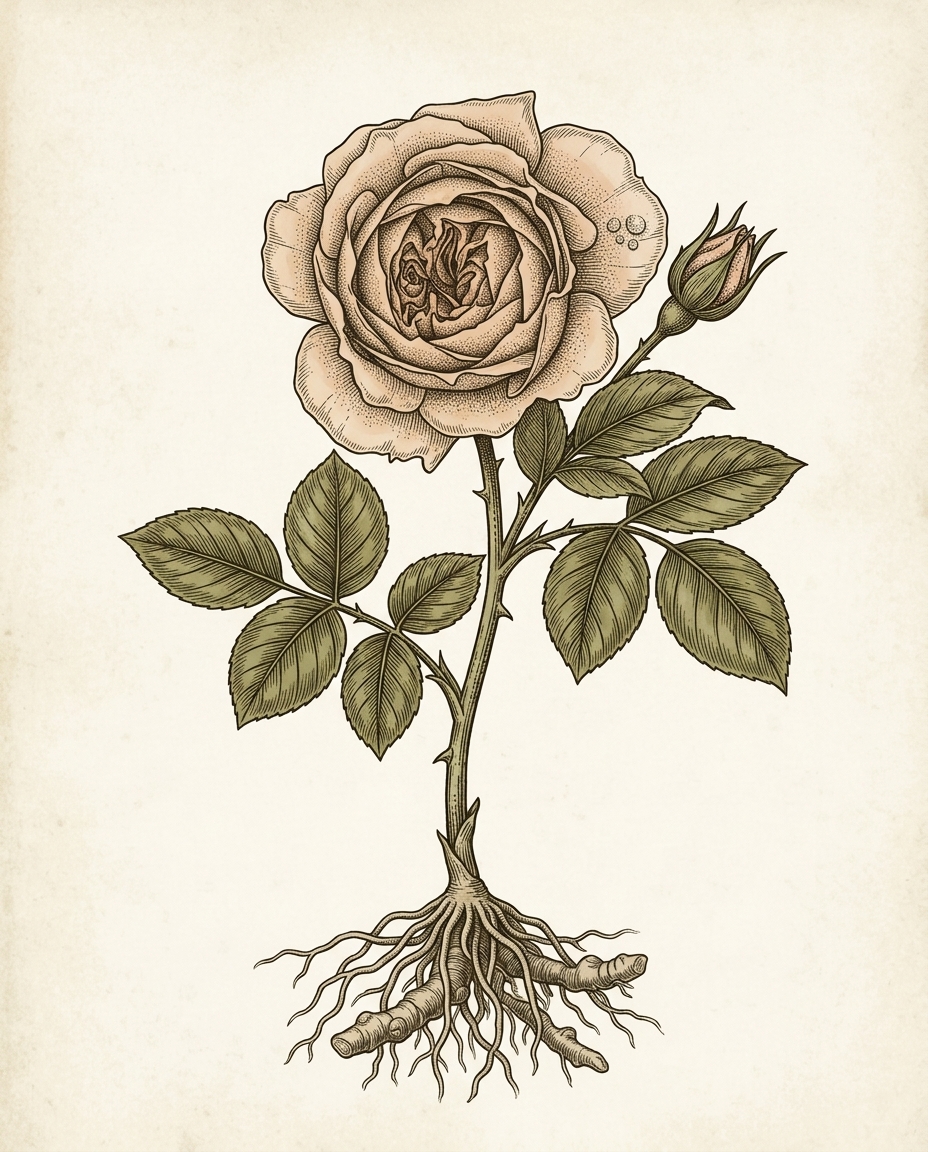
Rose (single-flower)
Roses don't read iris-like visually, but for spring cut-flower replacement they are the cleanest ASPCA-safe swap with the broadest colour range.
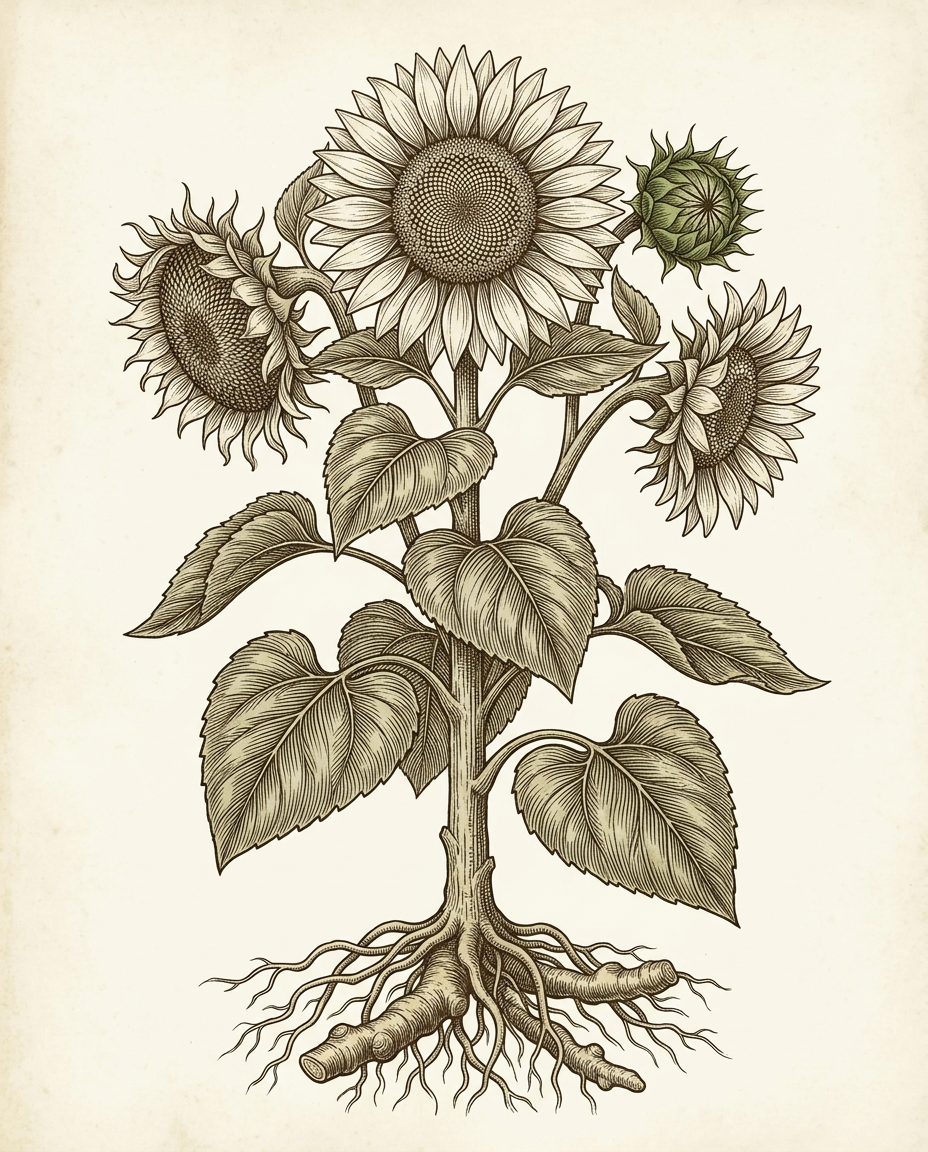
Sunflower
For tall summer garden colour that takes over after iris season ends, sunflowers are the seasonal companion. ASPCA non-toxic.
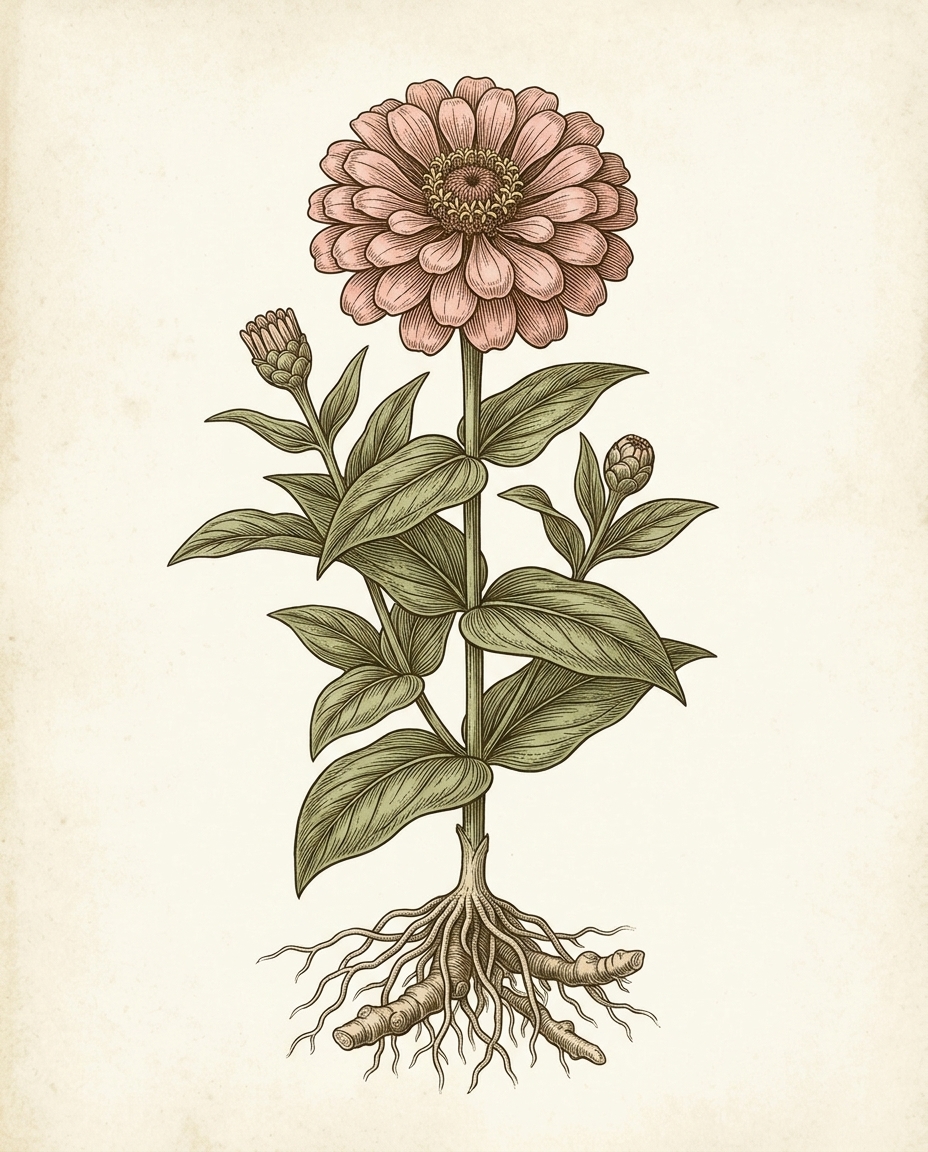
Zinnia
For continuous summer border colour to follow spring iris, zinnias are ASPCA-safe and bloom till frost.
What it does to a cat.
Iris is toxic to cats. The ASPCA lists Iris species as toxic to cats, dogs, and horses. The toxic principle is pentacyclic terpenoids — zeorin, missourin, and missouriensin — concentrated in the rhizome (the horizontal thickened root).
The ASPCA's verdict, verbatim: Additional Common Names: Flag, Snake Lily, Water Flag · Scientific Name: Iris species · Family: Iridaceae · Toxicity: Toxic to Dogs, Toxic to Cats, Toxic to Horses · Toxic Principles: Pentacylic terpenoids (zeorin, missourin and missouriensin) · Clinical Signs: Salivation, vomiting, drooling, lethargy, diarrhea.
Iris is not a true lily
The ASPCA listing notes "Snake Lily" and "Water Flag" as common names — and this matters. Iris is in family Iridaceae, not Liliaceae. It is not a true lily. The deadly true-lily renal-failure mechanism (which makes Lilium and Hemerocallis exposures a euthanasia-risk emergency) does not apply to iris.
This is important because Google directs lily-poisoning searches to the emergency cat ate a lily page — which is the right destination for true lilies. For an iris exposure, the clinical picture is different: salivation, vomiting, GI signs, lethargy. It's a vet call, especially for rhizome ingestion, but it is not the renal-failure euthanasia emergency that defines true-lily exposure.
Rhizome is the worst case
Iris stores its energy in a horizontal thickened root called a rhizome, sitting at or just below the soil surface. This is unusual among spring bulbs — most are buried deeper (tulip, daffodil, hyacinth) where digging is less common. Iris rhizomes are partially exposed by design (best flowering requires the top of the rhizome to see sun), which puts them at cat-exploration height.
The pentacyclic terpenoid concentration is highest in the rhizome. A digger cat that unearths and chews a rhizome gets the maximum realistic dose. Leaves (sword-shaped fans) and flowers contain lower concentrations and produce milder signs from grazing.
What it does to a cat
- Salivation (often first): drooling and frothing within an hour. A distinguishing sign that separates iris from purely-GI toxins.
- Vomiting: onset 1 to 4 hours after ingestion. Common across the dose range.
- Diarrhea: follows vomiting in moderate-to-severe exposures.
- Lethargy: withdrawal and reduced responsiveness for 24–48 hours.
For rhizome ingestion, go to the vet. For leaf or flower grazing, monitor and offer supportive care (water access, soft bedding); most cases resolve in 24–48 hours. Call the ASPCA Animal Poison Control Center at 888-426-4435 for dose-based guidance.
Managing iris with an outdoor cat
If you're keeping iris in a garden with a curious cat:
- Cover the rhizomes with a thin layer of mulch. Iris still flowers if the rhizome top is just below mulch — and it's less visually inviting to a digging cat.
- Plant in raised beds or behind low fencing. Reduces casual contact.
- Watch for chewed flower stalks or dug rhizomes. Direct evidence of cat interaction is the cue to act.
- Lift rhizomes in autumn for division — don't leave divided rhizomes drying at the surface in an accessible bed. That's the high-dose exposure window.
Cat-safe spring-garden alternatives
The spring-bulb category is genuinely difficult for cat-safe gardens: tulip, daffodil (daffodil), hyacinth, and crocus are all toxic. There isn't a clean spring-bloom non-toxic substitute on the ASPCA list. For overall garden colour that brackets the iris bloom window, plant ASPCA-safe alternatives:
- Rose — for cut-flower colour through spring and summer.
- Sunflower — for summer-into-fall vertical height.
- Zinnia and dahlia — for continuous border colour from summer through frost.
For the full toxic-plants reference, browse the toxic plants list.
What we have actually seen.
Salivation
Often the first sign — drooling and frothing within 1 hour of ingestion. Distinguishes iris from purely-GI toxic plants.
Vomiting
Onset 1–4 hours after ingestion. Common across the dose range.
Diarrhea
Often follows vomiting in moderate-to-severe exposures.
Lethargy
Withdrawal and reduced responsiveness for 24–48 hours.
- ASPCA Animal Poison Control Center. Toxic and Non-Toxic Plants: Iris.Accessed June 2026 · aspca.org · Iris species · Toxic Principles: Pentacyclic terpenoids (zeorin, missourin, missouriensin) · Clinical Signs: Salivation, vomiting, drooling, lethargy, diarrhea
- Pet Poison Helpline. Iris ingestion in companion animals.Clinical reference · 2024
- Merck Veterinary Manual. Iridaceae rhizome toxicosis.Standard veterinary toxicology reference