Hosta
Hosta plataginea
Hostas are toxic to cats per the ASPCA. The most-planted shade perennial in the US — saponins cause vomiting, diarrhea, depression. NOT a true lily despite the "Plantain Lily" common name.
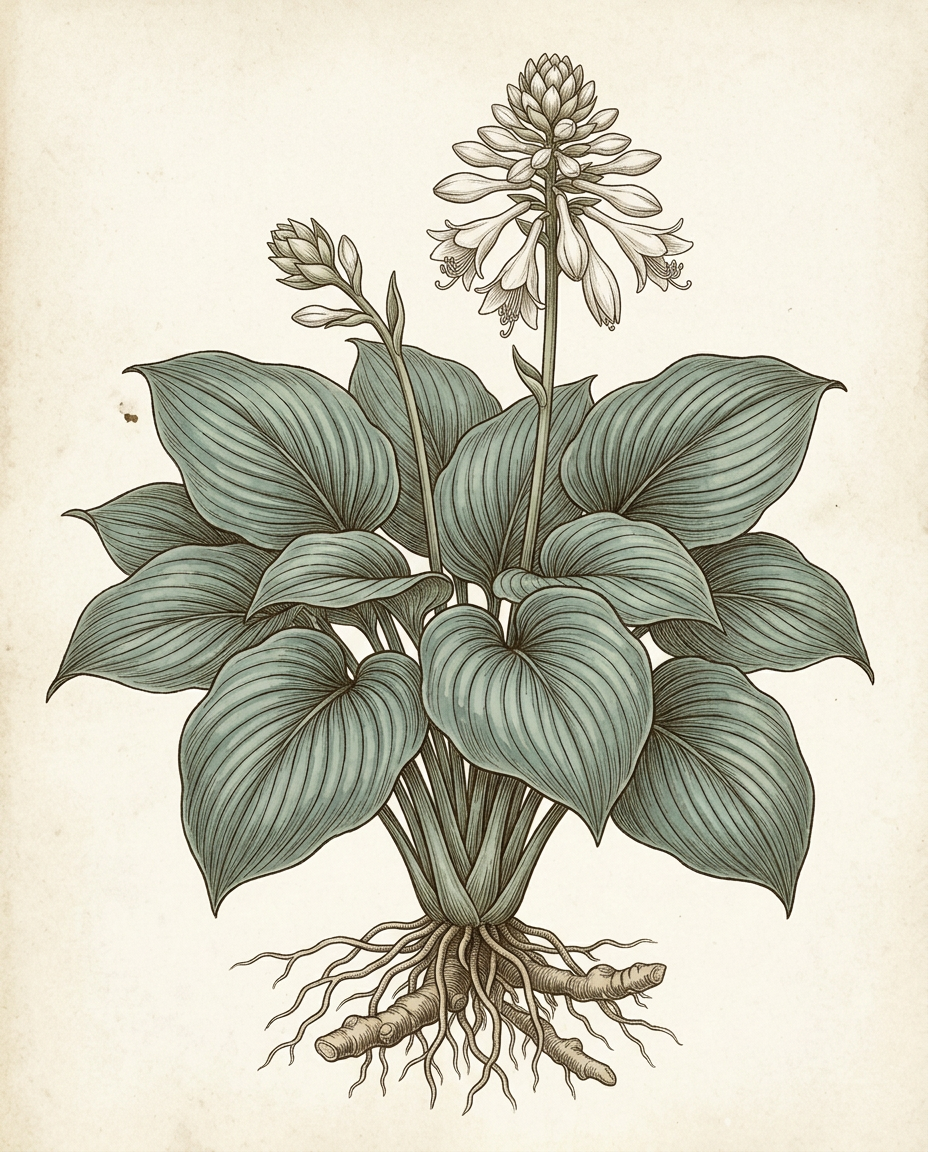
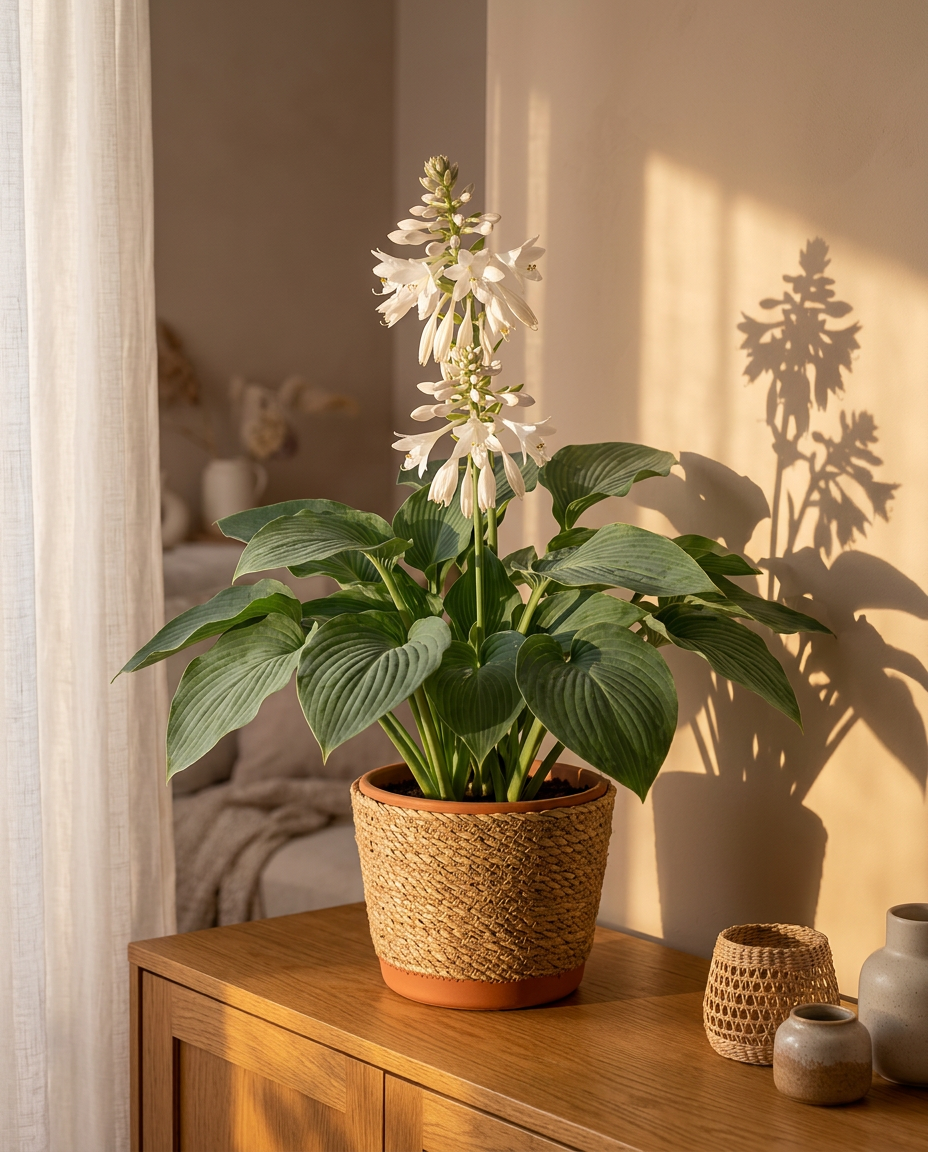
Plate IHosta plataginea — the shade-garden perennial. Broad heart-shaped leaves in a basal rosette; tall flower spike with white or lavender trumpet blooms in summer. ASPCA toxic — saponins throughout.
Three plants that look the part, without the risk.
Same broad-leaf shade-garden statement without the saponin irritation — these substitutes give the hosta silhouette with ASPCA non-toxic verdicts.
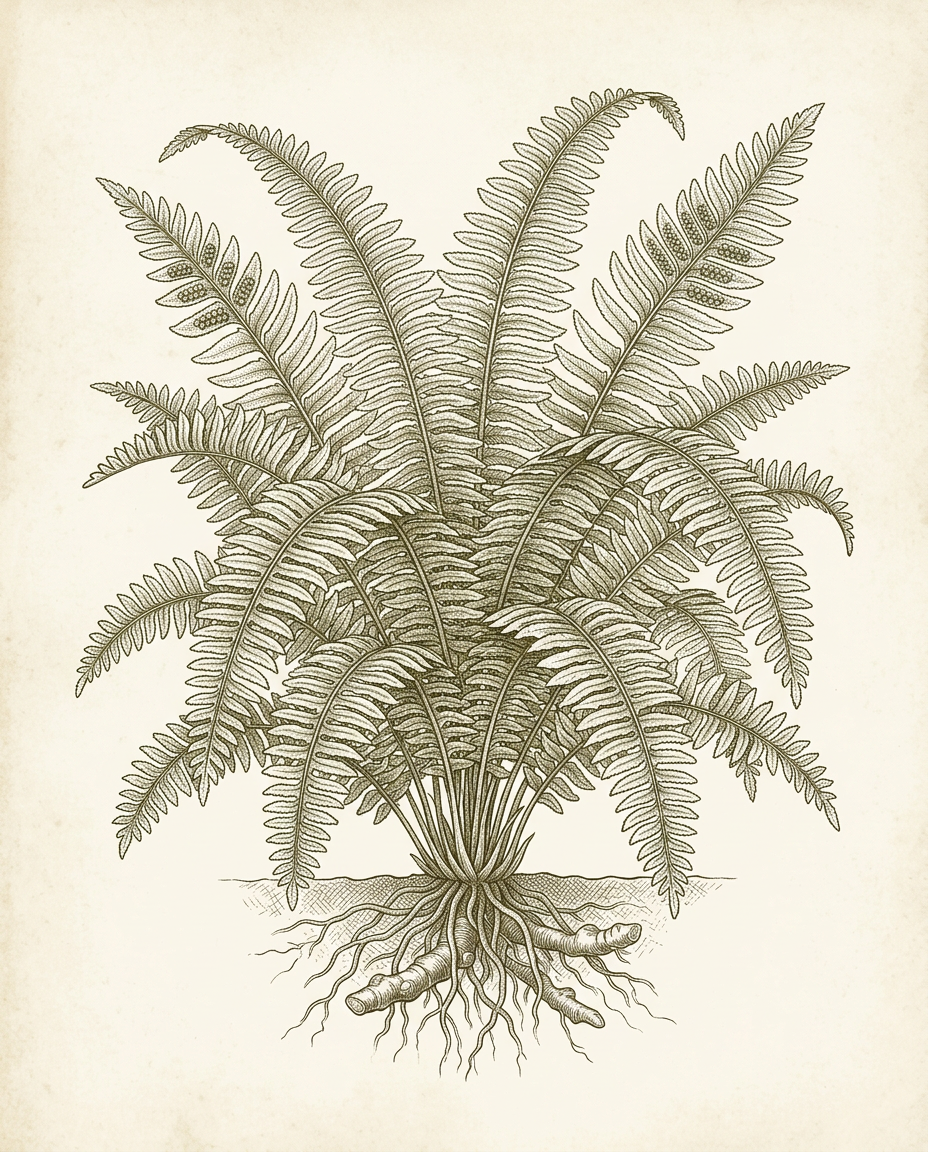
Boston Fern
For lush green foliage in the same shade-loving role, Boston fern is ASPCA non-toxic and reads similar at scale.
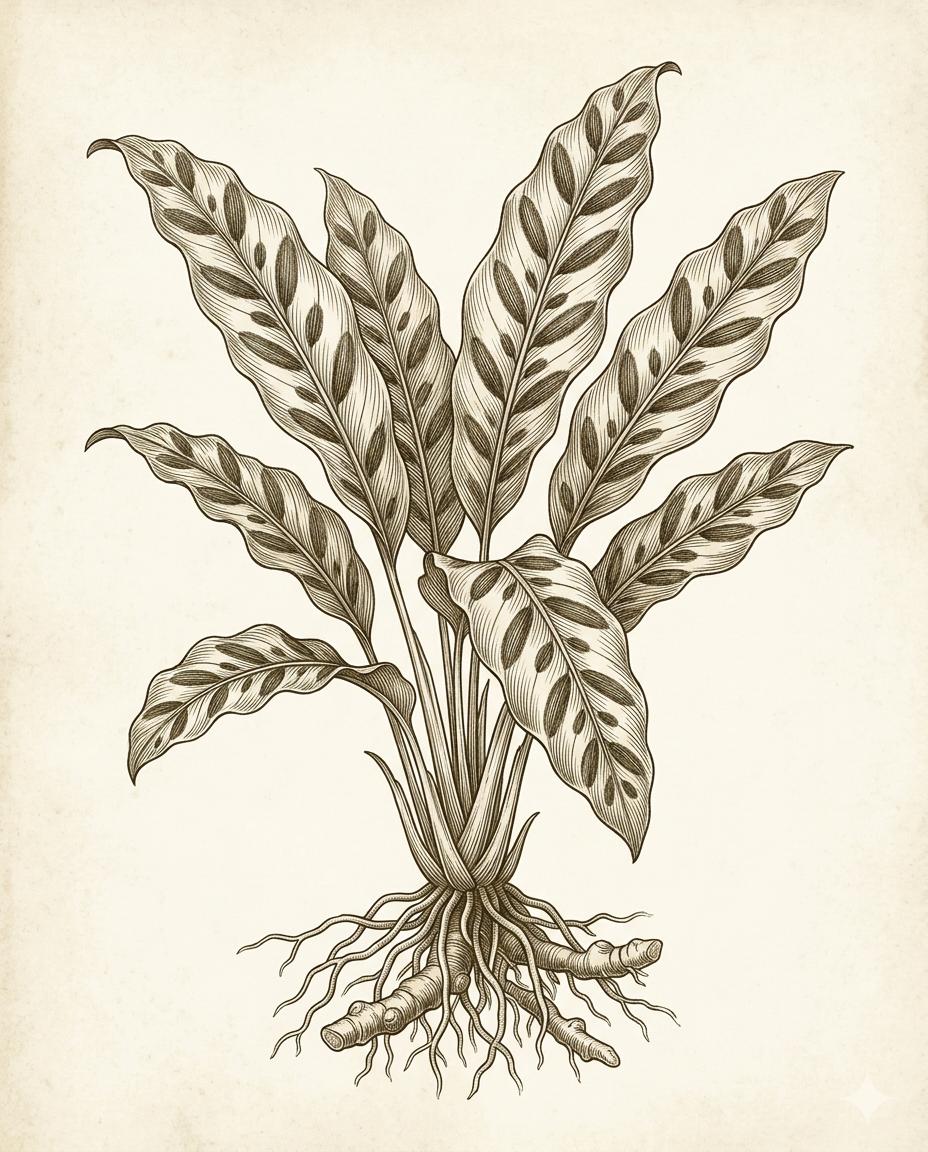
Calathea
For patterned broad leaves in shade, calathea (the prayer plant cousin) replaces variegated hosta at houseplant scale. ASPCA non-toxic.
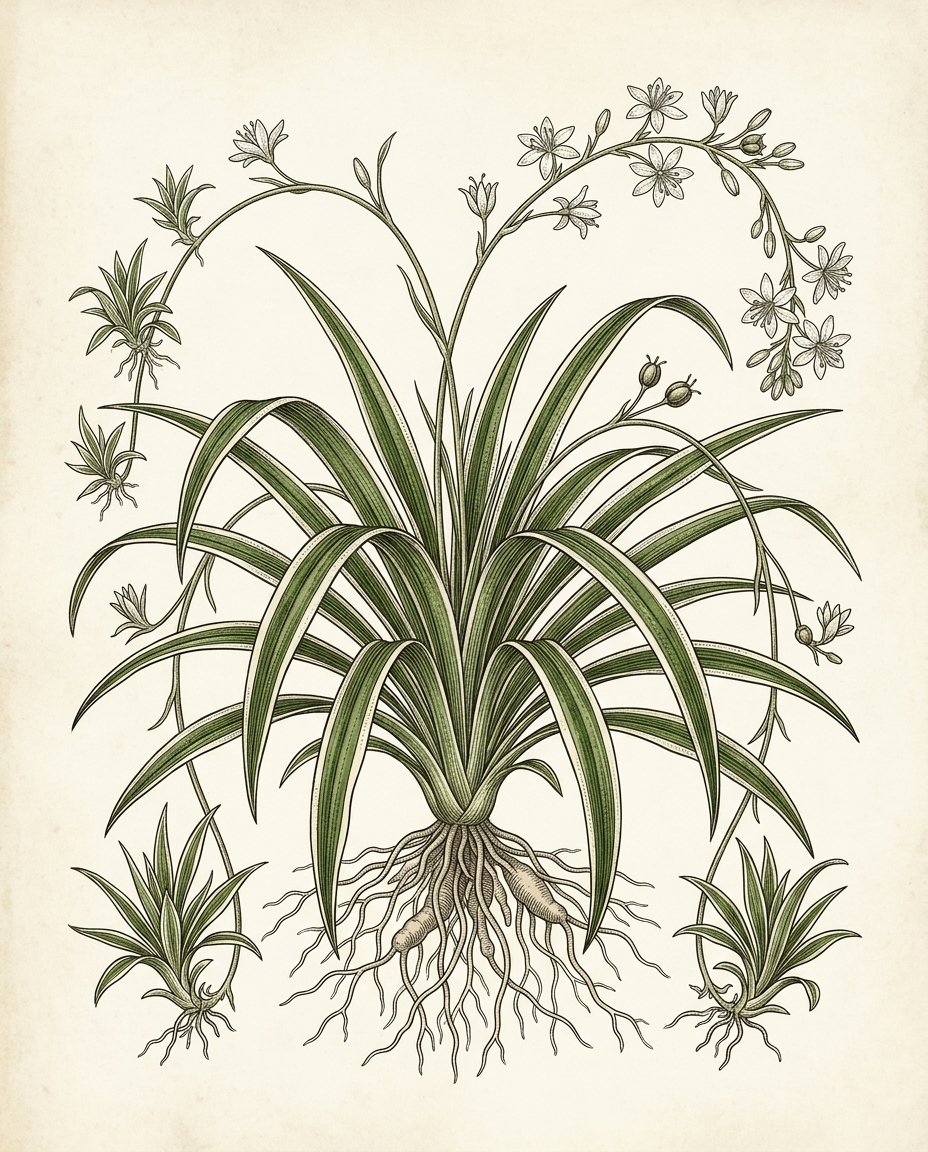
Spider Plant
For a tolerant filler in cat-accessible beds, spider plant is the safe go-to. ASPCA non-toxic.
What it does to a cat.
Hostas are toxic to cats. The ASPCA lists Hosta plataginea (and the genus broadly) as toxic to cats, dogs, and horses. The toxic principle is saponins — a class of glycosides that disrupt cell membranes in the GI tract, causing vomiting, diarrhea, and depression.
The ASPCA's verdict, verbatim: Additional Common Names: Plantain Lily, Funkia · Scientific Name: Hosta plataginea · Family: Liliaceae · Toxicity: Toxic to Dogs, Toxic to Cats, Toxic to Horses · Toxic Principles: Saponins · Clinical Signs: Vomiting, diarrhea, depression. (The ASPCA listing still uses the older "Liliaceae" classification; modern taxonomy places Hosta in Asparagaceae.)
Hosta is not a true lily
The "Plantain Lily" common name is misleading and the ASPCA's older "Liliaceae" family attribution doesn't help. Hosta is not a true lily. The deadly renal-failure mechanism that defines true-lily toxicity (Lilium, Hemerocallis) does not apply here.
If your cat has eaten something labelled "lily" in a nursery and you're trying to triage urgency:
- True lily (Lilium, daylily/Hemerocallis): renal-failure emergency. See cat ate a lily.
- Lily of the Valley: cardiac glycoside emergency — different mechanism, same urgency. See lily-of-the-valley.
- Hosta / Plantain Lily: saponin GI. Mild-to-moderate. Vet call if more than a nibble, not a renal-failure emergency.
- Iris / Snake Lily: terpenoid GI. See iris.
Hosta is in the GI-irritant tier — closer to yucca or agave than to lily.
What it does to a cat
- Vomiting (most common): saponin GI irritation. Onset 1 to 4 hours after ingestion.
- Diarrhea: follows vomiting in moderate-to-severe exposures.
- Depression: lethargy and reduced responsiveness for 24–48 hours.
- Anorexia: cats may refuse food for a day.
Most cases resolve in 24 to 48 hours with no treatment beyond water access and rest. If vomiting persists past 48 hours, your cat is lethargic and dehydrated, or any other concerning sign appears, go to the vet. Call the ASPCA Animal Poison Control Center at 888-426-4435 for dose-based guidance.
Why hosta exposure is so common
Hosta is the most-planted shade perennial in the United States. Every shaded suburban backyard has them. They are tough, tolerant of neglect, easy to divide, and they read as garden architecture rather than fragile flowers. They form clumps that a cat can hide behind, brush past, and graze on — and the saponins in the broad leaves give a faint but real bitter taste that doesn't always deter chewing.
The realistic harm pattern is repeat low-grade exposure: a patrolling cat, a chewy summer evening, mild GI the next morning, the same plant next week. Owners rarely connect the dots.
Managing hosta with an outdoor cat
- Plant in fenced or raised beds. Reduces casual access.
- Place hostas behind less-toxic foreground planting. A spider plant or Boston fern border can give the cat a safer target.
- Watch for chew marks on broad leaves. Direct evidence of cat interaction is the cue to act.
- Don't compost hosta clippings in an accessible heap. Cut foliage carries the same saponin load.
Cat-safe alternatives
For the shade-garden role specifically:
- Boston fern — non-toxic, lush green, similar shade tolerance at smaller scale.
- Calathea — patterned broad leaves, ASPCA non-toxic, indoor-scale shade.
- Spider plant — for cat-accessible safe ground cover.
For the full toxic-plants reference, browse the toxic plants list.
What we have actually seen.
Vomiting
Most common sign — saponin GI irritation. Onset 1–4 hours after ingestion.
Diarrhea
Often follows vomiting in moderate-to-severe exposures.
Depression
Lethargy and reduced responsiveness for 24–48 hours after a moderate ingestion.
Anorexia
Cats may refuse food for a day after a moderate dose.
- ASPCA Animal Poison Control Center. Toxic and Non-Toxic Plants: Hosta.Accessed June 2026 · aspca.org · Hosta plataginea · Toxic Principles: Saponins · Clinical Signs: Vomiting, diarrhea, depression
- Pet Poison Helpline. Hosta ingestion in companion animals.Clinical reference · 2024
- Merck Veterinary Manual. Saponin toxicosis in cats.Standard veterinary toxicology reference