Garlic
Allium sativum
No — garlic is not safe for cats. The ASPCA lists Allium sativum as toxic to cats, dogs, and horses. Garlic is roughly five times more potent than onion per gram of body weight — even a single clove can cause clinical signs in a small cat. The toxic principle is N-propyl disulfide, which destroys red blood cells.
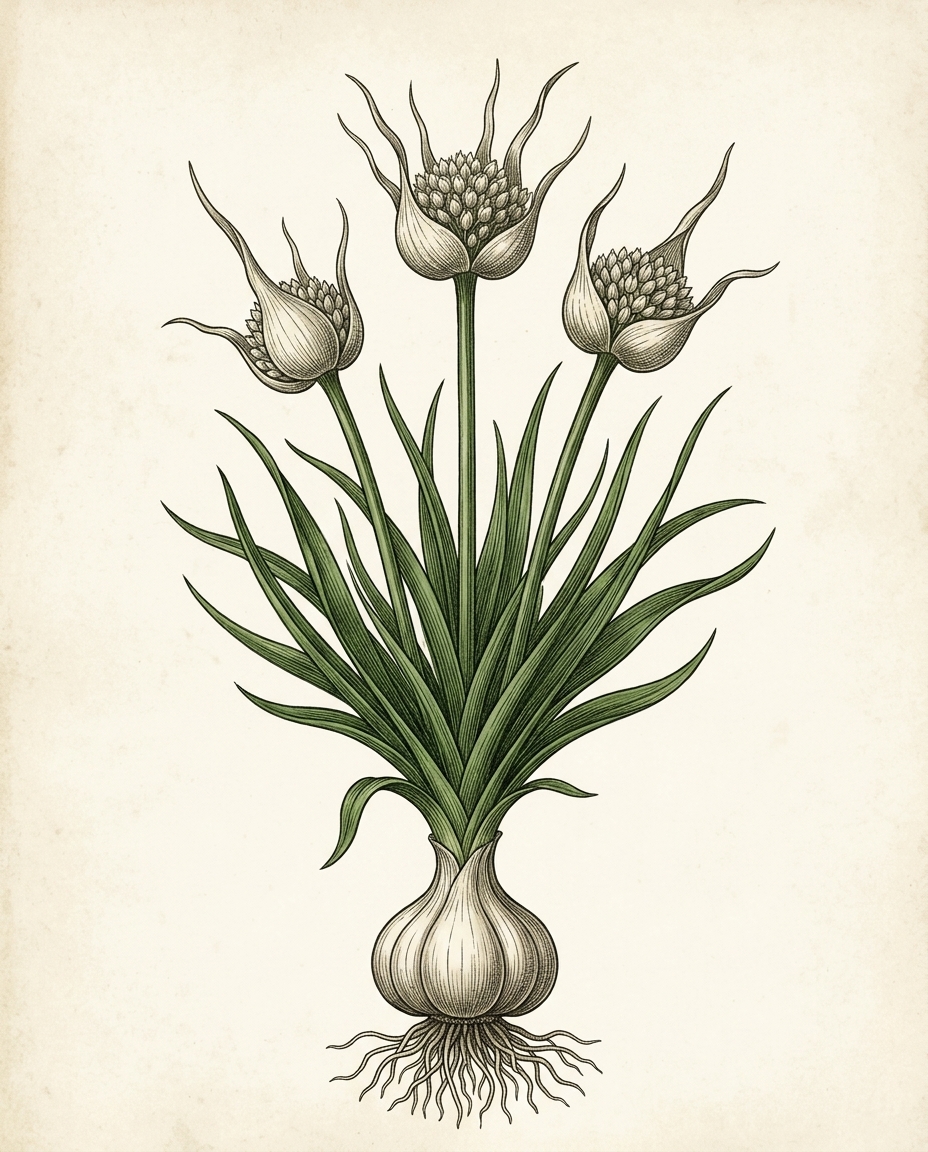
Plate IAllium sativum — garlic. The ASPCA lists it as toxic to cats: N-propyl disulfide destroys red blood cells. Garlic is roughly 5× more potent than onion per gram of body weight.
Three plants that look the part, without the risk.
If you want kitchen herbs that are safe around a cat, these ASPCA non-toxic plants are good alternatives to garlic and the entire Allium family.
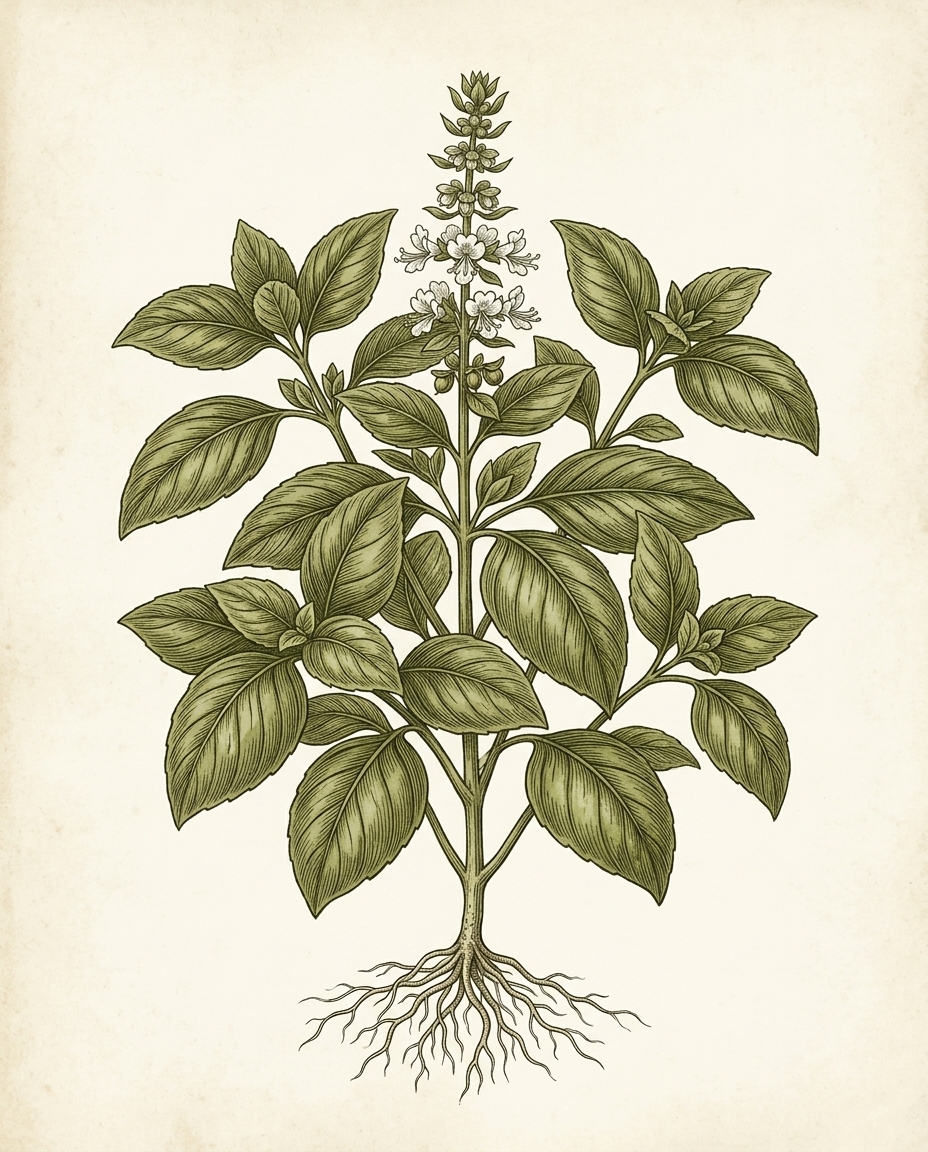
Basil
A non-toxic culinary herb that is safe for cats. The most popular kitchen herb — the Allium-free substitute for flavouring without the hemolytic anemia risk.
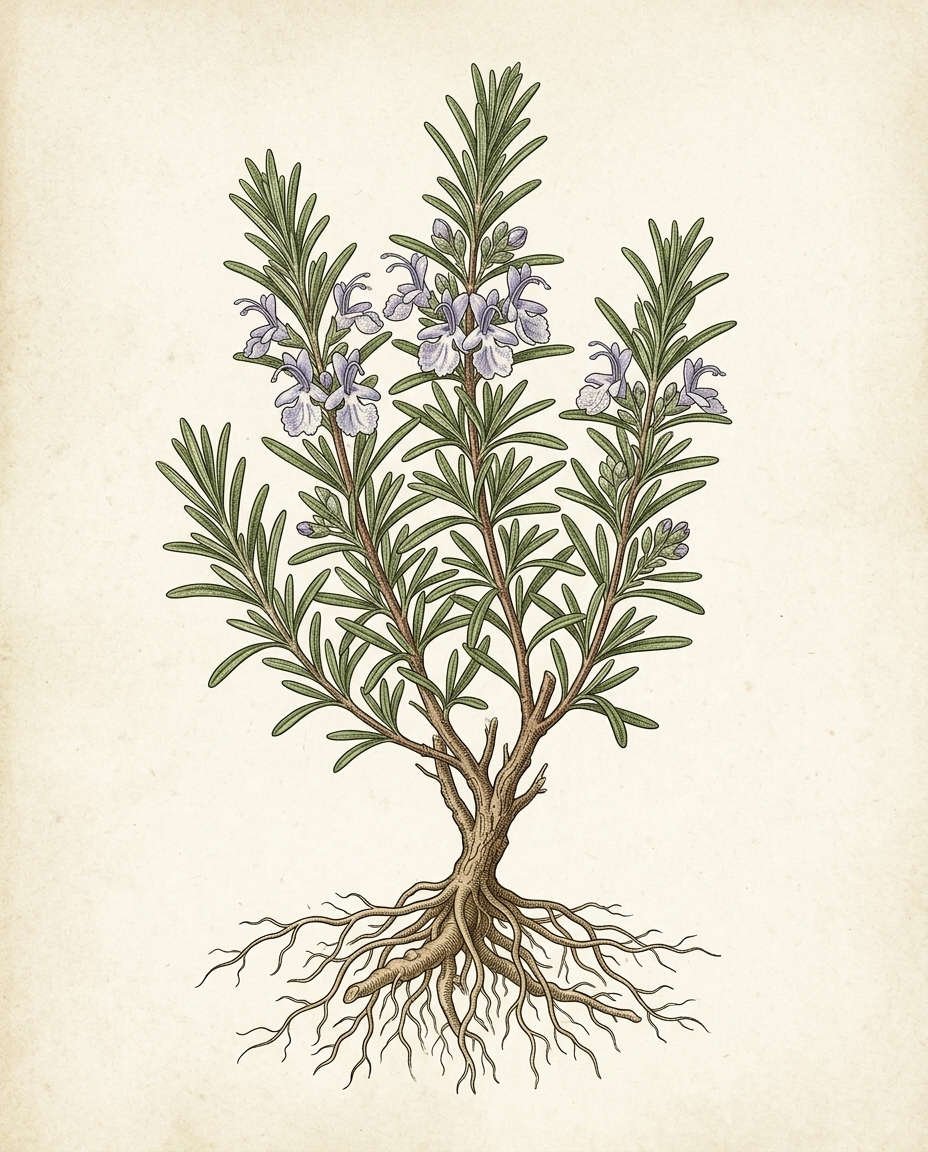
Rosemary
A woody, aromatic herb that is non-toxic to cats. The strong scent deters most cats, and it grows into a sturdy kitchen shrub that replaces garlic in many savoury dishes.
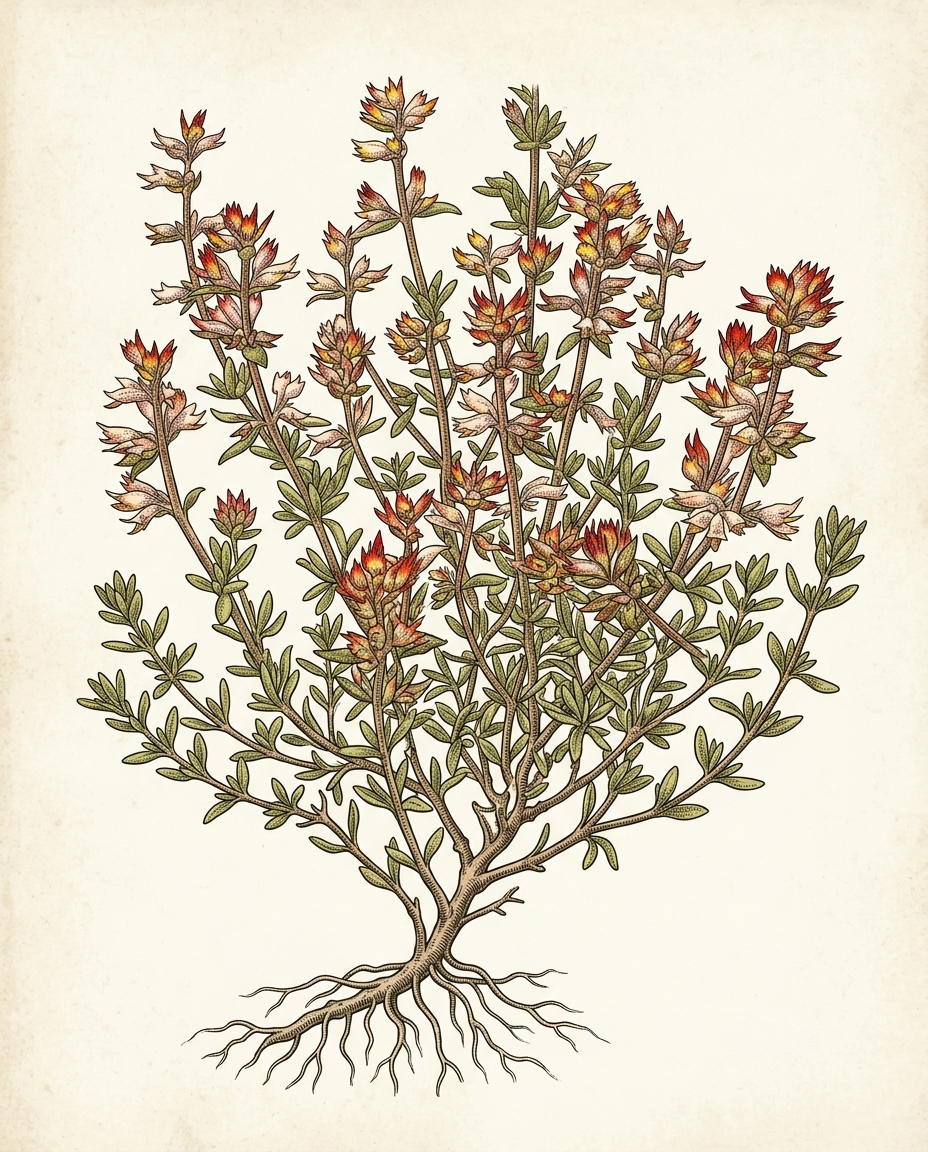
Thyme
A non-toxic culinary herb with a savoury flavour that can stand in for garlic in many recipes. Safe for cats and easy to grow on a sunny windowsill.
What garlic does to a cat's blood.
No — garlic is not safe for cats. The ASPCA lists Allium sativum as Toxic to Dogs, Toxic to Cats, Toxic to Horses. The toxic principle is N-propyl disulfide, which destroys red blood cells and causes hemolytic (Heinz body) anemia. Garlic is roughly five times more potent than onion per gram of body weight — even a single clove can cause clinical signs in a 4 kg cat.
Garlic (Allium sativum, family Liliaceae) is the most potent member of the Allium family. The ASPCA lists the following clinical signs: vomiting, breakdown of red blood cells (hemolytic anemia, Heinz body anemia), blood in urine, weakness, high heart rate, and panting. The ASPCA also records a rich set of common names — Stinking Rose, Rustic Treacle, Camphor of the Poor, Nectar of the Gods, Serpent Garlic, and Rocambole — all referring to the same toxic plant.
ASPCA Data
According to the ASPCA, garlic is listed under plants toxic to cats:
Toxic to Dogs, Toxic to Cats, Toxic to Horses.
Clinical signs: Vomiting, breakdown of red blood cells (hemolytic anemia, Heinz body anemia), blood in urine, weakness, high heart rate, panting.
The toxic principle is N-propyl disulfide — the same compound as in onion, but roughly five times more concentrated per gram.
Why garlic is five times more dangerous than onion
The N-propyl disulfide in garlic oxidises haemoglobin inside red blood cells, forming Heinz bodies — clumps of damaged haemoglobin. The damaged cells lose flexibility and rupture in the spleen, producing hemolytic anemia.
Garlic is approximately five times more potent than onion per gram of body weight. To put this in perspective: a single garlic clove (roughly 3–7 grams) can cause clinical signs in a 4 kg cat, whereas the same cat would need to eat several times that amount of onion to reach the same level of toxicity. Cats are the most sensitive species because of their small body size and the structure of their haemoglobin.
The garlic flea-remedy myth
Garlic is sometimes marketed as a natural flea and tick preventative for cats. This is a dangerous folk remedy. Garlic supplements — whether in pill, powder, or tincture form — have been associated with hemolytic anemia in documented cases. The N-propyl disulfide is present in all forms of garlic, and there is no dose that is safe for a cat.
If you see garlic listed as a flea remedy for cats, disregard it. Use a veterinary-approved flea treatment instead.
The Allium family
Garlic belongs to the genus Allium, which also includes onion and chives — both also toxic to cats by the same N-propyl disulfide mechanism. If you are avoiding garlic for your cat, avoid the entire Allium family. The common names can be deceptive: the ASPCA lists garlic under names including Stinking Rose, Nectar of the Gods, and Camphor of the Poor — all the same toxic plant.
What to do if your cat eats garlic
Garlic toxicity is a medical emergency. Red blood cell destruction can continue for days:
- Call your vet or ASPCA Animal Poison Control at (888) 426-4435 immediately. Do not wait for symptoms.
- Tell the vet how much garlic was eaten, in what form (raw, cooked, powdered, supplement), and when.
- Do not induce vomiting unless instructed by a veterinarian.
Safe kitchen herbs instead
If you want to grow herbs in a kitchen a cat can reach, skip the entire Allium family. Basil, rosemary, and thyme are all ASPCA-listed non-toxic to cats and can stand in for garlic's savoury flavour in many dishes.
The bottom line
Garlic is toxic to cats — five times more potent than onion, with no safe dose in any form. The N-propyl disulfide destroys red blood cells and causes hemolytic anemia. Garlic flea supplements are a dangerous folk remedy. Keep all Alliums — garlic, onion, and chives — away from cats, and call your vet immediately if ingestion occurs.
What we have actually seen.
Hemolytic (Heinz body) anemia — five times more potent than onion
The N-propyl disulfide in garlic damages red blood cells, causing them to rupture and produce hemolytic (Heinz body) anemia. Garlic is roughly five times more potent than onion per gram of body weight — even a single clove can cause clinical signs in a 4 kg cat. Cats are the most sensitive species.
Vomiting and gastrointestinal signs
The ASPCA lists vomiting as a clinical sign of garlic toxicity. Garlic irritates the gastrointestinal lining, so drooling, vomiting, and diarrhoea can appear within hours of ingestion.
Weakness, high heart rate, and panting
As red blood cells are destroyed, the blood carries less oxygen. The ASPCA lists weakness, high heart rate, and panting — the body's attempt to compensate for the anemia caused by N-propyl disulfide.
Garlic supplements for flea prevention are NOT safe
Garlic is sometimes marketed as a natural flea and tick remedy for cats. This is a dangerous folk remedy — garlic supplements have been associated with hemolytic anemia in documented cases. There is no safe dose of garlic for a cat.
- ASPCA Animal Poison Control Center. Toxic and Non-Toxic Plants: Garlic.Accessed June 2026 · aspca.org