English
Ivy.
Hedera helix
Yes — English ivy is toxic to cats. The ASPCA attributes it to triterpenoid saponins (hederagenin). The foliage is more toxic than the berries and causes drooling, vomiting, and abdominal pain.
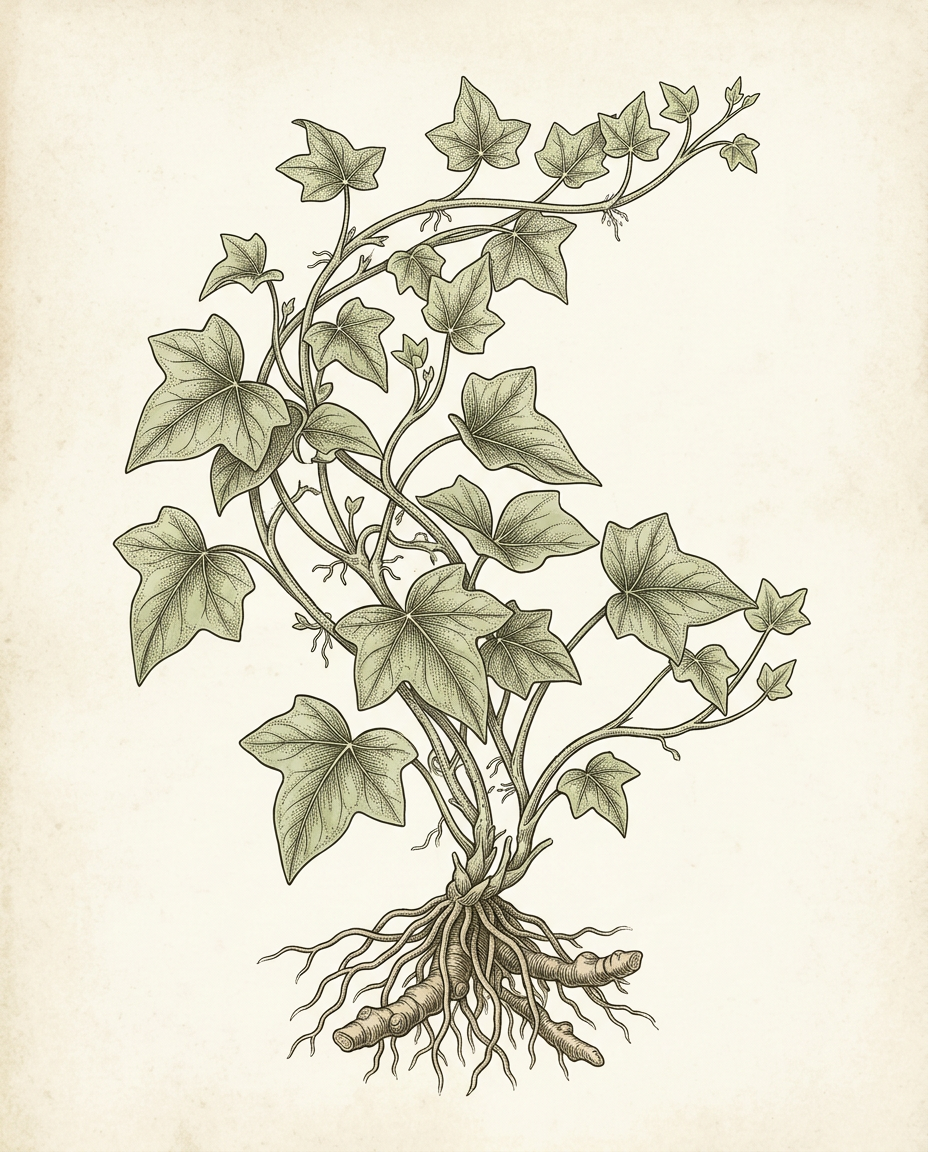
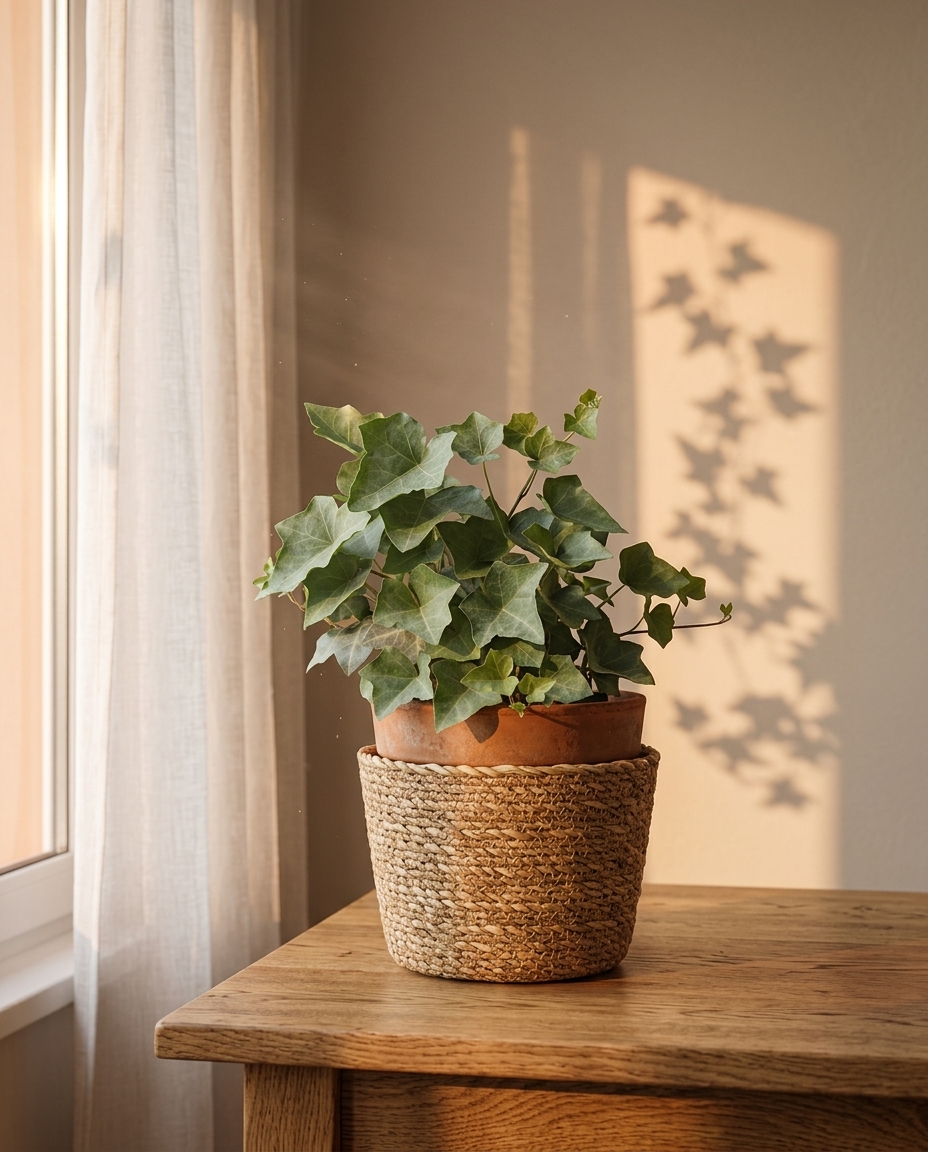
Plate IHedera helix — English ivy. A trailing evergreen whose lobed leaves carry more toxin than its berries.
Three plants that look the part, without the risk.
Cascading vines for shelves and hangers, without the saponins — all ASPCA non-toxic.
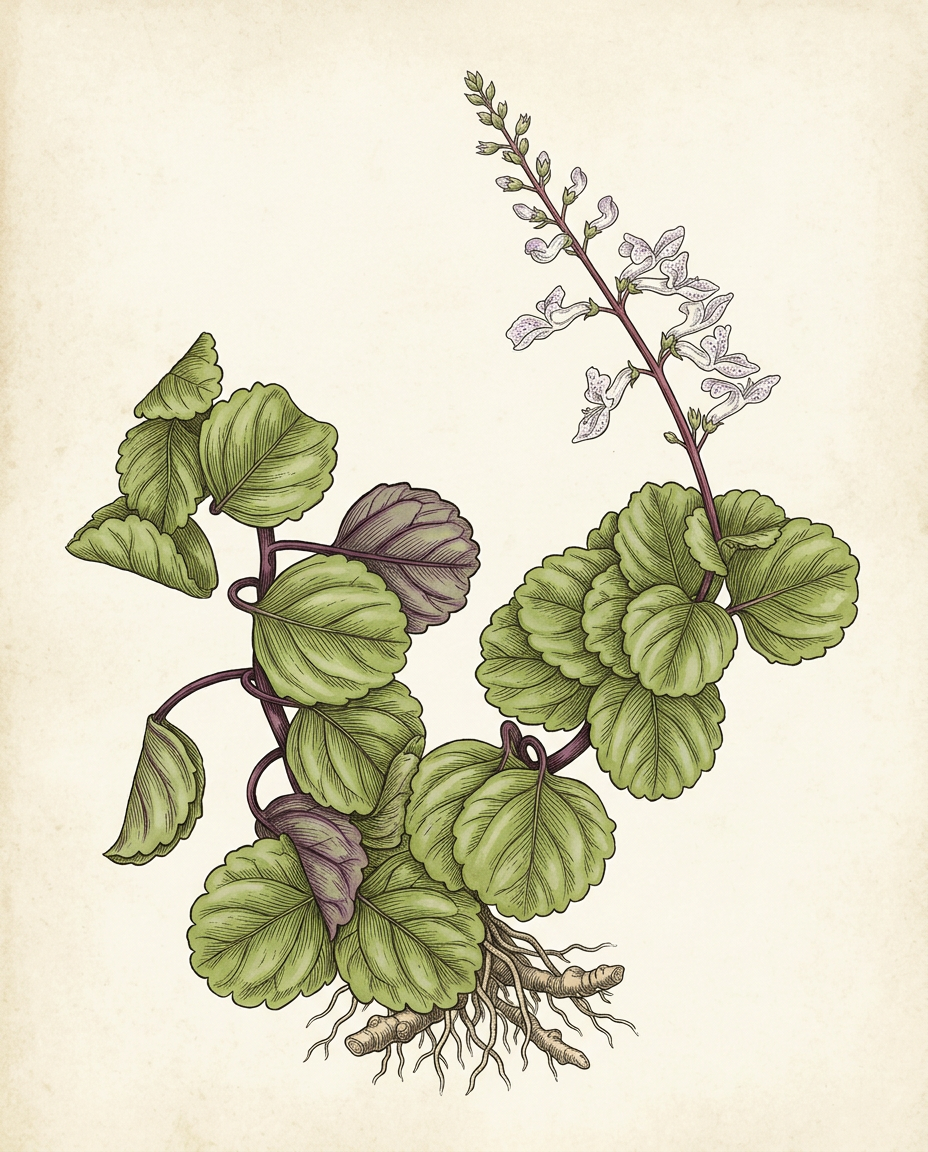
Swedish Ivy
The closest trailing match — soft cascading stems, no saponins. Safe for cats.
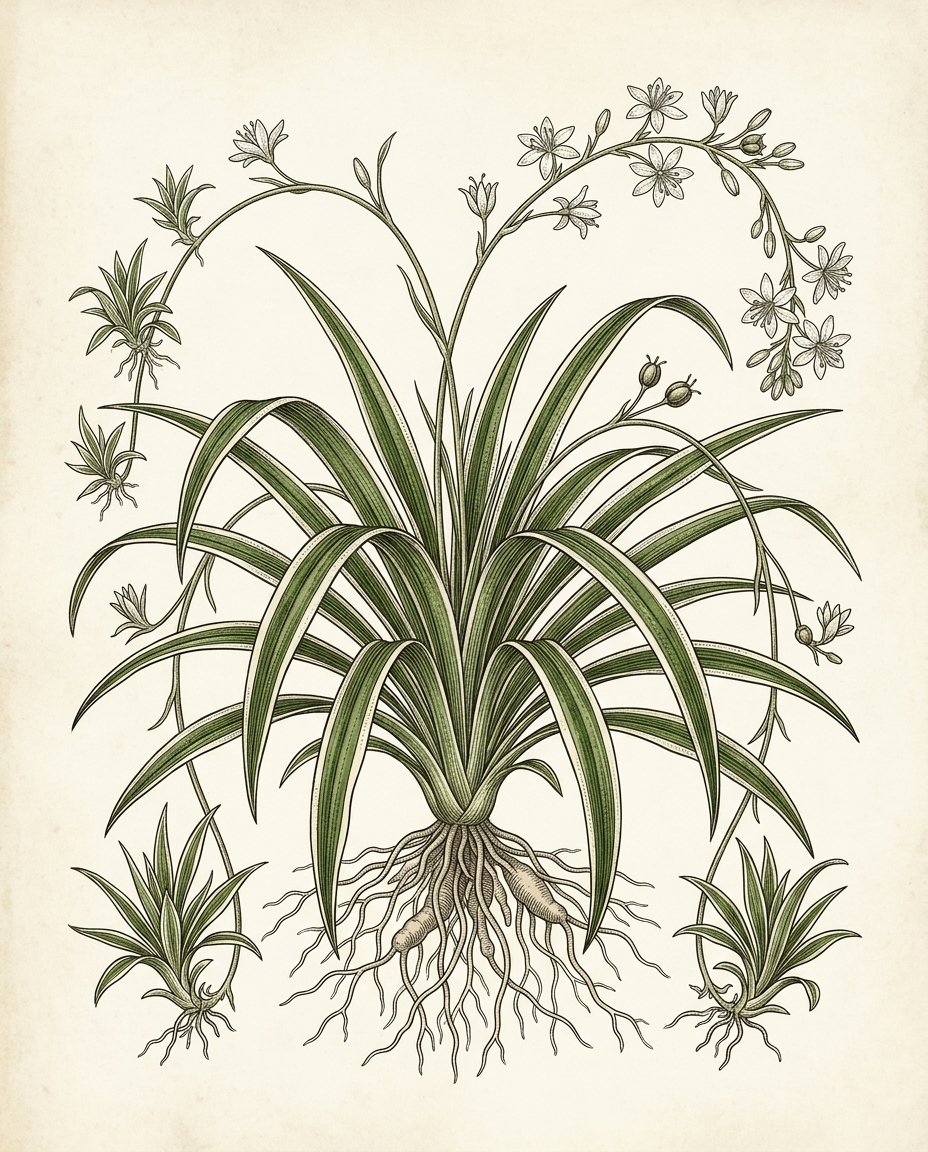
Spider Plant
Arching, pup-bearing greenery for a hanging pot. Nearly indestructible and non-toxic.
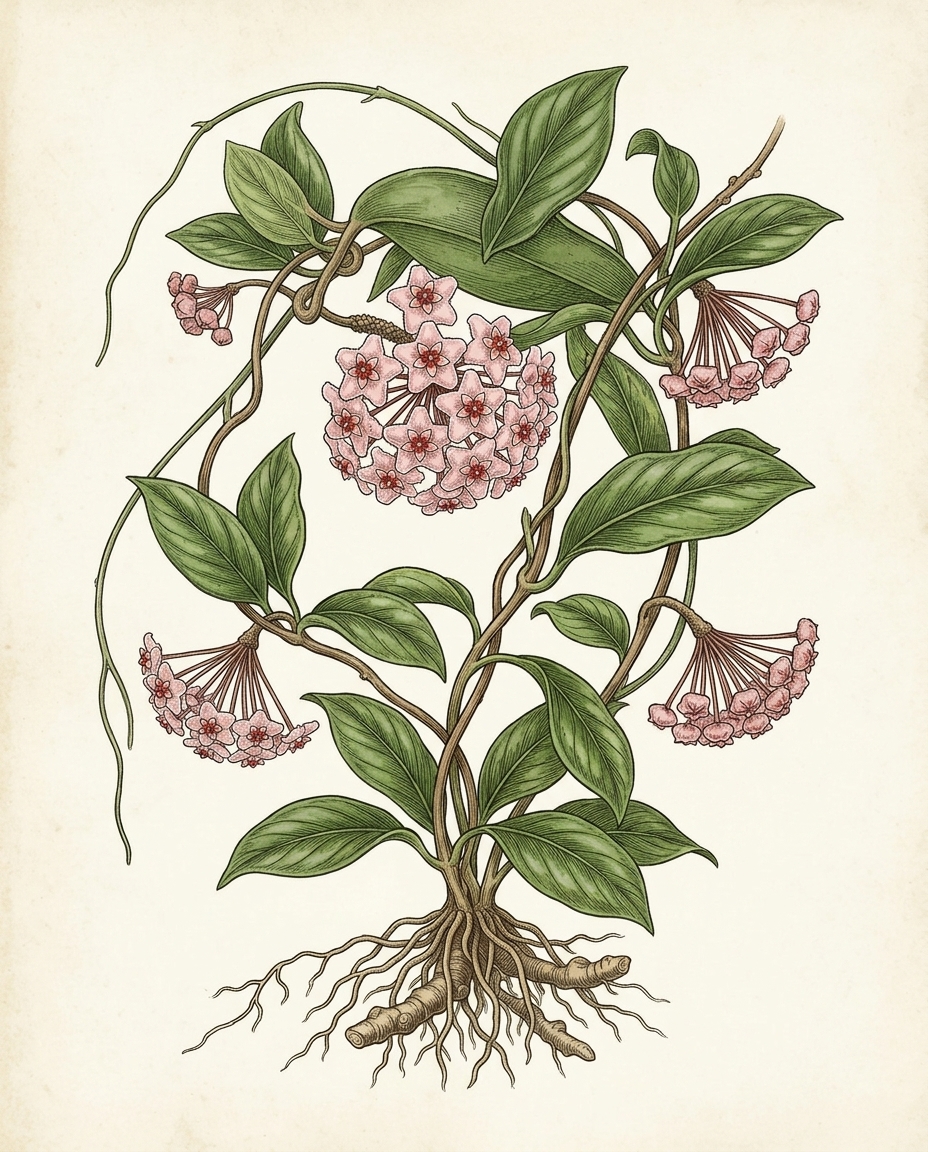
Wax Plant
Thick waxy trailing leaves for the same high shelf, with porcelain flowers. Non-toxic.
What it does to a cat.
Yes — English ivy is toxic to cats. The ASPCA lists Hedera helix as toxic, the culprit being triterpenoid saponins such as hederagenin. Counterintuitively, the leaves carry more toxin than the berries, so the everyday houseplant foliage is the real hazard. Chewing causes drooling, vomiting, diarrhoea, and sometimes abdominal pain.
Ivy's whole growth strategy works against a cat household: it trails and cascades, dangling long vines off shelves, mantels, and hangers directly into a cat's reach. Raising it rarely solves the problem — the stems simply hang down to meet the cat halfway.
A common trailing-plant trap
English ivy is one of several popular cascading plants that aren't cat-safe, alongside pothos. If you like the look of greenery spilling off a shelf, the fix is to swap the species, not just the height.
Safe swaps
Swedish ivy is the closest cat-safe trailing match, spider plant cascades from a hanging pot and is nearly impossible to kill, and wax plant offers thick waxy vines with flowers — all ASPCA non-toxic.
What we have actually seen.
Drooling & vomiting
Saponins irritate the mouth and gut on chewing. Salivation, vomiting, and diarrhoea are common.
Abdominal pain
Larger ingestions can cause a tender, uncomfortable belly. Monitor and contact your vet.
Contact dermatitis
The sap can irritate skin and paws — redness and itching after brushing against broken stems.
Trailing temptation
Long vines dangle from shelves and hangers right into batting and chewing range.
- ASPCA Animal Poison Control Center. Toxic and Non-Toxic Plants: English Ivy.Accessed May 2026 · aspca.org
- Pet Poison Helpline. English Ivy (Hedera helix).Reference list · 2024 ed.