Daffodil
Narcissus spp.
Daffodils are toxic to cats per the ASPCA. Every part contains lycorine and related alkaloids; the bulb carries the highest dose and can trigger vomiting, tremors, low blood pressure, and cardiac arrhythmia.
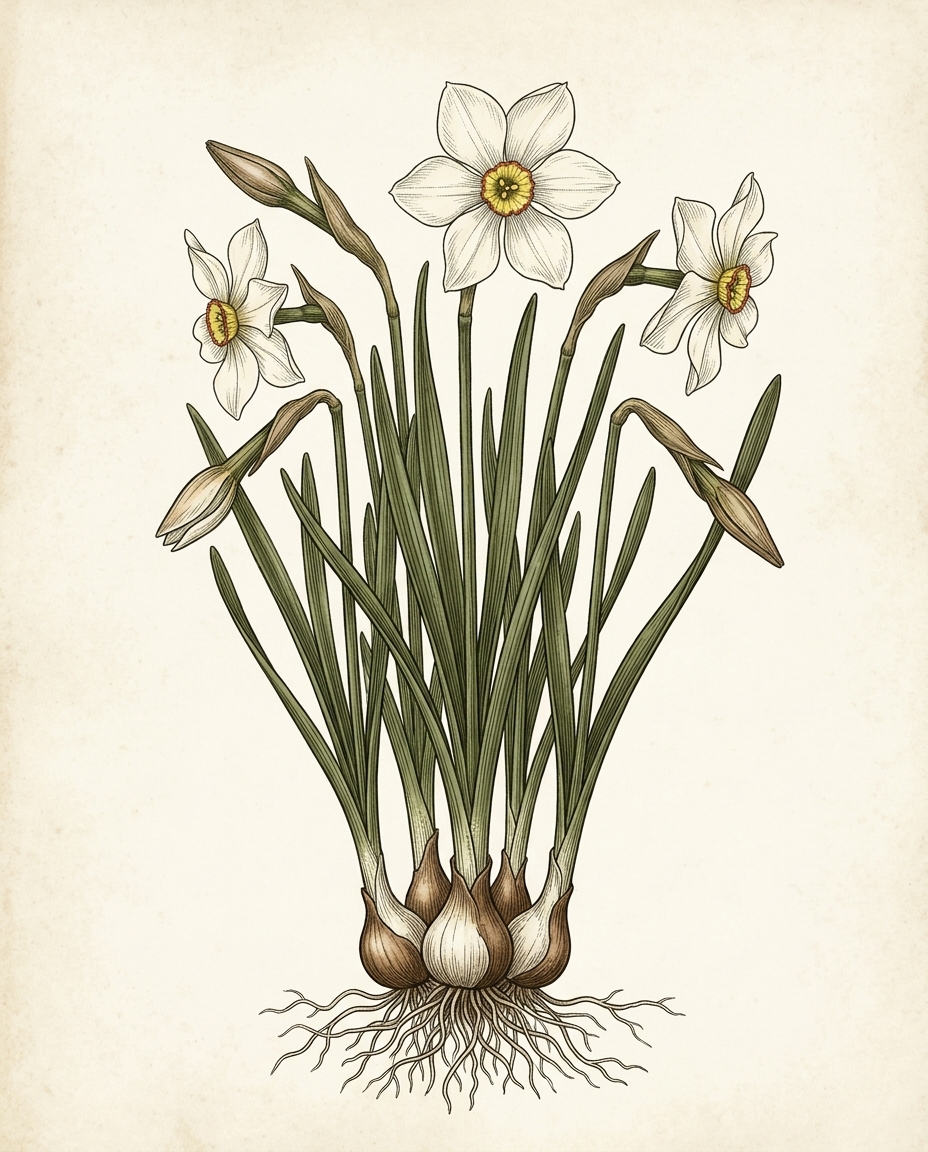
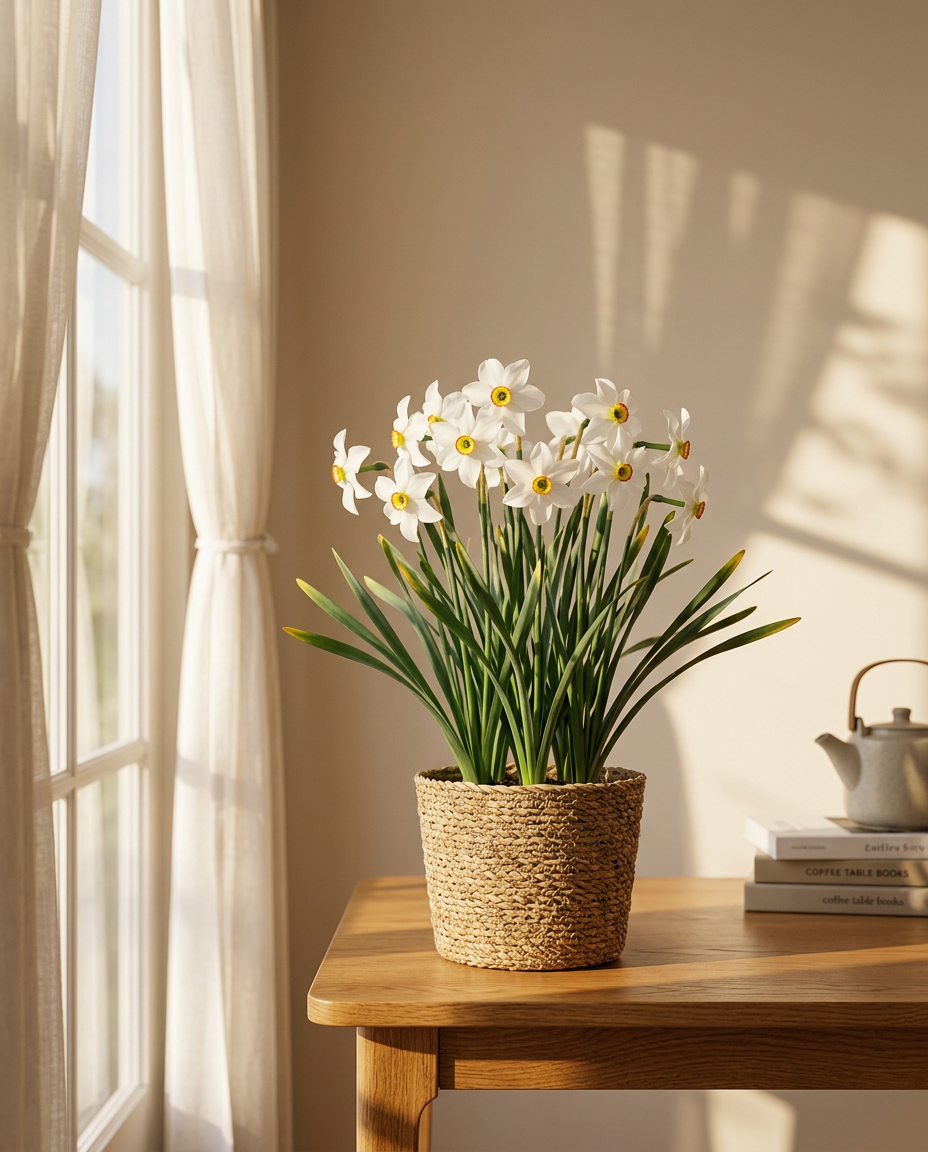
Plate INarcissus spp. — the spring trumpet flower of European meadows. Every tissue carries lycorine; the underground bulb is the most concentrated and most often eaten.
Three plants that look the part, without the risk.
Cheerful spring flowers and trumpet-shaped blooms without the bulb toxin — these three are ASPCA non-toxic and bring the same seasonal colour to a cat household.
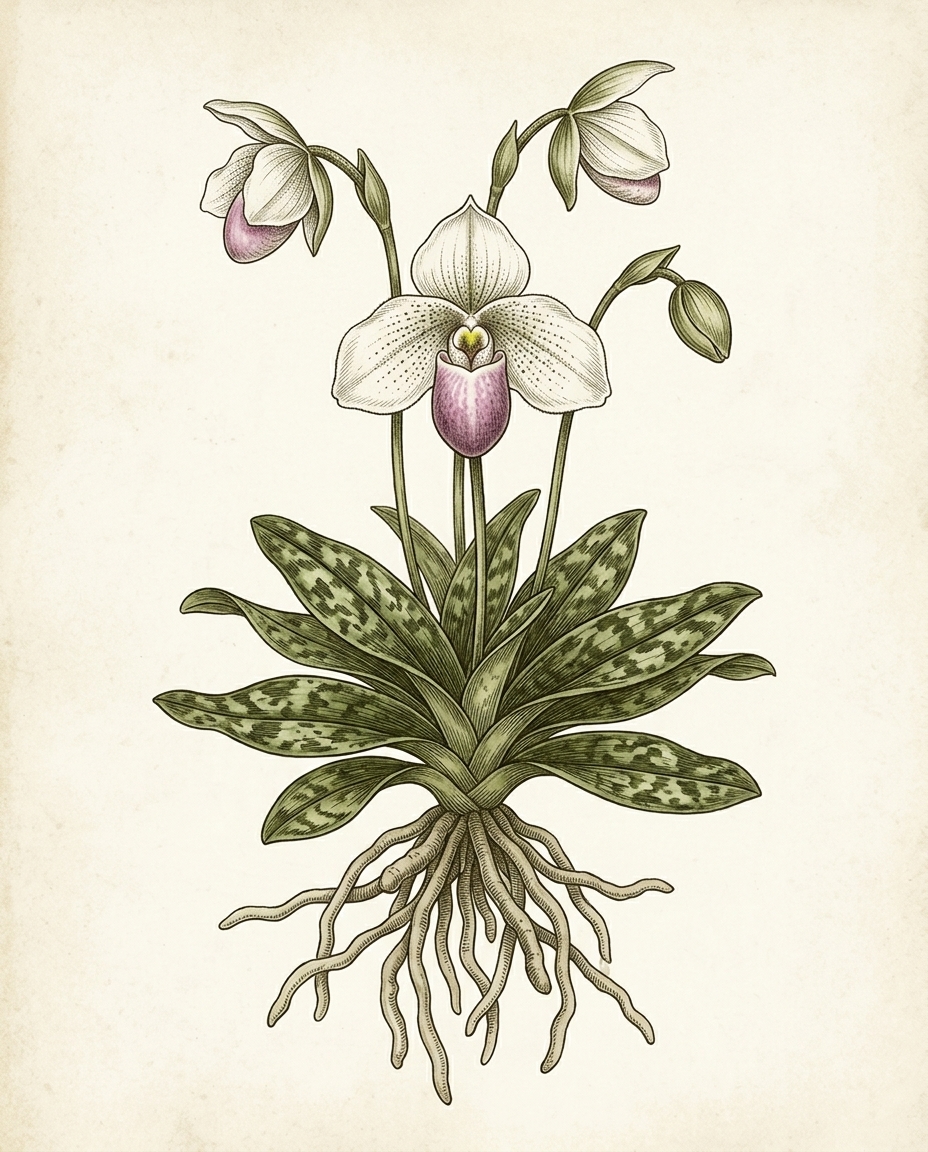
Orchid
Long-lasting trumpet-like blooms in a tabletop pot. ASPCA non-toxic and entirely cat-safe.
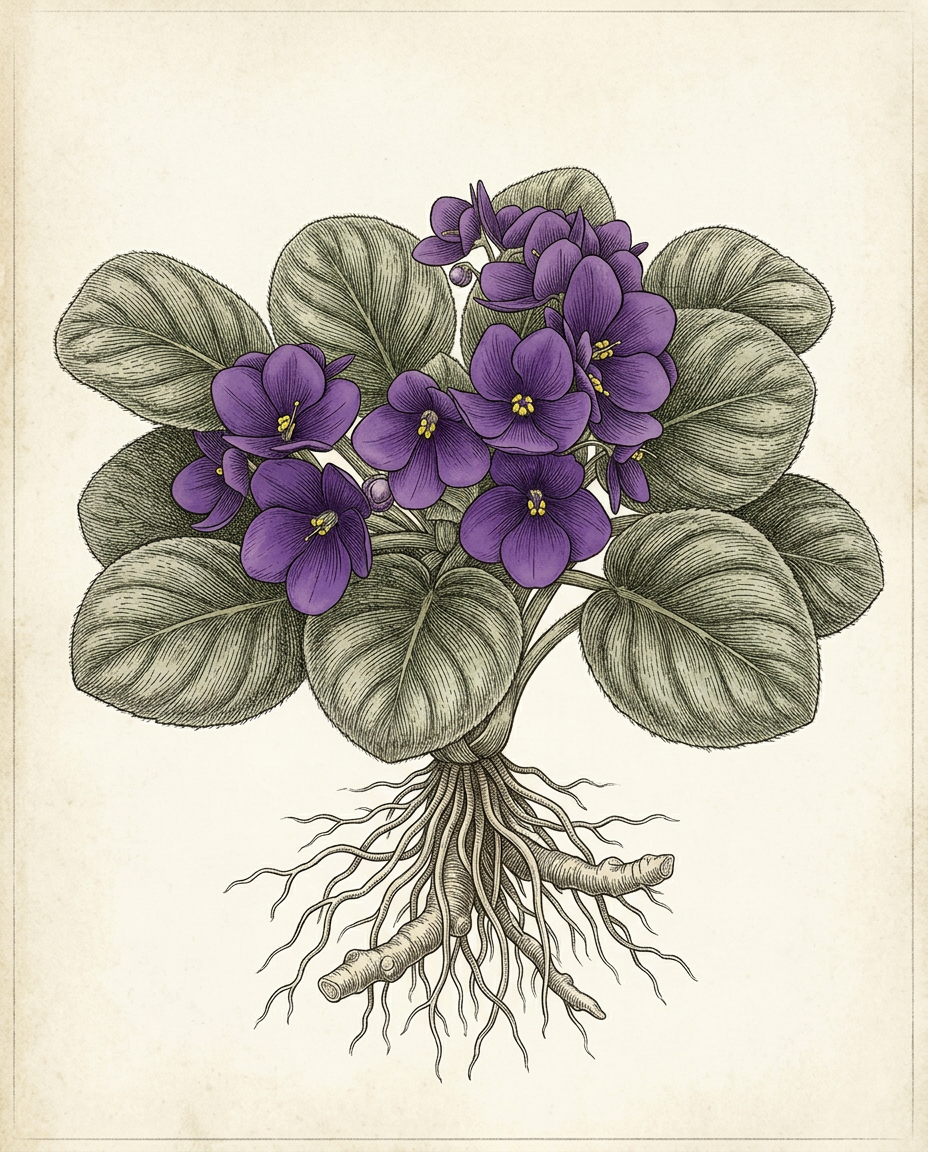
African Violet
Compact, cheerful indoor bloomer for windowsills. ASPCA non-toxic.
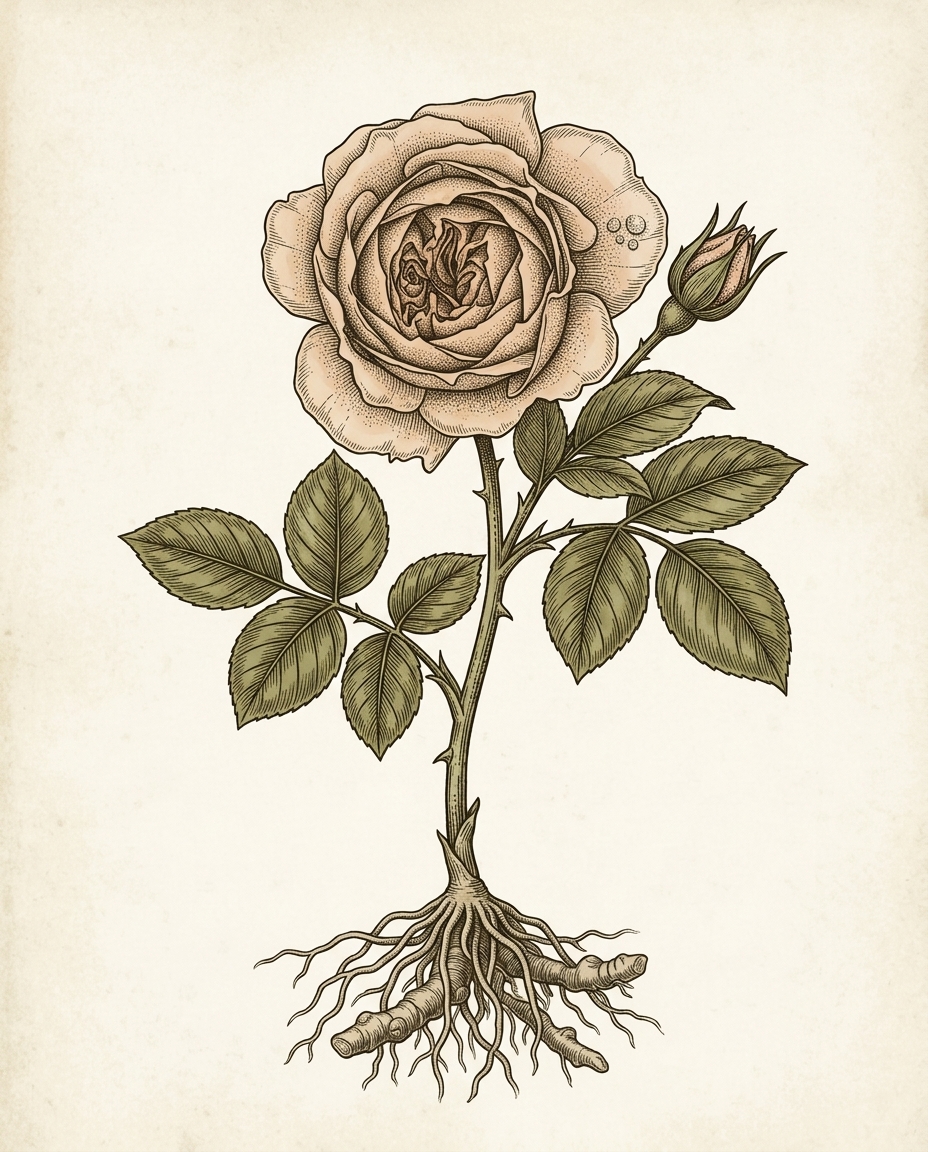
Rose
Classic cut flower without the alkaloid risk. ASPCA non-toxic to cats.
What it does to a cat.
Yes — daffodils are toxic to cats. The ASPCA lists Narcissus spp. — including jonquils and paper whites — as toxic to cats, dogs, and horses. The toxic principle is lycorine and related alkaloids, which act as potent GI irritants and, at higher doses, affect the cardiovascular and nervous systems. The bulb is the most poisonous part.
Symptoms usually begin within 15 minutes to two hours: drooling, vomiting (sometimes with bulb fragments), abdominal pain, and diarrhea. Larger ingestions — typically when a cat chews a bulb rather than nibbles a leaf — can progress to tremors, convulsions, low blood pressure, and cardiac arrhythmia.
Where cats meet daffodils
Outdoor cats encounter daffodils in spring borders and naturalised lawns. Indoor cats meet them in two specific high-risk forms: cut-flower bouquets and forced-bulb kits. The forced-bulb kits — paper whites and miniature Narcissus sold as winter gift items — are particularly dangerous because the bulb sits exposed in a shallow bowl, often at counter or table height.
The bulb problem
Of all the parts of a daffodil, the bulb carries the highest alkaloid load. A cat that chews an exposed forced bulb or digs one up from a planter receives a much larger dose than one nibbling a leaf or petal. Bulb ingestions are the cases that produce tremors, seizures, and cardiac signs — and the ones that need ER-level treatment.
Vase water counts
The water in a vase of cut daffodils carries enough alkaloid to make a cat sick on its own. If a cat drinks from flower water, treat it as an ingestion: call your vet or ASPCA Poison Control at (888) 426-4435 and watch for GI signs.
Safer spring flowers
For trumpet-shaped or cheerful spring blooms without the alkaloid risk, orchids and African violets are ASPCA non-toxic and bring the same seasonal colour indoors. For cut flowers, roses are the obvious replacement. See our pages on tulips — another Amaryllidaceae-adjacent spring bulb you should not have around cats — and lilies, the deadliest spring flower of all.
If exposure has happened
Call your vet or ASPCA Animal Poison Control at (888) 426-4435 immediately. Bring a piece of the plant or a photo — especially if a bulb was involved. Treatment is supportive: IV fluids, anti-emetics, and cardiac monitoring for severe cases. Most cats recover fully with prompt care; the danger is in delay.
What we have actually seen.
Vomiting and drooling
The first and most reliable signs — excessive salivation, repeated vomiting, sometimes with bulb fragments, and abdominal pain within 15 minutes to two hours of ingestion.
Diarrhea
Often follows the vomiting phase. Lycorine is a potent GI irritant; dehydration can develop quickly in small cats.
Tremors and convulsions
Larger ingestions — typically when a cat has chewed a bulb — can trigger muscle tremors, ataxia, and seizures within a few hours.
Cardiac arrhythmia and hypotension
Severe poisonings produce low blood pressure and irregular heart rhythm. These cases need IV fluids and cardiac monitoring; outcomes are good with prompt treatment.
- ASPCA Animal Poison Control Center. Toxic and Non-Toxic Plants: Daffodil.Accessed June 2026 · aspca.org
- Pet Poison Helpline. Daffodil Toxicity in Cats and Dogs.Clinical brief · 2024 ed.
- Saxton-Shaw KD, et al. Toxic plant ingestion in companion animals: alkaloid syndromes.Vet Clin North Am · review