Cyclamen
Cyclamen spp.
Cyclamen is toxic to cats per the ASPCA. The tuber concentrates terpenoid saponins that can cause fatal heart arrhythmia and seizures. The Valentine's and Christmas gift-pot plant is one of the most dangerous houseplants you can buy.
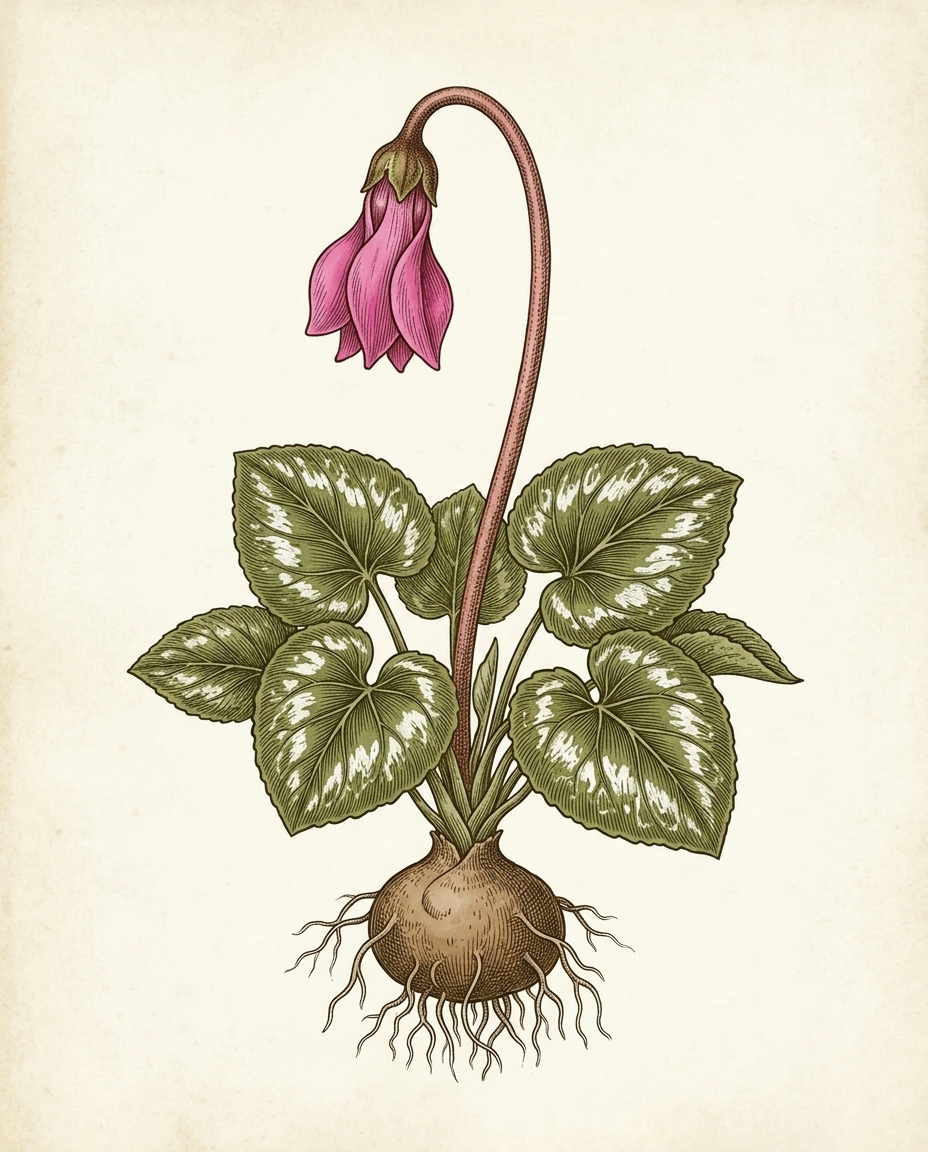

Plate ICyclamen species — the supermarket gift pot with the upturned petals. Pretty above the soil, lethal beneath it. The tuber holds the saponins that can stop a cat's heart.
Three plants that look the part, without the risk.
Heart-shaped foliage and bright winter blooms without the saponins — these three deliver the same gift-pot energy without the tuber risk.
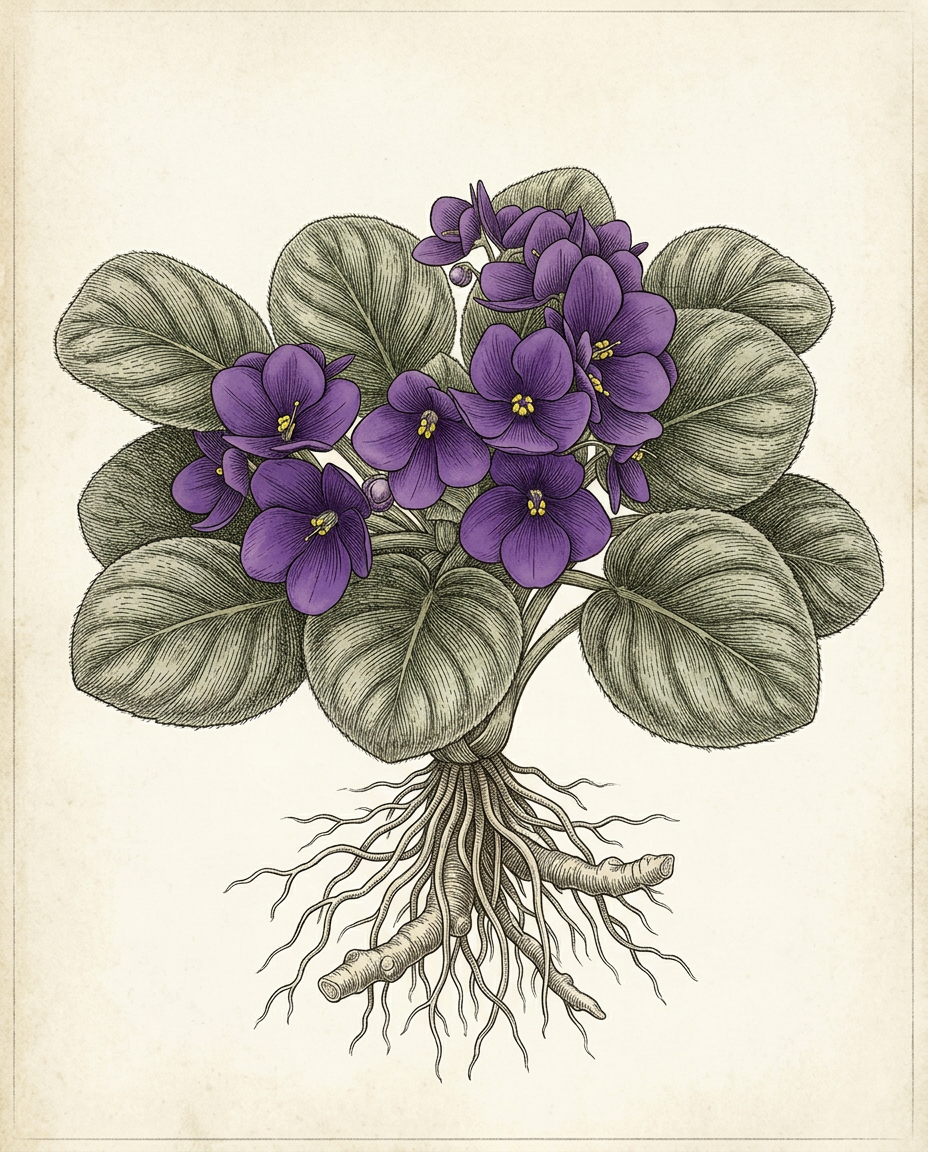
African Violet
The closest visual match — compact, bright, winter-blooming, fits the same pot. ASPCA non-toxic.
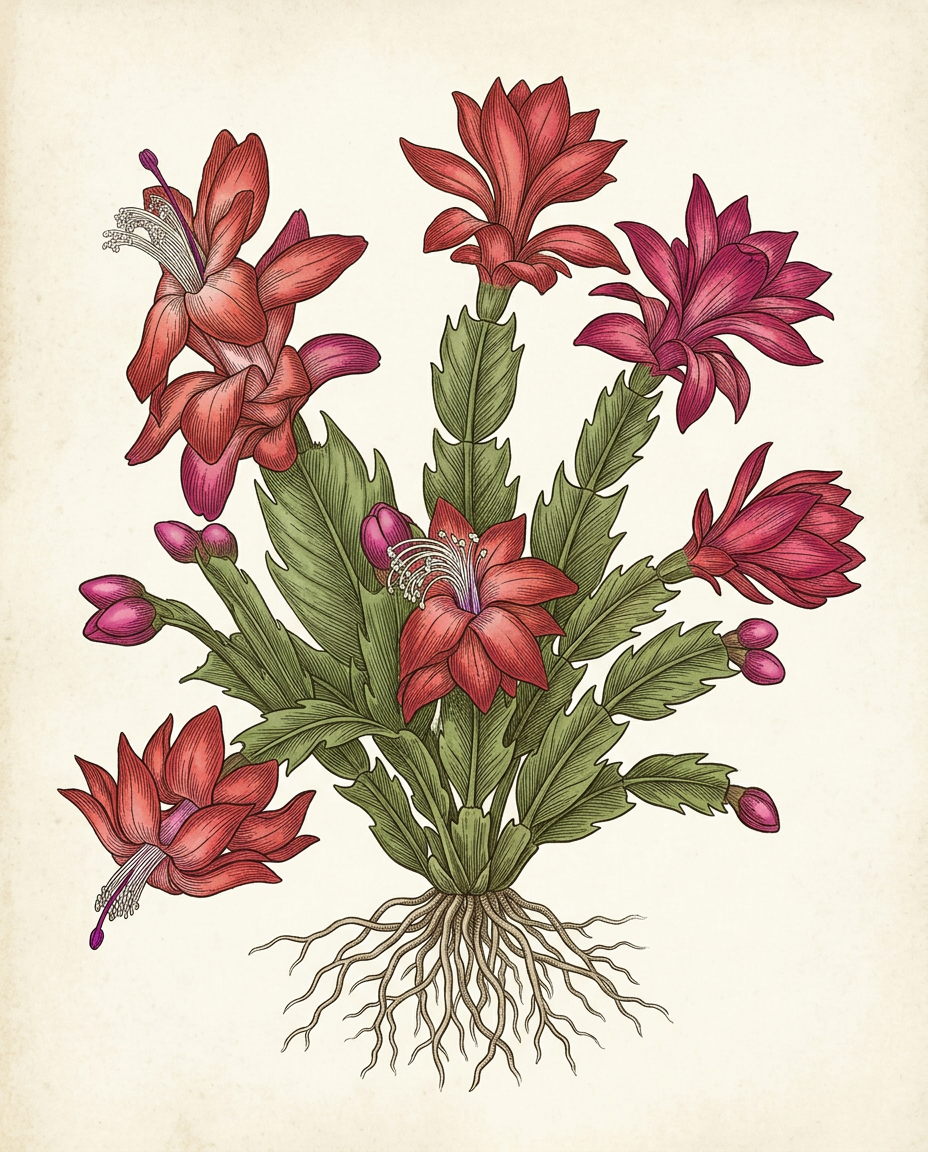
Christmas Cactus
Brilliant winter colour for the same gift-pot occasion. ASPCA non-toxic, lives for decades.
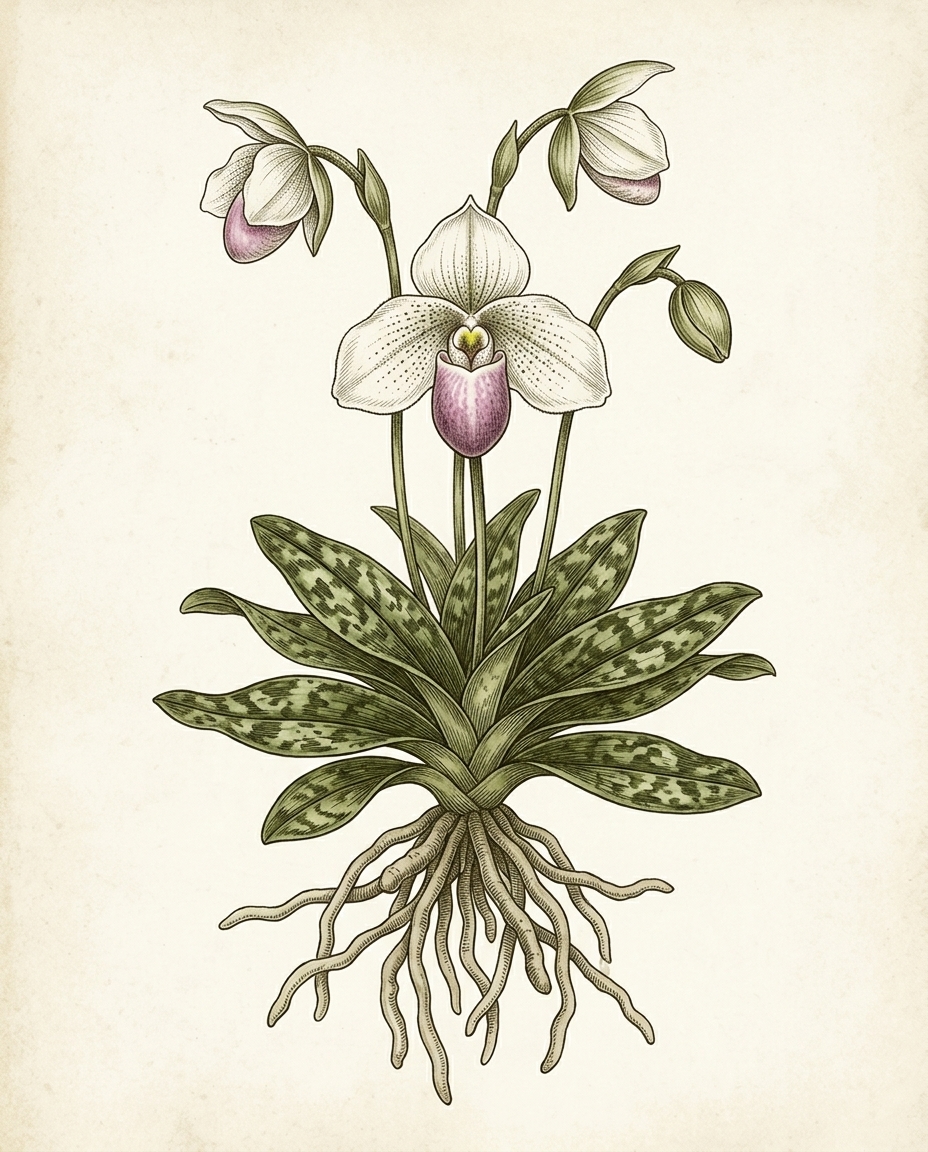
Orchid
Long-lasting winter blooms for centrepiece or gift. ASPCA non-toxic.
What it does to a cat.
Yes — cyclamen is toxic to cats, and unlike many ASPCA-listed plants the toxicity is not theoretical. The ASPCA lists Cyclamen species as toxic to cats, dogs, and horses. The toxic principle is terpenoid saponins (cyclamine). For leaf and flower exposure the picture is mostly GI — vomiting and drooling. For tuber ingestion the picture is much worse: cardiac arrhythmia, seizures, and reported fatalities.
It is one of the most dangerous houseplants you can buy, and it is sold most heavily at Christmas and Valentine's Day as a gift pot. The combination is bad for cats.
Why the tuber is the part that matters
Cyclamen grows from a flattened underground tuber. The plant concentrates its defensive saponins in the tuber at much higher levels than in the leaves or flowers — a defence against burrowing herbivores. A cat that chews a leaf gets a sore mouth and an upset stomach. A cat that paws the soil, exposes the tuber, and chews it gets a cardiotoxic dose. Most pet poisonings from cyclamen that progress to serious symptoms involve tuber exposure.
Saponins and the heart
Terpenoid saponins are a known cardiotoxin family. At low dose they irritate the GI lining; at higher dose they reach the heart, where they slow conduction and disturb rhythm. The clinical sequence in serious cases runs: vomiting and diarrhea within hours, then weakness and irregular pulse, then arrhythmia and seizures. Death is reported in untreated cases. Treatment is supportive — IV fluids, antiarrhythmics, intensive monitoring — and outcomes depend heavily on how quickly the cat reaches care.
What to do if your cat ate cyclamen
For leaf or flower exposure, monitor for vomiting and lethargy — most cases resolve in 24 to 48 hours. For any exposure involving the tuber, or any cat that shows weakness, unsteadiness, or irregular pulse, go to an emergency vet immediately. Bring the pot. ASPCA Animal Poison Control is available 24/7 at (888) 426-4435.
Cat-safe substitutes
For the compact gift-pot role, African violets are the closest visual match — winter-blooming, ASPCA non-toxic, the same scale and same care. Christmas cactus covers the November-to-January gift window with brilliant colour, and orchids deliver the long-lasting bloom centrepiece.
For the related cardiotoxic plants we cover, see our oleander and foxglove profiles — different toxin families, the same fatal-arrhythmia mechanism.
What we have actually seen.
Vomiting and drooling
First sign within hours of ingestion. Saponins are intensely bitter; many cats spit the leaf out and salivate heavily.
Diarrhea
Follows vomiting in most cases. May be watery or bloody with significant exposure.
Cardiac arrhythmia
With tuber ingestion, terpenoid saponins reach systemic circulation and disrupt cardiac rhythm. Bradycardia and arrhythmia are reported and can be fatal.
Seizures and death
Documented in cats with large tuber ingestions. Without aggressive vet care — IV fluids, antiarrhythmics, monitoring — prognosis worsens quickly.
- ASPCA Animal Poison Control Center. Toxic and Non-Toxic Plants: Cyclamen.Accessed June 2026 · aspca.org · Cyclamen spp · Toxic Principles Terpenoid saponins
- Pet Poison Helpline. Cyclamen toxicity in companion animals.Clinical reference · 2024
- Merck Veterinary Manual. Saponin-containing plants and cardiac toxicity.Standard small-animal toxicology reference