Mexican Bird of
Paradise.
Caesalpinia gilliesii
Mexican Bird of Paradise (Caesalpinia gilliesii) is toxic to cats per the ASPCA. The plant carries GI irritants; ingestion produces oral burning, drooling, vomiting, diarrhea, and possible incoordination.
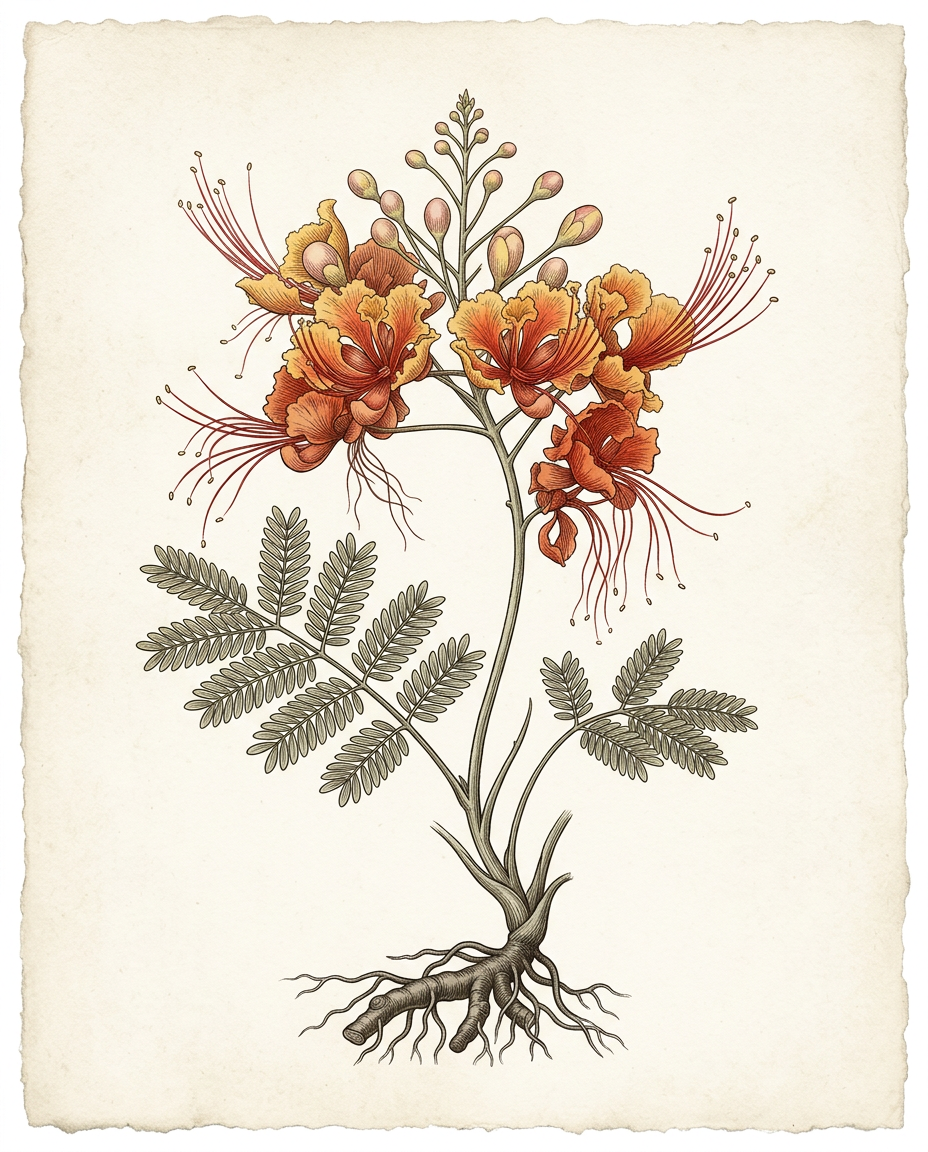
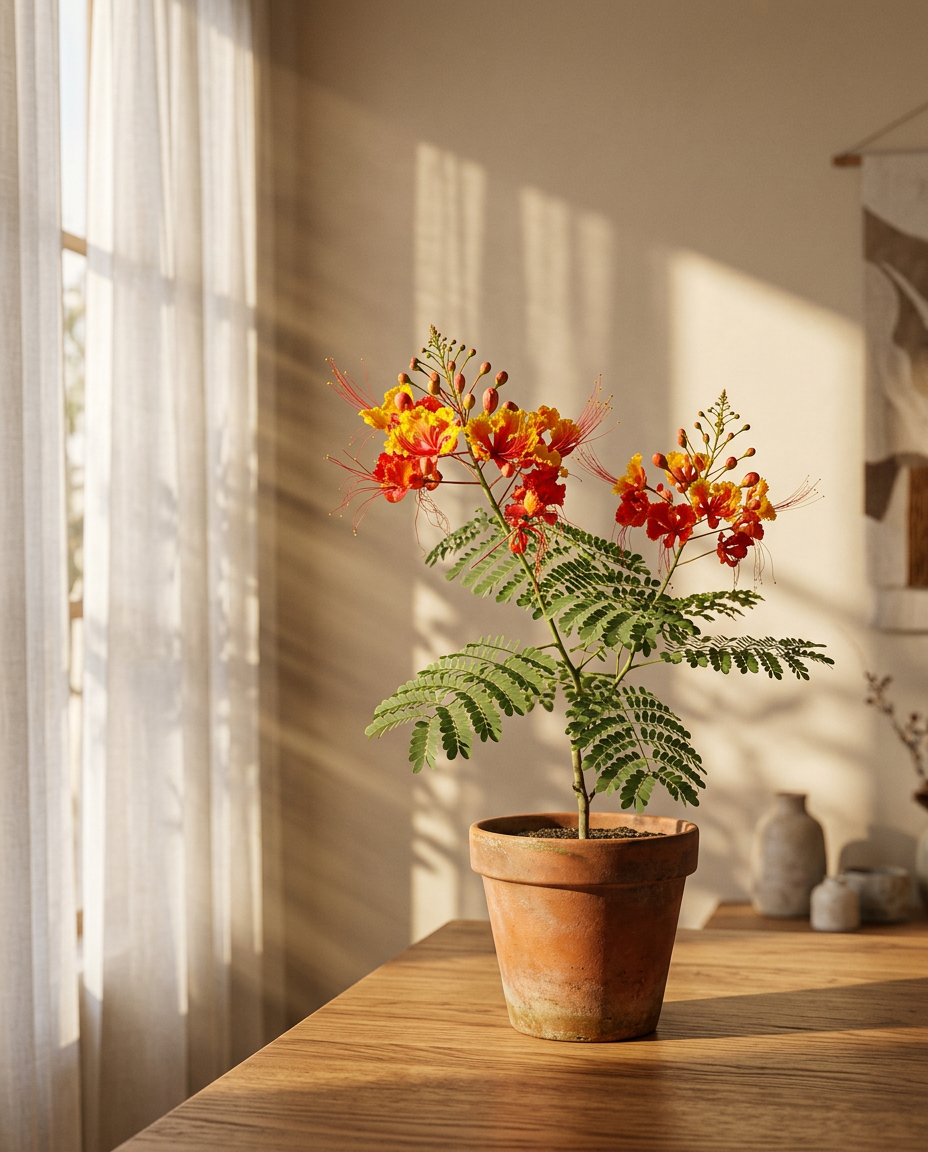
Plate ICaesalpinia gilliesii — the yellow-and-red flowered desert shrub. Despite the common name, this is not the houseplant Bird of Paradise; every part carries the GI irritants the ASPCA lists.
Three plants that look the part, without the risk.
Showy yellow-and-red flowering shrubs and fern-leafed desert plants without the irritant compounds — these three are ASPCA non-toxic alternatives for the same warm-climate garden role.
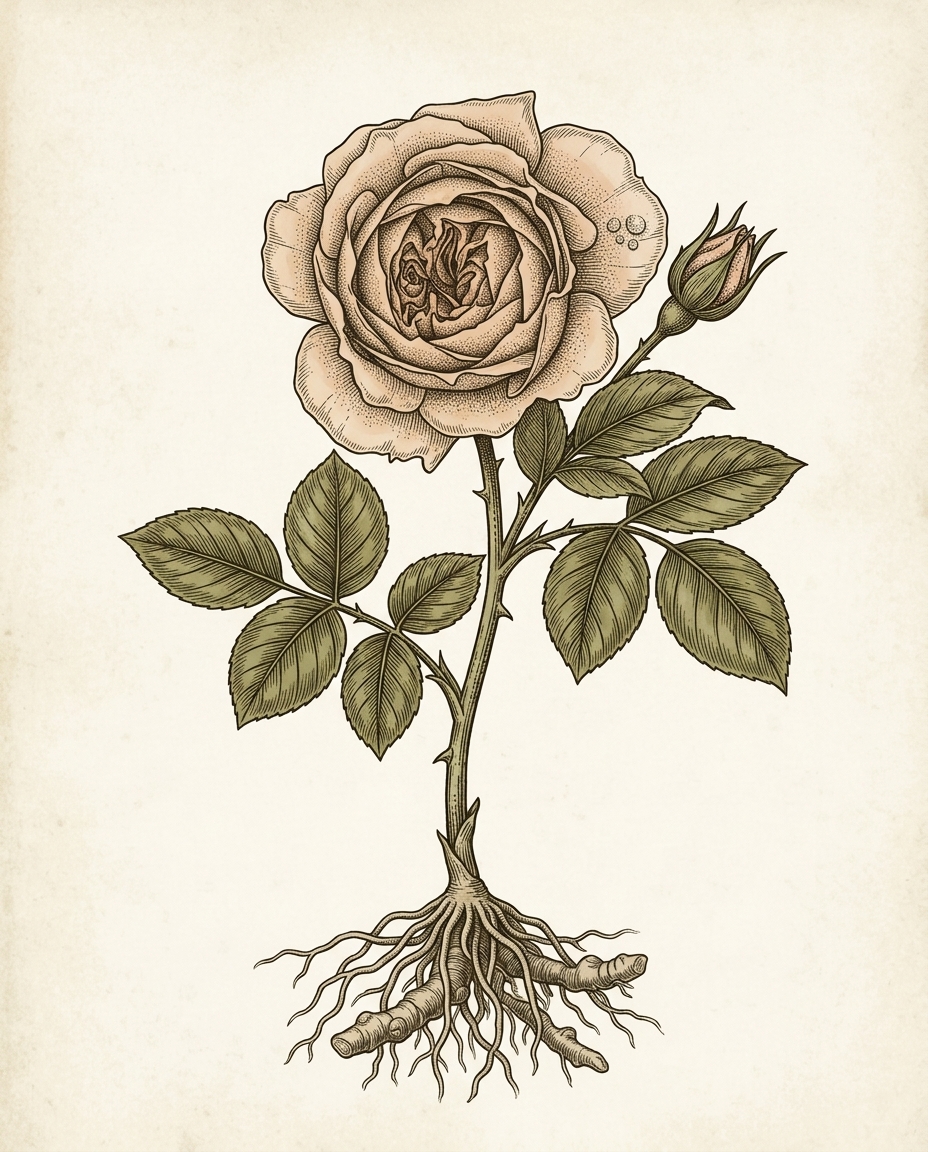
Rose
Classic flowering shrub for warm gardens, ASPCA non-toxic to cats.
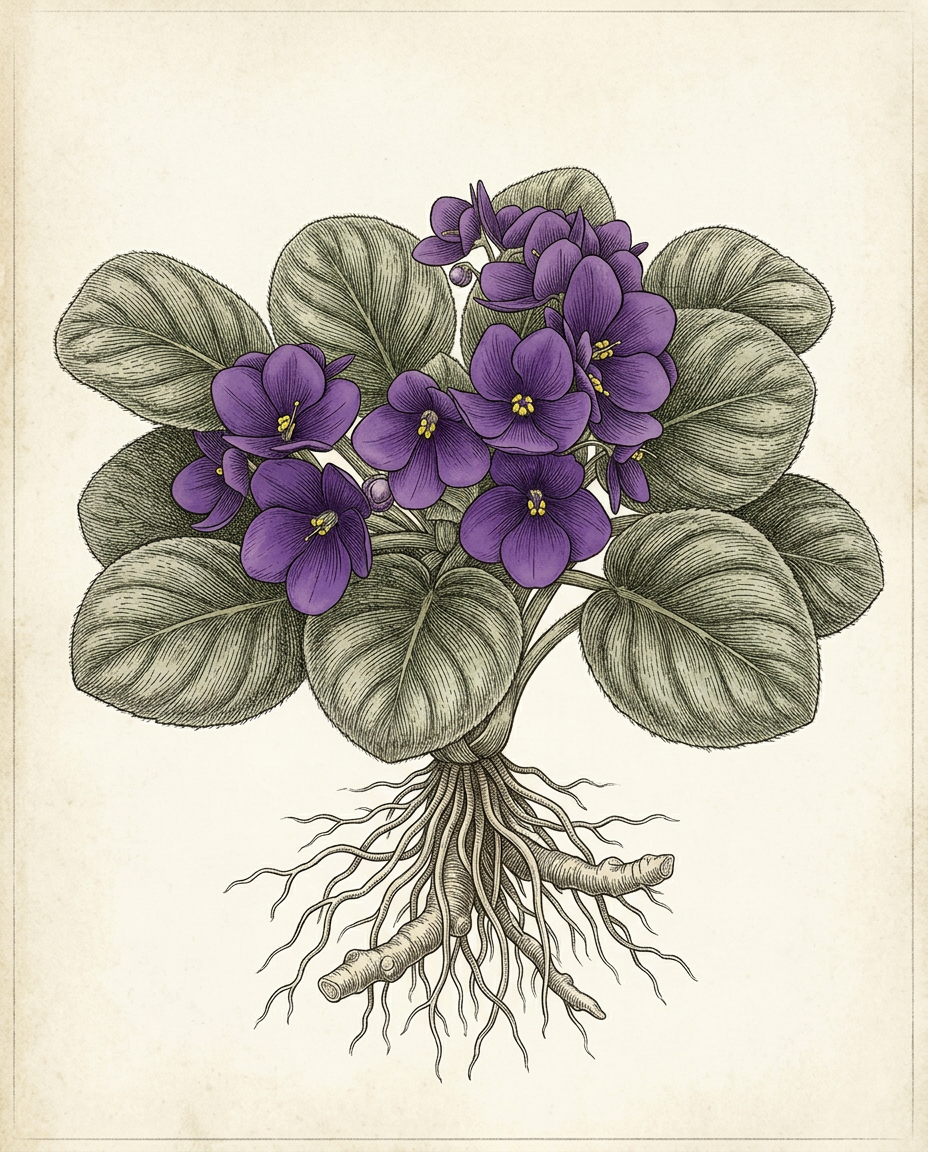
African Violet
Indoor flowering plant with no irritant sap. ASPCA non-toxic.
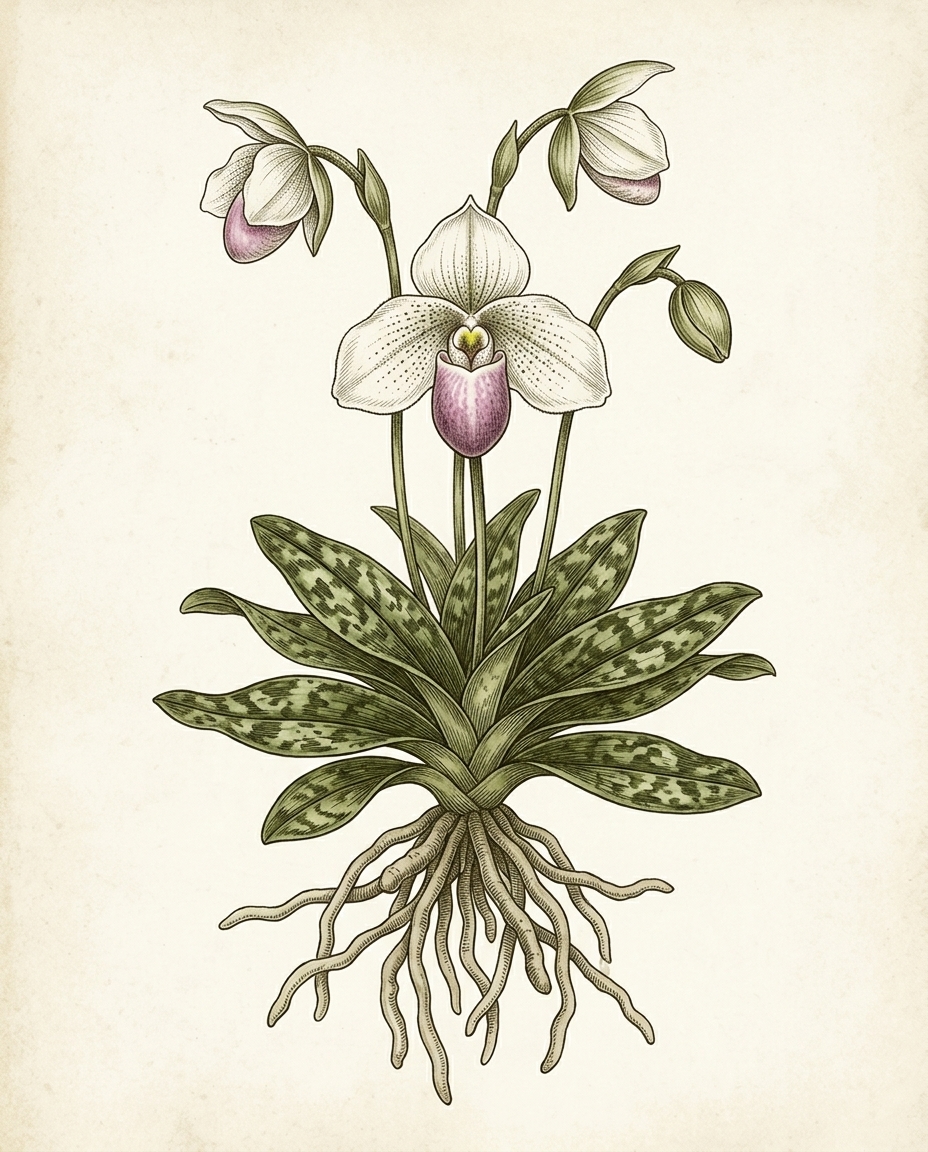
Orchid
Long-lasting flowering pot plant, completely safe around cats per ASPCA.
What it does to a cat.
Yes — Mexican Bird of Paradise is toxic to cats. The ASPCA lists Caesalpinia gilliesii — also catalogued under Poinciana — as toxic to cats, dogs, and horses. The toxic principle is described as GI irritants; clinical signs include intense oral burning, excessive drooling, vomiting, diarrhea, difficulty swallowing, and rarely incoordination. Deaths in rabbits have been reported, though severe cases in cats are uncommon.
Symptoms typically begin within minutes (oral burn, drooling) and progress to vomiting and diarrhea over a few hours. Most cats recover within 24 to 48 hours with supportive care. Seed-pod ingestions are the higher-risk exposures and the ones that can progress to incoordination.
Three plants share the name "Bird of Paradise"
This is the source of most confusion in plant safety guides. In the US, three distinct plants are sold as some variant of "Bird of Paradise":
- Mexican / Yellow Bird of Paradise — Caesalpinia gilliesii, a desert shrub with yellow flowers and long red stamens. The page you are reading.
- Pride of Barbados / Red Bird of Paradise — Caesalpinia pulcherrima, a related tropical shrub. Also ASPCA toxic.
- Houseplant Bird of Paradise / Crane Flower — Strelitzia reginae, the banana-leaved indoor floor plant. Also toxic but milder — see our Strelitzia reginae page.
All three are on the ASPCA toxic list. The Caesalpinia species have the stronger oral-burn / GI syndrome; Strelitzia produces a milder nausea and drowsiness picture, mostly from fruit and seeds.
Where cats meet this plant
Caesalpinia gilliesii is a workhorse xeriscape shrub in the US Southwest, parts of Mexico, and similar warm-dry climates. It is a fast-growing, drought-tolerant flowering shrub with bright yellow flowers and dramatic red stamens that bloom from late spring through summer. Outdoor cats and patio-roaming indoor cats encounter it in foundation plantings and along property lines.
The seed pods — long, hairy, flat legumes — are the higher-risk parts. They split open as they dry, and cats can carry them in or chew them where they fall.
Safer warm-garden alternatives
For flowering shrubs in the same xeriscape role without the GI irritants, roses are the obvious replacement. Indoors, African violets and orchids bring colour without the risk. See our oleander and azalea pages for the other landscape flowering shrubs cats should not be near.
If exposure has happened
Call your vet or ASPCA Animal Poison Control at (888) 426-4435. Rinse the cat's mouth with cool water if it tolerates it. Treatment is supportive — anti-nausea drugs, IV fluids for dehydration, and monitoring for the rare incoordination cases. Most cats recover fully within 24 to 48 hours.
What we have actually seen.
Oral burning and drooling
GI irritants act on the oral mucosa within minutes of chewing — excessive drooling, lip-smacking, and pawing at the mouth.
Vomiting
Follows shortly after ingestion as the irritants reach the stomach. May be accompanied by abdominal pain and reduced appetite.
Diarrhea and difficulty swallowing
The full GI syndrome — irritated mucosa from mouth to colon. Dehydration is a concern in small cats.
Incoordination (rare)
The ASPCA notes that incoordination has been observed in severe cases. Seed-pod ingestions are the higher-risk exposures.
- ASPCA Animal Poison Control Center. Toxic and Non-Toxic Plants: Bird of Paradise (Caesalpinia gilliesii).Accessed June 2026 · aspca.org
- ASPCA Animal Poison Control Center. Toxic and Non-Toxic Plants: Poinciana (Caesalpinia gilliesii). Companion listing.Accessed June 2026 · aspca.org
- Pet Poison Helpline. Caesalpinia Toxicity in Pets.Clinical brief · 2024 ed.