Bay
Laurel.
Laurus nobilis
Yes — bay laurel is toxic to cats. The ASPCA lists Laurus nobilis as toxic to cats, dogs, and horses. Eugenol and essential oils cause vomiting and diarrhea. The dried bay leaf in your kitchen spice jar is this plant.
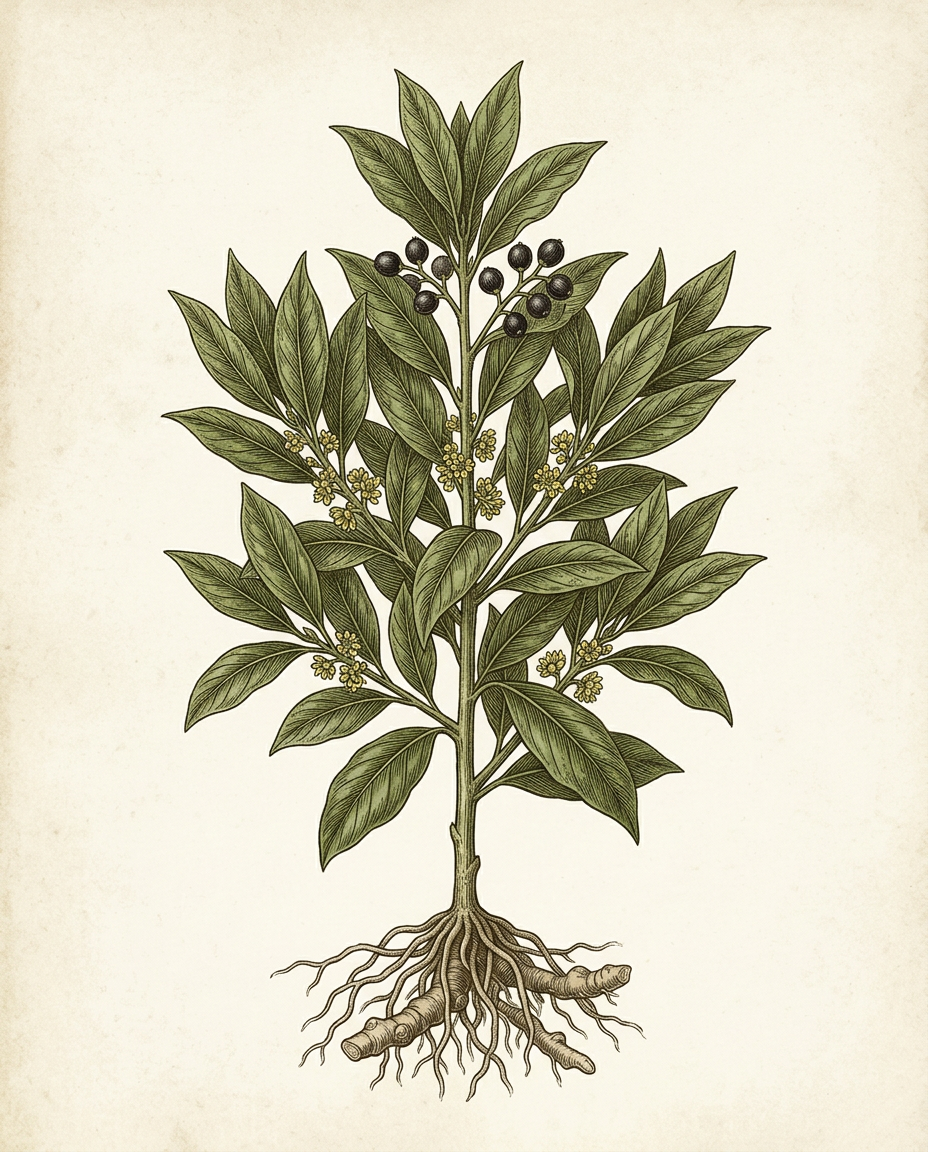
Plate ILaurus nobilis — bay laurel. Toxic to cats per the ASPCA: eugenol and other essential oils cause vomiting and diarrhea. The dried bay leaf in your spice jar is this plant.
Three plants that look the part, without the risk.
If you want a cat-safe culinary herb for the kitchen windowsill, these ASPCA non-toxic herbs cover the same cooking role without the eugenol risk.
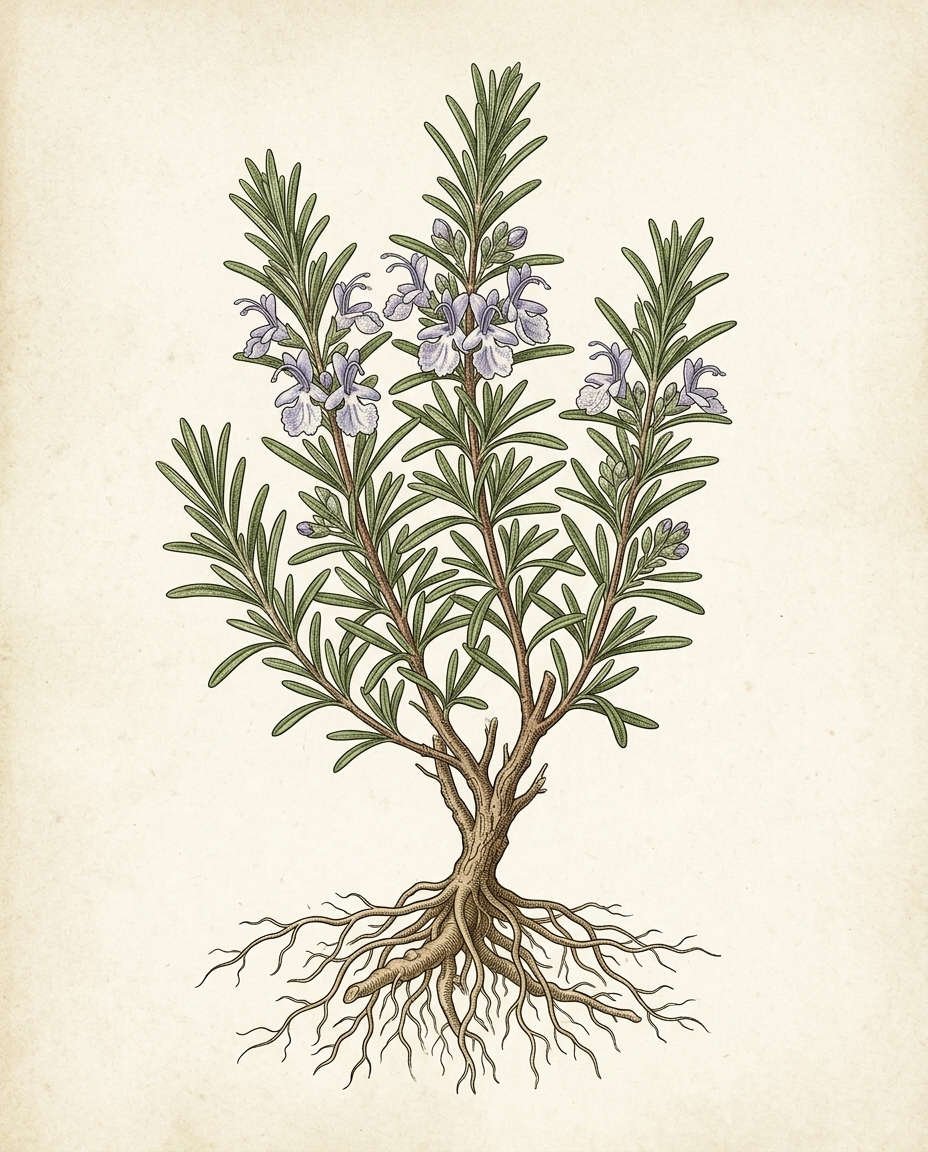
Rosemary
The closest culinary substitute for bay leaf in slow-cooked dishes, and ASPCA non-toxic to cats. Grow it on the same windowsill and strip needles for stocks and stews.
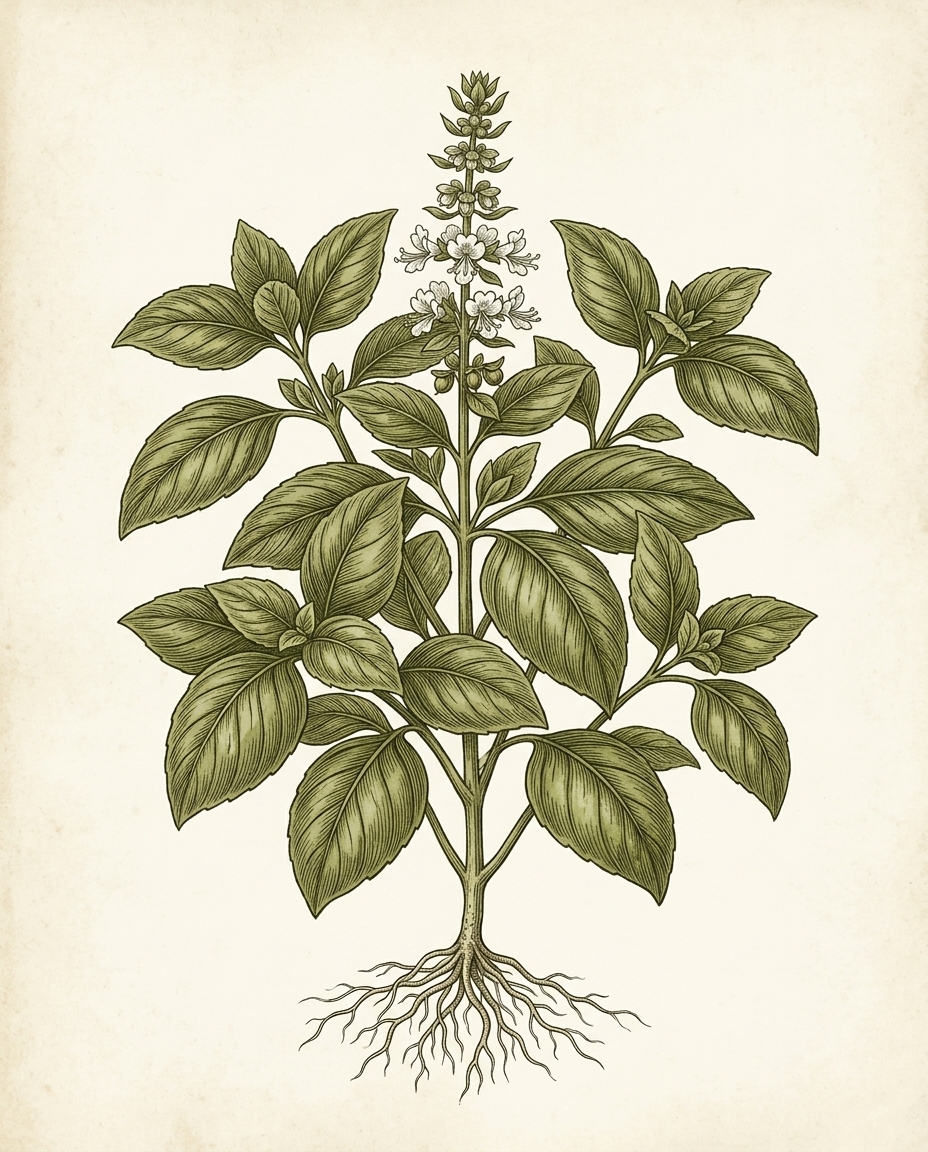
Basil
A non-toxic culinary herb safe for cats per the ASPCA. Not a direct bay leaf substitute, but it covers the fresh-herb kitchen role that bay laurel sometimes fills.
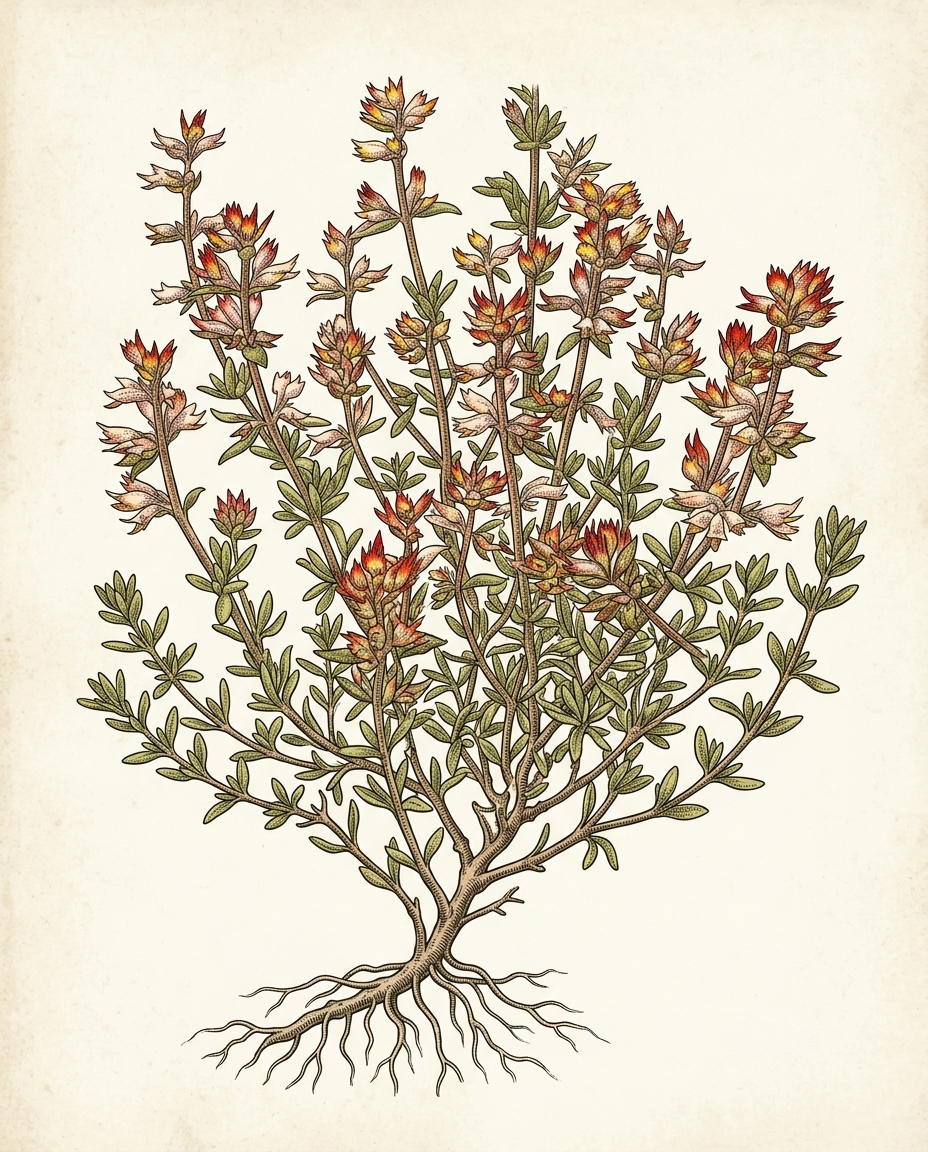
Thyme
Another ASPCA non-toxic culinary herb that works in slow-cooked dishes where bay leaf is traditionally used. Low-growing and easy on a windowsill.
What bay laurel does to a cat.
Yes — bay laurel is toxic to cats. The ASPCA lists Laurus nobilis as Toxic to Dogs, Toxic to Cats, Toxic to Horses. The toxic principles are eugenol and other essential oils. Clinical signs are vomiting and diarrhea, and large ingestion of whole leaves can cause obstruction.
This is the plant that produces the dried bay leaves in your kitchen spice jar. The same leaf you drop into a stew is toxic to your cat — and many owners assume that because it is a culinary herb, it must be safe. It is not.
The ASPCA data, verbatim
The ASPCA listing for bay laurel states:
Scientific Name: Laurus nobilis · Family: Lauraceae · Toxicity: Toxic to Dogs, Toxic to Cats, Toxic to Horses · Toxic Principles: Eugenol, and other essential oils · Clinical Signs: Vomiting and diarrhea, large ingestion of whole leaves can cause obstruction.
Why bay laurel is toxic — eugenol
Eugenol is a phenolic compound — the same molecule that gives cloves their distinctive aroma. It is used in dentistry as a topical anesthetic and antiseptic, but in cats, eugenol is poorly metabolised. Cats lack specific liver enzymes (glucuronyl transferases) that process phenolic compounds efficiently, which is why essential oils in general are a category-wide hazard for cats.
The "other essential oils" in the ASPCA listing include cineole (eucalyptol), which is present in bay laurel and is itself toxic to cats. The combination of eugenol and cineole makes bay laurel a genuine toxicity risk, not just a mild irritant.
The obstruction risk from whole leaves
The ASPCA notes that large ingestion of whole leaves can cause obstruction. This is a physical risk on top of the chemical toxicity. Bay leaves are tough, leathery, and do not break down in stomach acid. A cat that swallows a whole dried bay leaf — which is exactly the form found in a kitchen — risks a gastrointestinal blockage that may require surgical removal.
This is the practical danger: a dried bay leaf falls off the counter, a cat plays with it and swallows it, and you have both a chemical toxicity and a physical obstruction to deal with.
The kitchen herb trap
Bay laurel is a correction page for the assumption that all culinary herbs are safe. They are not. Sage, rosemary, and thyme are all ASPCA-listed non-toxic to cats — but bay laurel is the exception. If you grow herbs on a kitchen windowsill, bay laurel is the one to leave out.
The dried-leaf form does not help. Drying concentrates the essential oils relative to the water content, and the tough leaf structure is preserved. A dried bay leaf from a jar is just as toxic as a fresh one from the tree.
What to do if your cat eats a bay leaf
- Remove any remaining plant material from your cat's mouth if you can do so safely.
- Call your vet or ASPCA Animal Poison Control at (888) 426-4435. Do not wait for symptoms — eugenol acts within hours.
- Tell the vet exactly what was eaten — bay laurel (Laurus nobilis), the amount, and whether the leaf was whole or broken.
Cat-safe alternatives for the kitchen
For the slow-cooked dishes where bay leaf is traditional, rosemary is the closest ASPCA non-toxic substitute. Thyme also works well in stocks and stews. Both are safe to grow on the same kitchen windowsill, and neither carries the eugenol risk.
The bottom line
Bay laurel (Laurus nobilis) is toxic to cats per the ASPCA. The eugenol and essential oils cause vomiting and diarrhea, and whole leaves can cause obstruction. The dried bay leaf in your spice jar is this plant. Keep the jar closed and off the counter, and swap to rosemary or thyme for cat-safe cooking herbs.
What we have actually seen.
Eugenol and essential oils
The ASPCA lists the toxic principles as eugenol and other essential oils. Eugenol is the same compound found in cloves — it is a phenolic compound that cats cannot efficiently metabolise. Ingestion causes vomiting and diarrhea.
Vomiting and diarrhea
The ASPCA clinical signs are vomiting and diarrhea. These are the primary effects of bay laurel ingestion in cats. Onset is typically within a few hours of chewing or eating the leaves.
Gastrointestinal obstruction from whole leaves
The ASPCA notes that large ingestion of whole leaves can cause obstruction. Whole bay leaves are tough and do not break down in the digestive tract — a cat that swallows a whole leaf risks a physical blockage in addition to the chemical toxicity.
Kitchen exposure risk
Dried bay leaves in a kitchen spice jar are this plant. A leaf that falls on the floor or is left within a cat's reach is a direct exposure risk. Fresh bay laurel grown as a kitchen plant carries the same toxicity.
- ASPCA Animal Poison Control Center. Toxic and Non-Toxic Plants: Bay Laurel.Accessed June 2026 · aspca.org · Laurus nobilis · Toxic Principles: Eugenol, and other essential oils · Clinical Signs: Vomiting and diarrhea, large ingestion of whole leaves can cause obstruction