Arrowhead
Vine.
Syngonium podophyllum
Arrowhead Vine (Syngonium podophyllum) is toxic to cats per the ASPCA. Insoluble calcium oxalates cause oral pain, drooling, swelling, and vomiting — same family as pothos and philodendron.
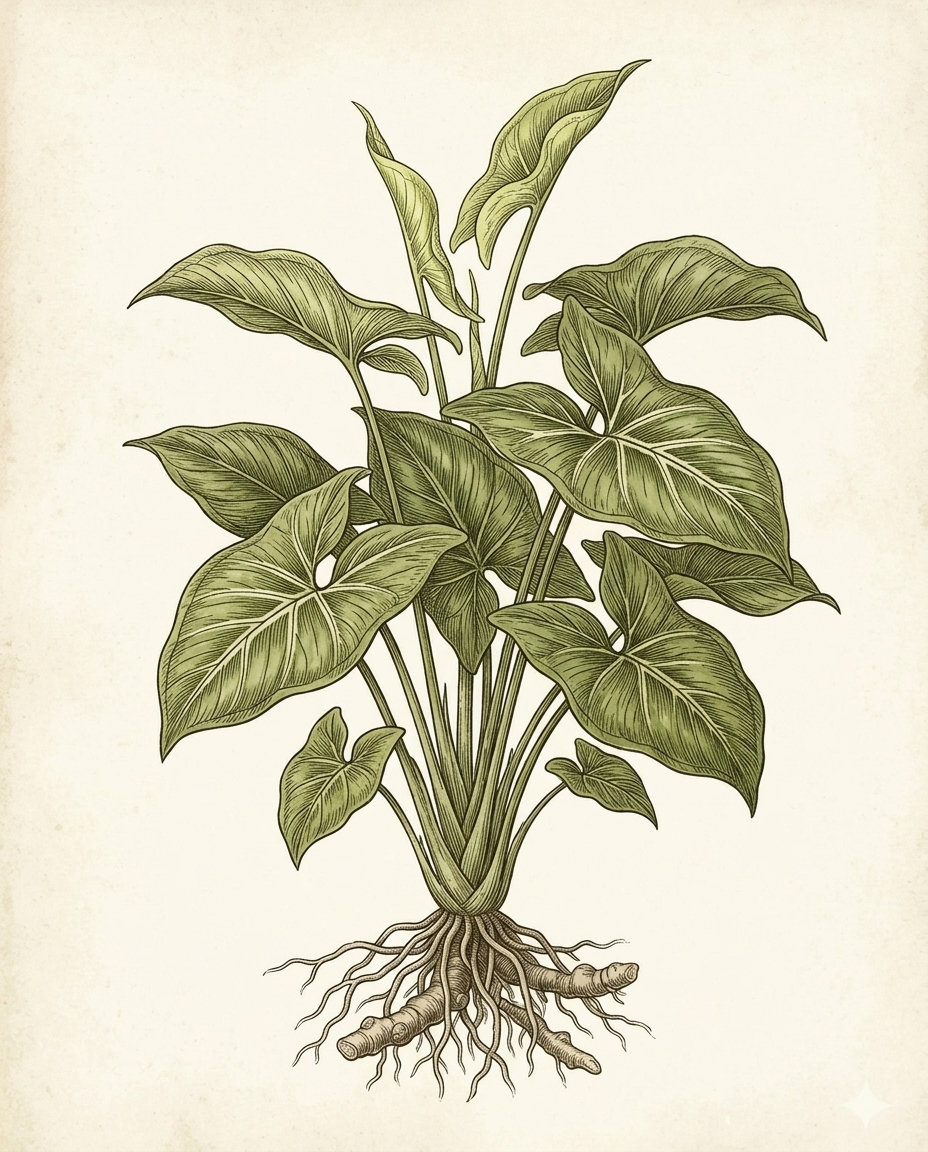

Plate ISyngonium podophyllum — the Arrowhead Vine. Three-lobed arrow-shaped variegated leaves on a slender trailing or climbing vine. ASPCA toxic — insoluble calcium oxalates.
Three plants that look the part, without the risk.
Same trailing-vine variegated-foliage aesthetic without the oral-irritant chemistry — these substitutes give the arrowhead look at ASPCA non-toxic.
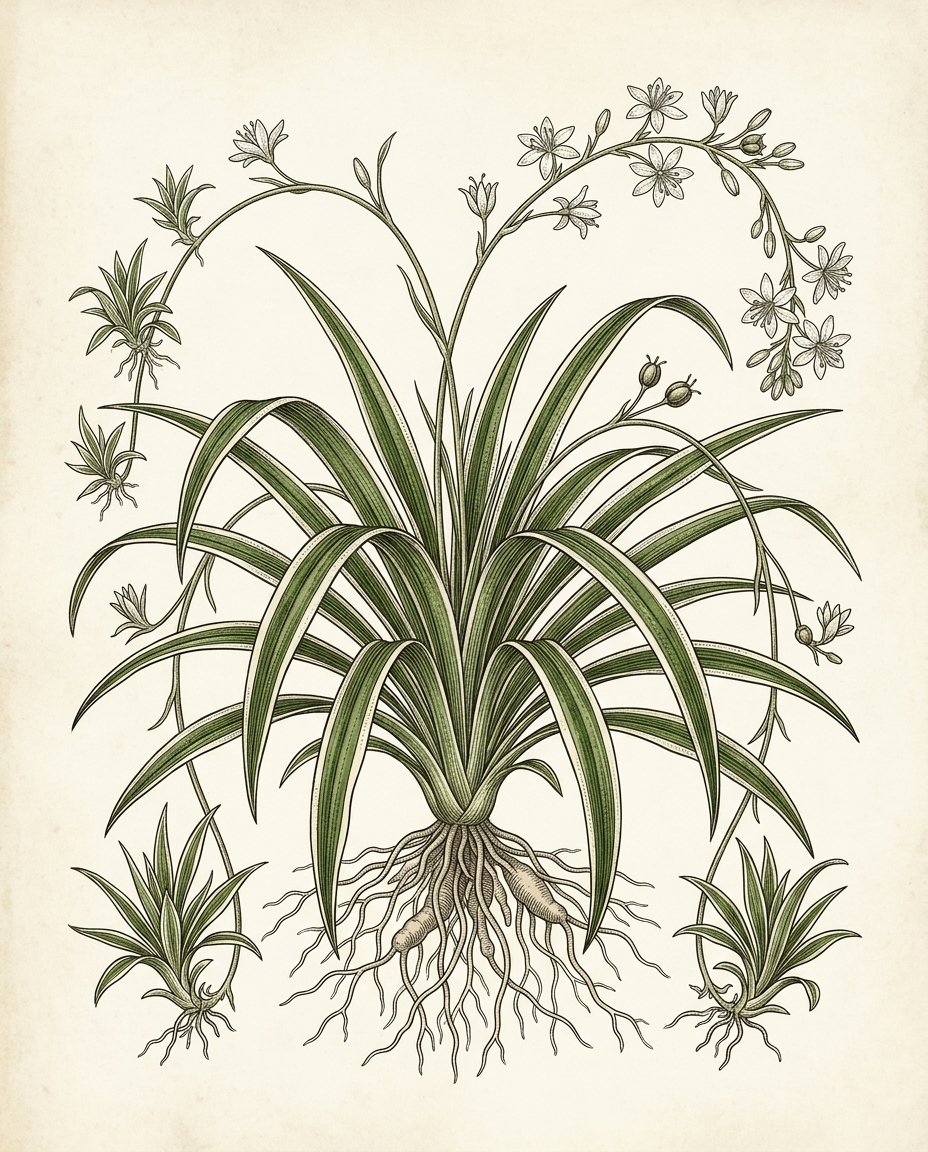
Spider Plant
For arching variegated foliage and a trailing habit, spider plant is the ASPCA-safe substitute. Easier care, tough to kill, cats love it.
Hoya
For long trailing vines of waxy leaves, hoya covers the same shelf-edge role at ASPCA non-toxic. Many cultivars with variegation.
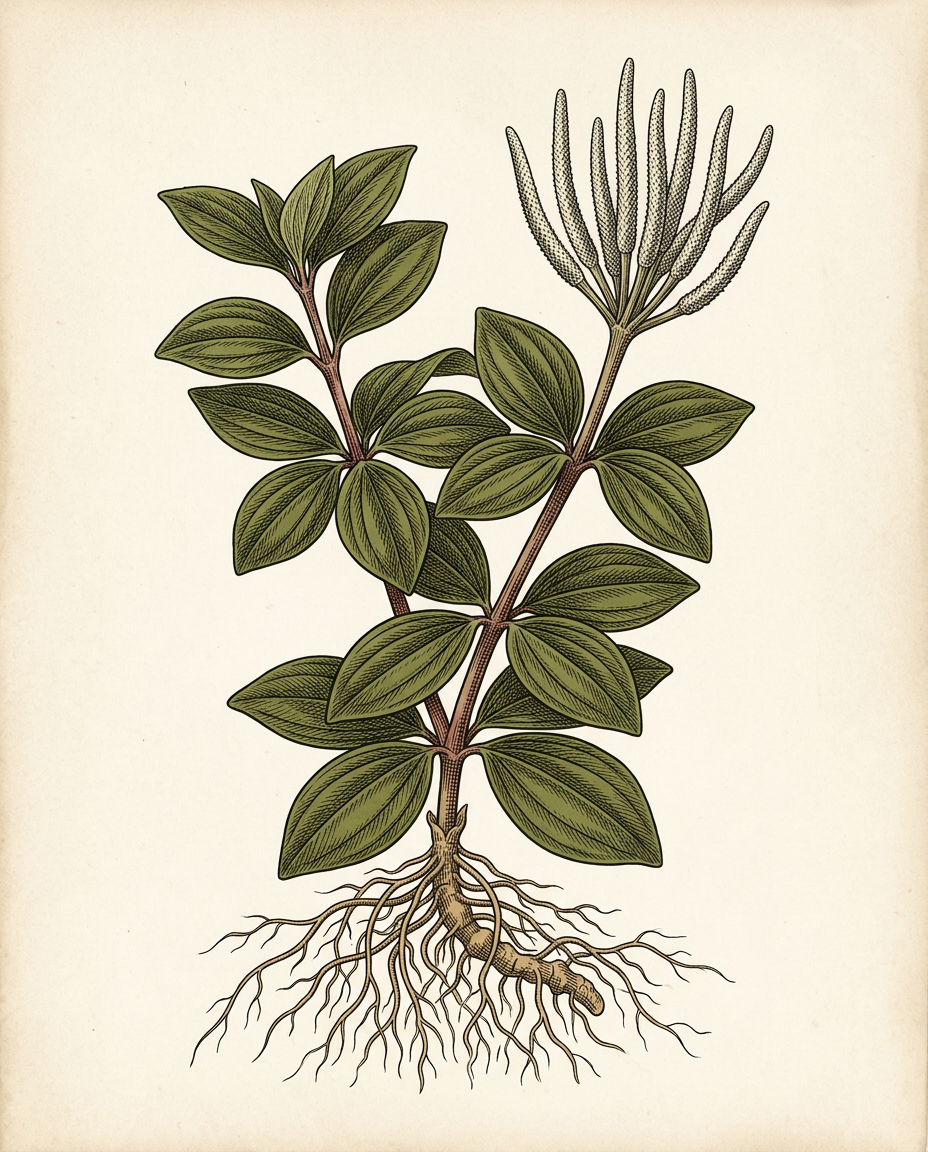
Peperomia
For small-pot variegated foliage, peperomia covers tabletop scale at ASPCA non-toxic. The Watermelon Peperomia is variegated and explicitly listed.
What it does to a cat.
Yes — the Arrowhead Vine is toxic to cats. The ASPCA lists Syngonium podophyllum — also called Arrowhead Plant, Goosefoot, Nephthytis, African Evergreen, and Trileaf Wonder — as toxic to cats, dogs, and horses. The toxic principle is insoluble calcium oxalates — needle-like microscopic crystals (called raphides) that physically pierce mouth tissue on chew.
The ASPCA verdict, verbatim: Scientific Name: Syngonium podophyllum · Family: Araceae · Toxicity: Toxic to Dogs, Toxic to Cats, Toxic to Horses · Toxic Principles: Insoluble calcium oxalates · Clinical Signs: Oral irritation, pain and swelling of mouth, tongue and lips, excessive drooling, vomiting (not horses), difficulty swallowing.
Same toxin, same family — same as pothos and philodendron
The Arrowhead Vine is an aroid — family Araceae — and shares the calcium-oxalate-raphide mechanism with the rest of the family's popular houseplants:
- Pothos (Epipremnum aureum) — toxic, same mechanism.
- Philodendron (Philodendron spp.) — toxic, same mechanism.
- Monstera (Monstera deliciosa) — toxic, same mechanism.
- Dieffenbachia ("Dumb Cane") — toxic, same mechanism, classically the worst because of its heavier oxalate load.
- Peace lily — toxic, same mechanism (and a confusing name — it's NOT a true Lilium).
If you keep one of these, the same handling applies to all of them. There is no "safer" aroid — pick a non-aroid if cat safety is the priority.
The variegated-cultivar boom
Arrowhead Vine has had a viral moment as a houseplant — Pink Allusion, White Butterfly, Neon Robusta, Strawberry Cream, and dozens of named cultivars with pink, white, or yellow variegation. The variegation does not change the chemistry. All cultivars are Syngonium podophyllum and all carry the same calcium oxalate load. A pink-blushed arrowhead is exactly as toxic to a cat as the plain green form.
What it does to a cat
Calcium oxalate raphides work by mechanical injury, not by systemic poisoning. A cat that bites a leaf gets:
- Immediate oral pain (within seconds). The raphides puncture mouth lining and release histamine. The cat will spit, drool, paw at its mouth, and back away from the plant.
- Swelling of mouth, tongue, lips (within minutes). Inflammation from the punctures and histamine response. Can affect swallowing.
- Vomiting (within hours). The cat's body clearing the plant material. Usually self-limiting.
- Difficulty swallowing (occasional). From oral and pharyngeal swelling. Rare for airway involvement to become severe in cats; more concerning in small dogs.
The self-limiting response — cats taste it, hurt, stop — is why aroid toxicity is rarely fatal despite how common these plants are. The cat will be miserable for hours, sometimes a day, but recovery is the rule.
What to do if your cat chews one
- Wipe out the mouth with a clean damp cloth (if your cat will tolerate it). Remove any visible plant material.
- Offer cold milk, plain yoghurt, or ice cream — the calcium binds the free oxalates and the cold soothes the irritation.
- Call the ASPCA Animal Poison Control Center at 888-426-4435 or your vet for severity assessment.
- Watch for breathing difficulty — rare in cats but a vet emergency if it happens.
- Pain control and fluids — most cats benefit from a single vet visit for an anti-inflammatory, an anti-emetic if vomiting is heavy, and subcutaneous fluids. Rarely needs hospitalisation.
Cat-safe alternatives for the trailing-vine aesthetic
If you want the arrowhead look — trailing or climbing variegated foliage on a slender vine — without the oral irritation, the ASPCA non-toxic options:
- Spider plant — arching variegated foliage, easy, tough, and the plant cats actually do well with.
- Hoya — long trailing waxy-leaf vines, many variegated cultivars, ASPCA non-toxic.
- Peperomia — small-pot textured foliage including the variegated Watermelon Peperomia, ASPCA non-toxic.
For the full toxic-plants reference, see toxic plants for cats.
What we have actually seen.
Oral pain and drooling
First sign — onset on chew. The insoluble calcium oxalate raphides physically pierce mouth tissue. Cat will paw at the mouth, drool visibly, and refuse food.
Swelling of mouth, tongue, lips
Mast-cell histamine response to oxalate injury. Inflammation appears within minutes; can affect swallowing and breathing in severe cases.
Vomiting
Within hours of ingestion. ASPCA does not list vomiting for horses, but for cats and dogs it is typical. Usually self-limiting once the plant material is expelled.
Difficulty swallowing
Mouth and pharynx swelling can interfere with normal swallowing for several hours after exposure. Severe airway swelling is rare in cats but warrants a vet check.
- ASPCA Animal Poison Control Center. Toxic and Non-Toxic Plants: Arrow-Head Vine.Accessed June 2026 · aspca.org · Syngonium podophyllum · Toxic to cats, dogs, horses · Toxic Principles: Insoluble calcium oxalates · Clinical Signs: Oral irritation, pain and swelling of mouth, tongue and lips, excessive drooling, vomiting (not horses), difficulty swallowing
- Pet Poison Helpline. Aroid (Araceae) ingestion in companion animals.Clinical reference · 2024
- Merck Veterinary Manual. Calcium oxalate plant toxicoses in cats.Standard veterinary toxicology reference