Yucca
Yucca spp.
Yucca (Yucca spp., including Spineless Yucca and Adam's Needle) is toxic to cats per the ASPCA — saponins that cause vomiting. Same toxin class as English ivy. Common outdoor landscape plant and a popular indoor 'Yucca Cane'.
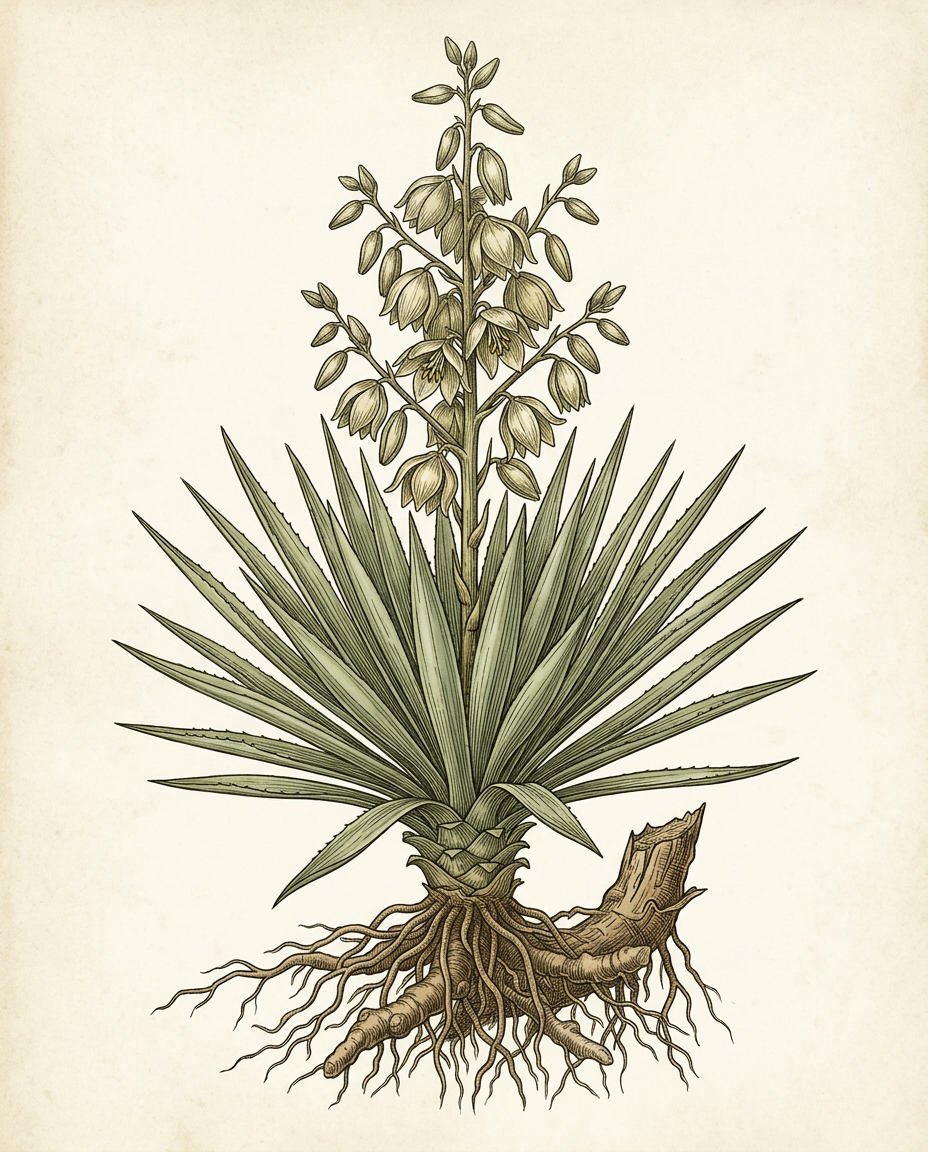
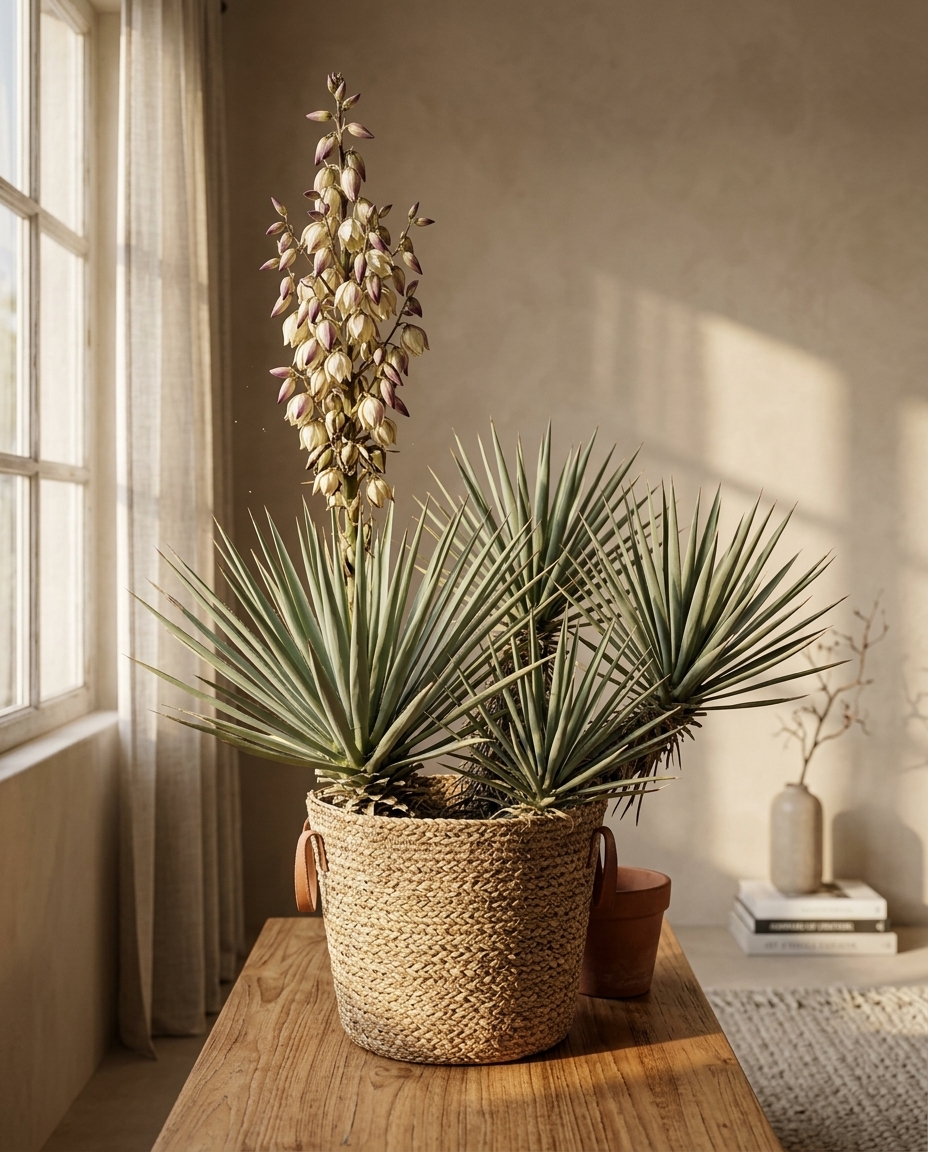
Plate IYucca spp. — sword-leaf rosette and tall cream-flower panicle. Agavaceae. ASPCA toxic — saponins, vomiting in cats.
Three plants that look the part, without the risk.
Sword-leaf or rosette houseplants that are ASPCA non-toxic — for the same architectural look without the saponins.
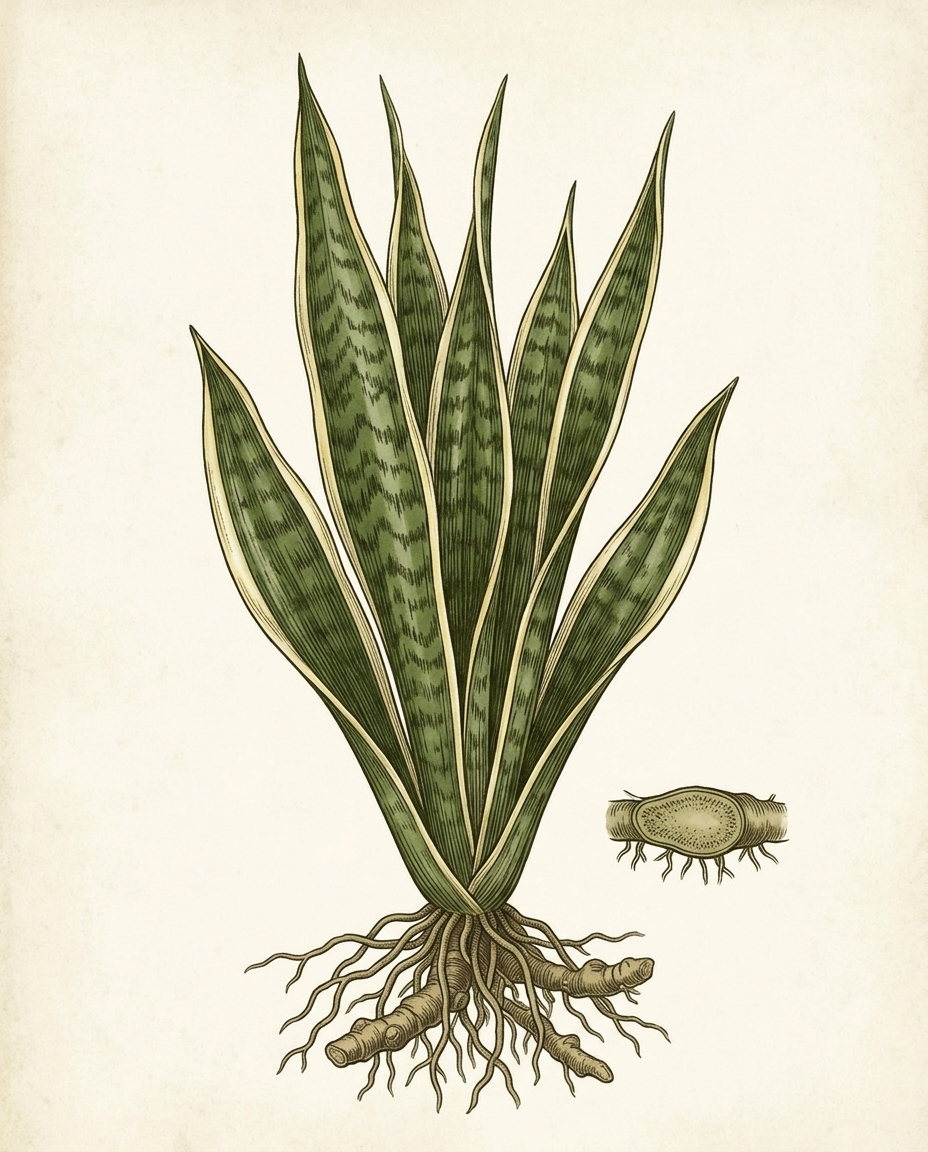
Snake Plant
Stiff upright sword-like leaves and similar architectural look — though note ASPCA actually lists snake plant as mildly toxic. Better safe swap is spider plant.
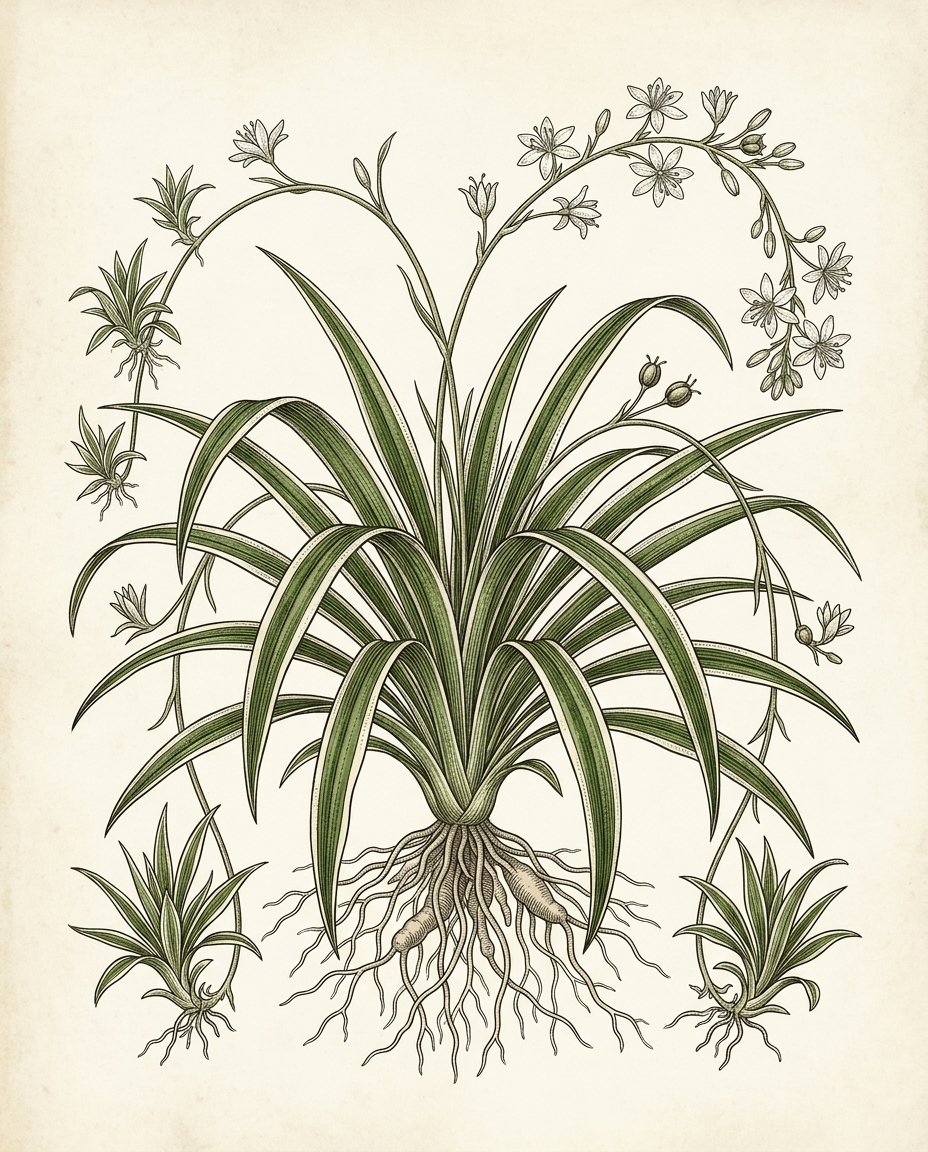
Spider Plant
Long arching strap leaves with a similar grassy texture. Non-toxic per ASPCA and very easy to grow.
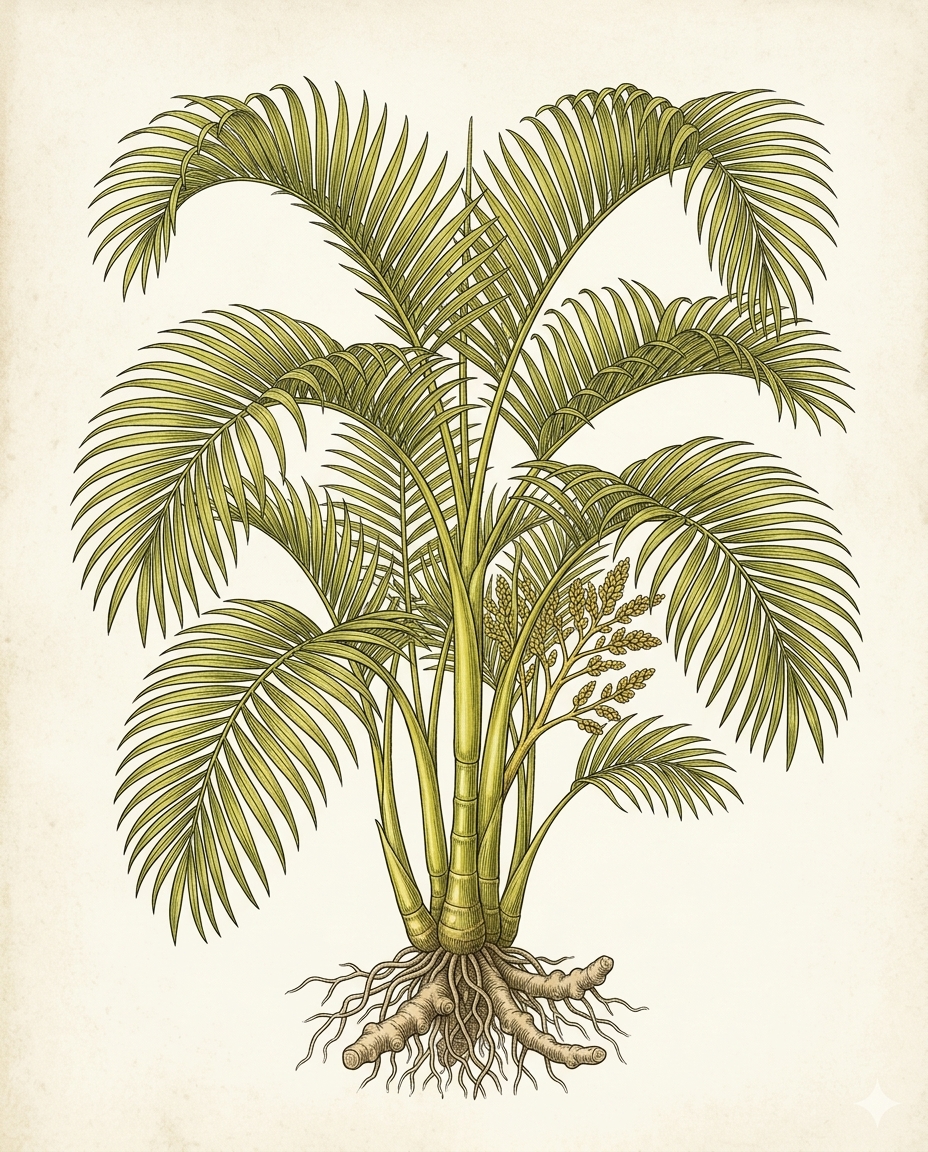
Areca Palm
Tall feathery palm form for a floor-standing statement plant. Non-toxic per ASPCA.
What it does to a cat.
Yes — yucca is toxic to cats. The ASPCA lists Yucca spp. (the entire genus, including the indoor Yucca Cane / Spineless Yucca and outdoor species like Adam's Needle and Spanish Dagger) as toxic to dogs, cats, and horses. The toxic principle is saponins — soap-like plant glycosides — and the practical clinical sign in cats is vomiting. Severity is mild to moderate at household exposure, but it is on the list.
The ASPCA verdict, verbatim: Toxic to Dogs, Toxic to Cats, Toxic to Horses · Family: Agavaceae · Scientific Name: Yucca spp. · Toxic Principles: Saponins · Clinical Signs: Dogs, cats — Vomiting; Horses — liver disease, dermatitis.
Yucca Cane is the indoor one
When most readers ask "is yucca toxic," they mean the cane-stem houseplant sold at IKEA, Home Depot, and the like — that is Yucca elephantipes, also called Spineless Yucca or Yucca Cane. It is covered by the same ASPCA genus-level listing. "Spineless" refers to softer leaf tips, not lower toxicity. The same saponins are present.
Outdoor landscape yuccas — Y. filamentosa (Adam's Needle), Y. gloriosa (Spanish Dagger), Y. brevifolia (Joshua Tree) — are all covered by the same listing. Outdoor cats grazing yucca leaves face the same vomiting risk.
Same toxin class as English ivy
Saponins are the same toxin class as English ivy. Mechanism is mostly mechanical: saponins emulsify cell membranes in the gut wall, irritating the lining and triggering vomiting. They are not a systemic poison at typical cat exposure. The severity is real but not the lily-grade emergency some cat owners assume from the sword-leaf look.
Severity is low for cats, high for horses
The ASPCA listing collapses three species' clinical signs into one entry, and the horse profile is much worse than the cat profile — liver disease and dermatitis in horses, vomiting only in cats and dogs. The veterinary literature backs this up. If you keep horses, take yucca more seriously. If you keep cats only, the practical risk is GI upset.
Watch for the leaf tip first
A more immediate yucca risk than the saponins is the leaf. Yucca leaves are stiff, sharp, and pointed. A cat batting at a Yucca Cane is more likely to take an eye injury or a face poke than to ingest enough saponin to matter. Site the plant above cat-jumping height for both reasons.
Safe architectural swaps
For the same floor-standing tropical look without saponins:
- Areca palm — tall, feathery, non-toxic per ASPCA.
- Parlor palm — smaller indoor palm with the same low-care profile.
- Ponytail palm — bulb-base trunk, arching strap leaves, non-toxic.
- Spider plant — the easiest safe sword-leaf substitute on a stand.
Note: dracaena is the most-confused indoor lookalike but is also on the ASPCA toxic list (saponins, same family) — not a safe swap. Indoor sword-leaf plants are a saponin family in general; the safer options sit elsewhere visually.
What we have actually seen.
Vomiting is the main sign
ASPCA clinical signs for dogs and cats are limited to vomiting. Saponins act as gastrointestinal irritants — they emulsify cell membranes mechanically rather than poisoning a specific system.
Self-limiting in casual exposure
A cat that gnaws one leaf tip usually shows mild salivation and may or may not vomit once. The ASPCA category is real but the severity tier is low for cats — most cases resolve at home.
Mechanical leaf injury
Yucca leaves are stiff and pointed. A curious cat batting at a Yucca Cane risks an eye or face poke before it risks chewing-toxicity. Worth siting away from cat traffic for both reasons.
Horses get the severe profile
ASPCA flags liver disease and dermatitis in horses — much more serious than the feline picture. Yucca is a real risk to livestock; cats get a soft warning by comparison.
- ASPCA Animal Poison Control Center. Toxic and Non-Toxic Plants: Yucca.Accessed June 2026 · aspca.org · Yucca spp. · Toxic to Dogs, Toxic to Cats, Toxic to Horses · Family Agavaceae · Toxic Principles: Saponins · Clinical Signs: Dogs, cats — Vomiting; Horses — liver disease, dermatitis
- ASPCA Animal Poison Control Center. Toxic and Non-Toxic Plants: English Ivy.For the cross-link to the same saponin-class toxin in a common indoor vine