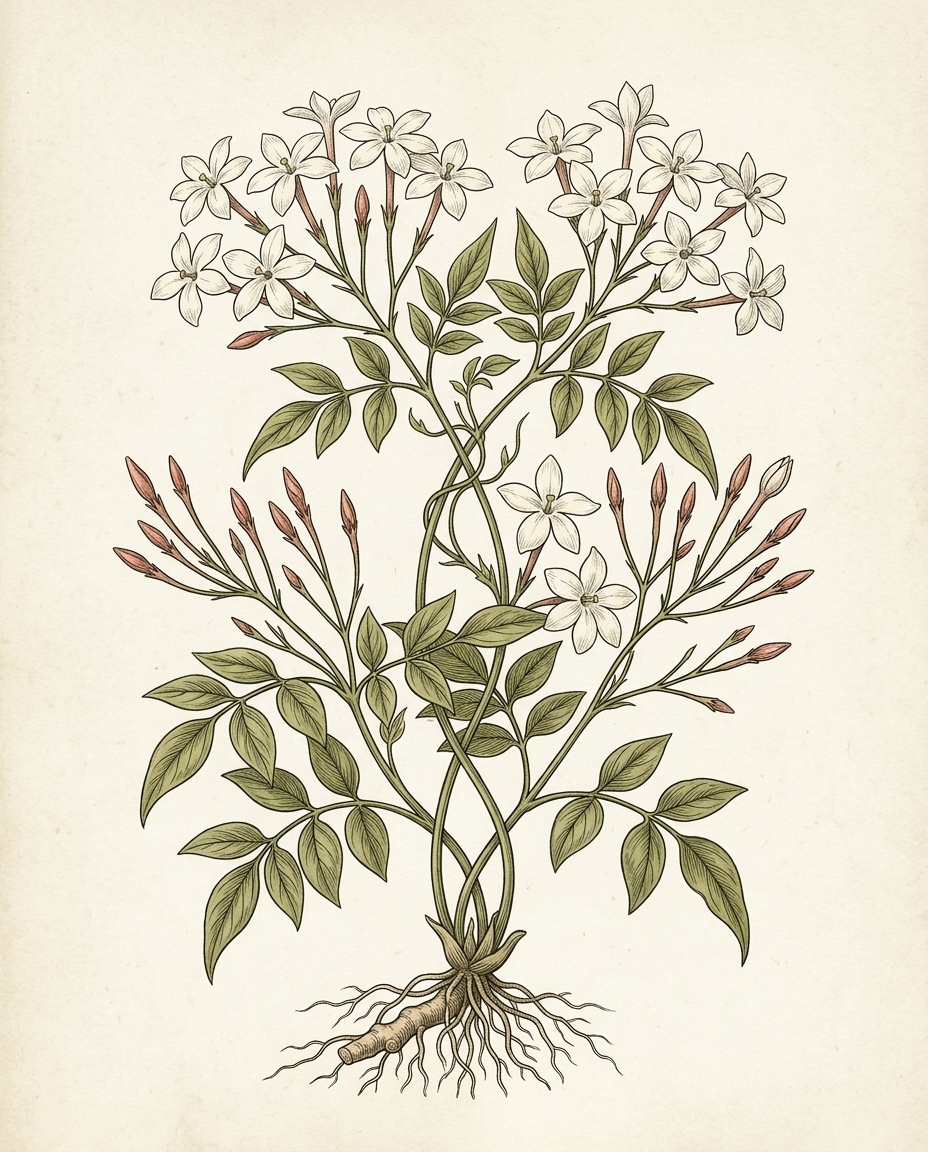
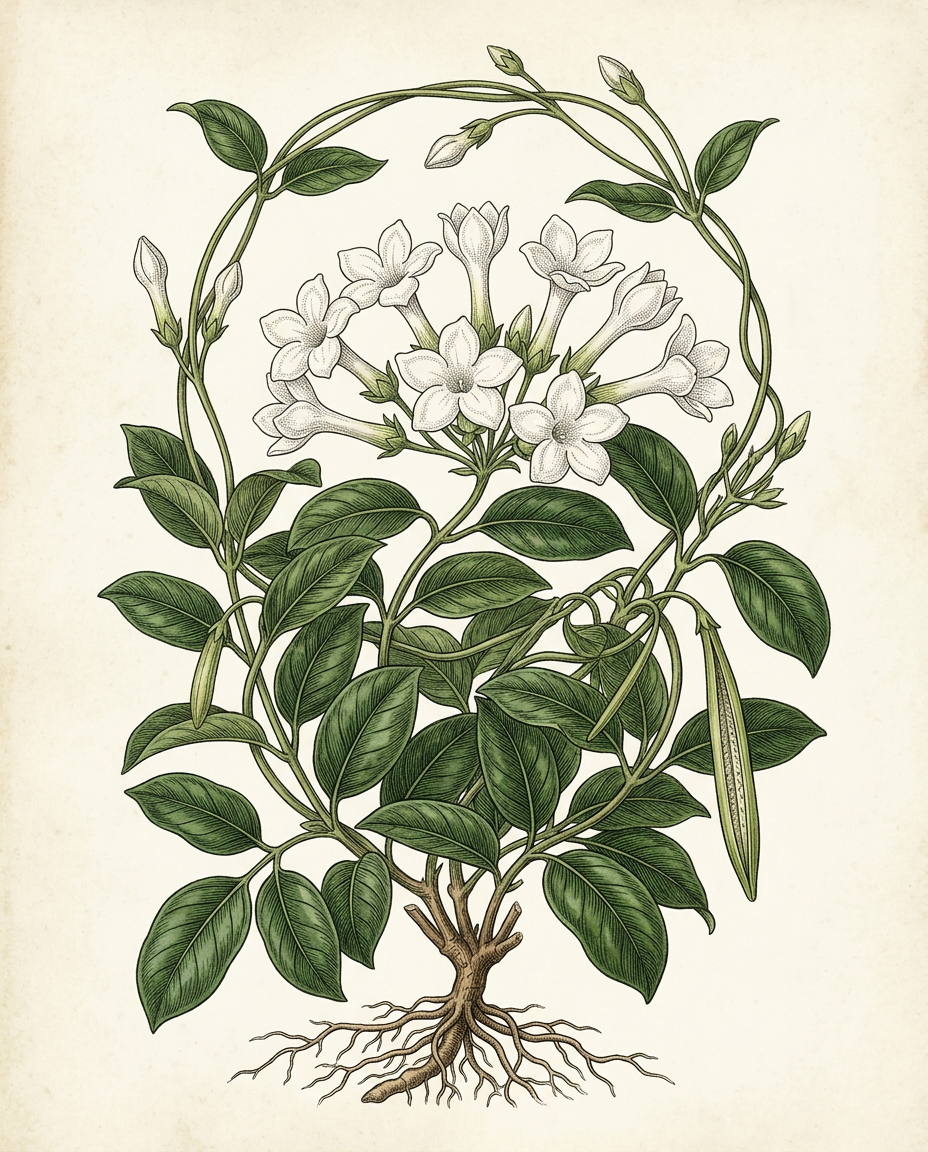
Star
Jasmine.
Trachelospermum jasminoides
Yes — star jasmine is safe for cats. The ASPCA lists Trachelospermum jasminoides as non-toxic to cats, dogs, and horses. It is not a true jasmine — and several other "jasmines" sharing the name are toxic, so confirm which plant you have before trusting the verdict.
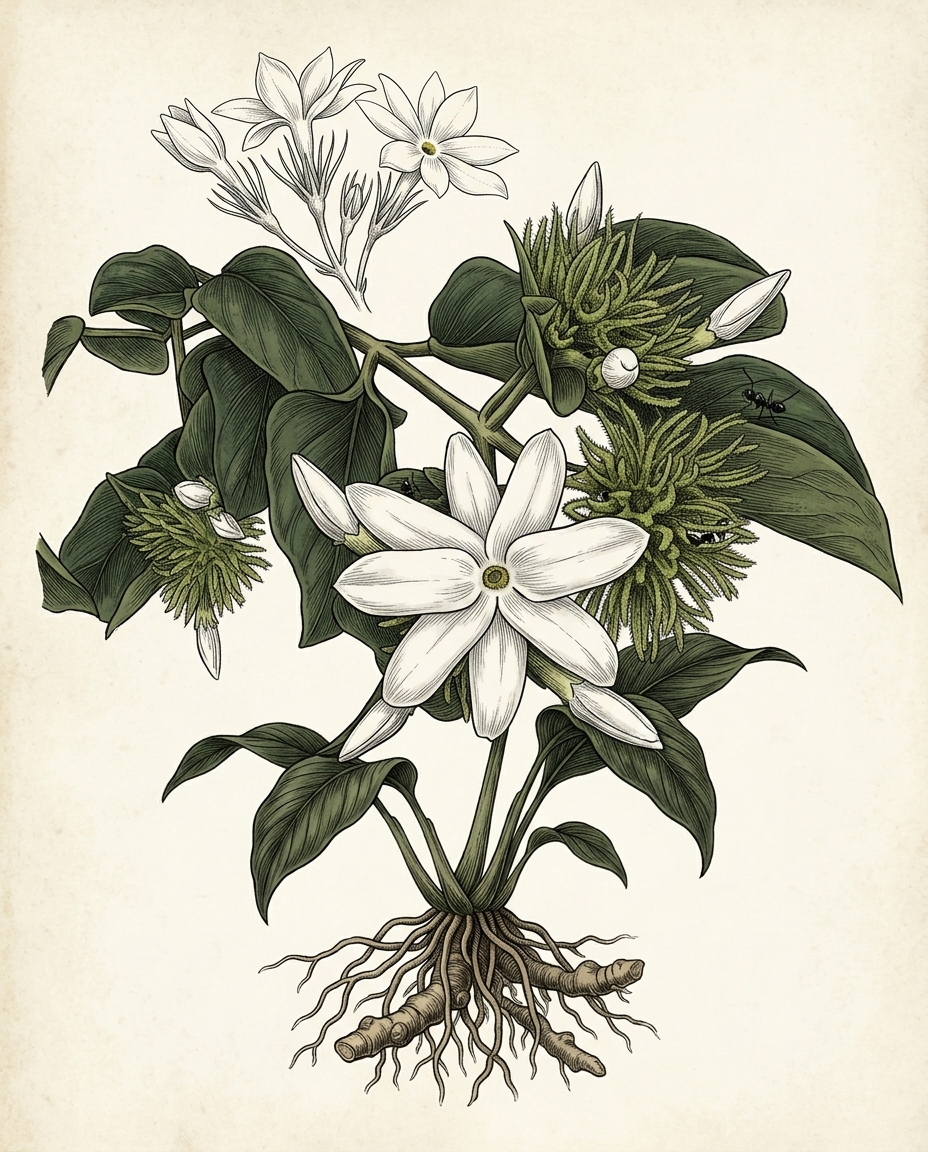
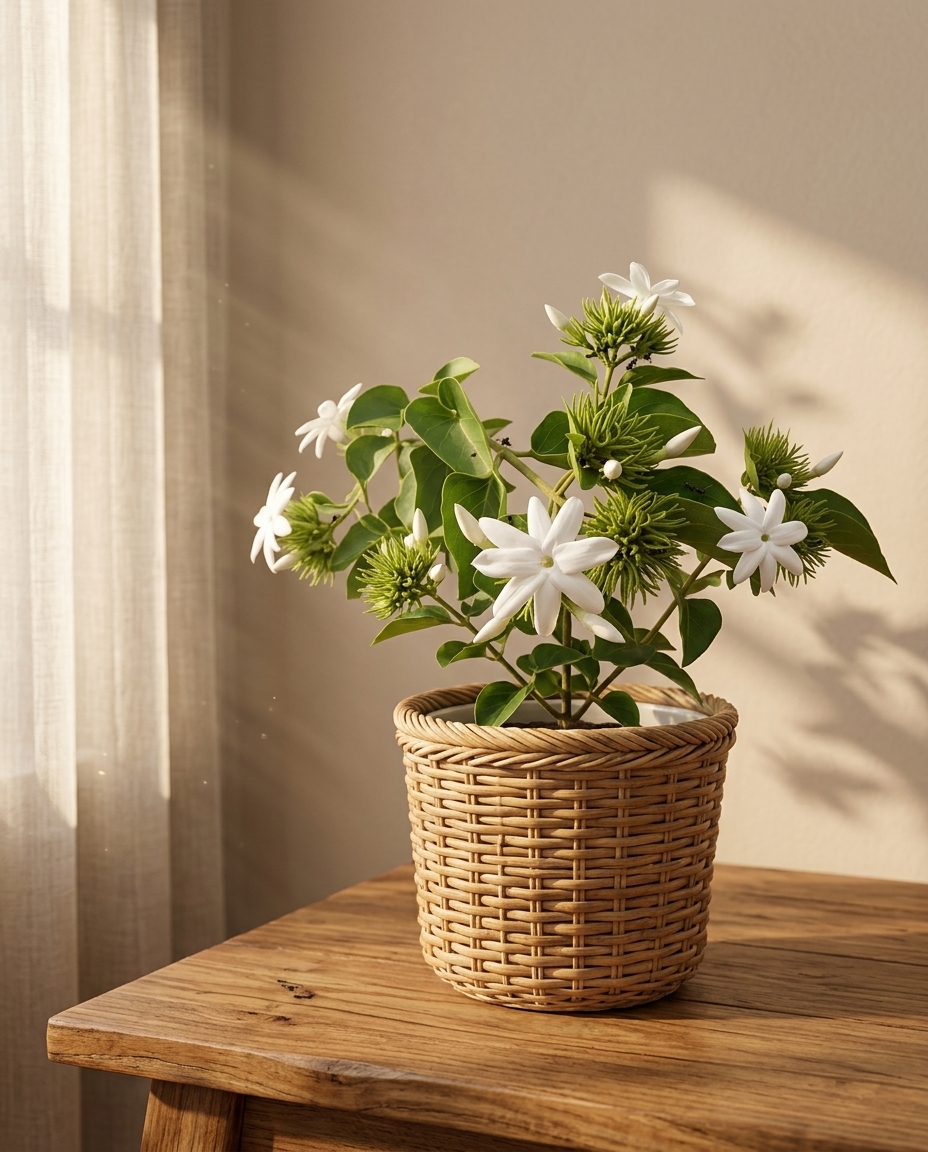
Plate ITrachelospermum jasminoides — star jasmine. The ASPCA lists it as non-toxic to cats, though it is not a true jasmine.
Star jasmine is safe— but check which "jasmine" you have.
Yes — star jasmine is safe for cats. The ASPCA lists Trachelospermum jasminoides as "Non-Toxic to Dogs, Non-Toxic to Cats, Non-Toxic to Horses." The flowers, leaves, and stems pose no poisoning risk.
But the word "jasmine" is one of the most dangerous common names in the plant world — it is attached to at least six different plants, and three of them are toxic to cats. So before you relax, confirm which one you actually have.
"Jasmine" disambiguation — six plants, one name
| Common name | Botanical name | For cats | | --- | --- | --- | | True Jasmine | Jasminum spp. | Safe — see jasmine | | Star Jasmine | Trachelospermum jasminoides | Safe — this page | | Madagascar Jasmine | Stephanotis floribunda | Safe — see Madagascar jasmine | | Cape Jasmine | Gardenia jasminoides | Toxic — see gardenia | | Carolina Jessamine | Gelsemium sempervirens | Toxic | | Night-Blooming Jasmine | Cestrum nocturnum | Toxic |
The takeaway is simple: the common name "jasmine" cannot tell you whether a plant is safe. Only the Latin name can. This page is about star jasmine, Trachelospermum jasminoides, which is non-toxic.
ASPCA Data
According to the ASPCA, star jasmine is listed under plants non-toxic to cats:
Non-Toxic to Dogs, Non-Toxic to Cats, Non-Toxic to Horses.
There are no toxic principles. Star jasmine is completely safe around cats.
Not a true jasmine
Despite the name, star jasmine is not a Jasminum. It belongs to the genus Trachelospermum in the family Apocynaceae — the same family as oleander and other notoriously toxic plants. That family relationship is worth noting precisely because it shows why you cannot reason about toxicity from family alone: Trachelospermum is ASPCA-verified non-toxic even though some of its relatives are dangerous.
Star jasmine does share the family's milky sap. The plant is non-toxic, but the sap may cause minor, transient skin or mouth irritation if a cat chews a lot of stem — an irritant nuisance, not a poisoning.
Growing star jasmine around cats
Star jasmine is an evergreen twining vine that flowers most freely in full sun, though it tolerates part shade. Give it a trellis, wire, or obelisk to climb, keep the soil evenly moist in the growing season with free draining soil, and prune after flowering. Because it is non-toxic, there is no safety reason to keep a cat away — only to protect the vine from chewing.
The bottom line
Star jasmine (Trachelospermum jasminoides) is safe for cats — but its name is shared by toxic plants, so always confirm the Latin name. The safe "jasmines" are this one, true jasmine, and Madagascar jasmine; the toxic ones include gardenia (Cape jasmine), Carolina jessamine, and night-blooming jasmine.
What we have actually seen.
Non-toxic plant
Star jasmine — leaves, stems, and the fragrant flowers — is non-toxic to cats. A cat that nibbles the vine or bats at a bloom faces no poisoning risk.
Not a true jasmine
Despite the common name, star jasmine is Trachelospermum (family Apocynaceae), not Jasminum. The name is a marketing convenience, not a botanical fact.
The name "jasmine" is shared by toxic plants
Several unrelated plants are sold as some kind of "jasmine," and three of the common ones are toxic to cats. Always confirm the Latin name before trusting a verdict.
Milky sap can mildly irritate
Like many in the Apocynaceae, star jasmine has a milky sap. It is ASPCA non-toxic, but the sap may cause minor, transient skin or mouth irritation if a cat chews a lot of stem.
Four common varieties.
Trachelospermum jasminoides (The ASPCA-listed species)
An evergreen climbing vine with pinwheel-shaped, intensely fragrant white flowers. This is the species the ASPCA lists as non-toxic.
Trachelospermum asiaticum (Tougher, smaller-leaved relative)
A hardier, ground-covering relative with creamy flowers. Same genus and benign chemistry; commonly grown as a low evergreen mat.
Keeping the plant alive.
Full sun to part shade
Flowers most freely in full sun but tolerates part shade. Indoors, give it the brightest spot available.
Moderate, even moisture
Keep soil evenly moist in the growing season; let the top inch dry between waterings. Reduce in winter.
Rich, free-draining
Fertile, well-draining soil. A container plant appreciates a loam-based mix with added grit.
Trellis or support
A natural climber — give it a trellis, wire, or obelisk to twine around. Prune after flowering to keep it tidy.
- ASPCA Animal Poison Control Center. Toxic and Non-Toxic Plants: Star Jasmine.Accessed June 2026 · aspca.org
If you liked this, also safe.