Pampas
Grass.
Cortaderia selloana
Yes — pampas grass is safe for cats. The ASPCA lists Cortaderia selloana as non-toxic to cats, dogs, and horses. The only real cautions are mechanical (the blades and plumes are sharp and fibrous in quantity) and ecological (it is an aggressive invasive in California, Australia, and New Zealand).
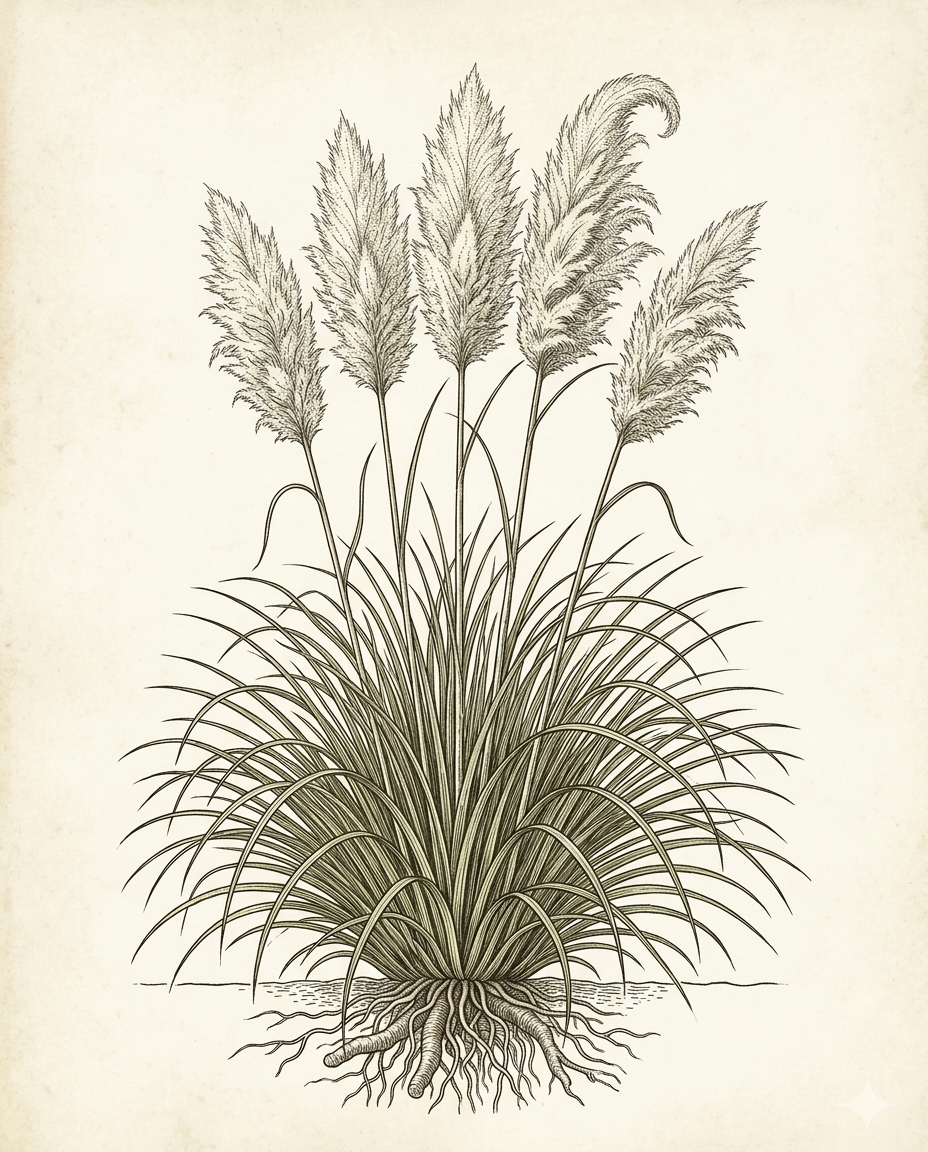
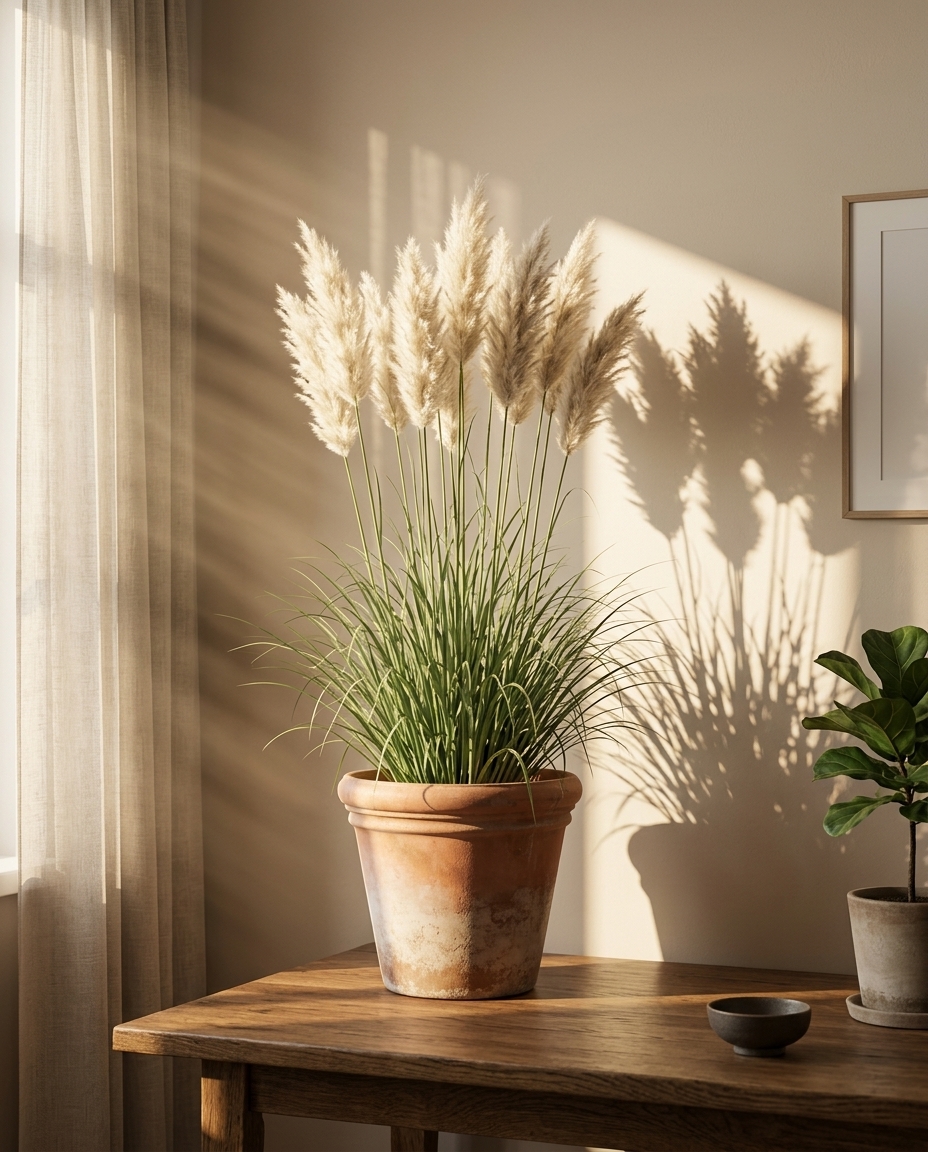
Plate ICortaderia selloana — pampas grass. The ASPCA lists it as non-toxic to cats; the plumes are a safe, if sharp, decor staple.
Pampas grass is safe— the risks are sharp, not toxic.
Yes — pampas grass is safe for cats. The ASPCA lists Cortaderia selloana as "Non-Toxic to Dogs, Non-Toxic to Cats, Non-Toxic to Horses." There is no toxin in the blades, the plumes, or the dried decor.
Pampas grass is a large clump-forming ornamental grass in the family Poaceae, instantly recognisable from its towering feathery plumes. Indoors it shows up most often as dried decor — those tall cream plumes in a floor vase — and that is exactly where most cat owners encounter it.
ASPCA Data
According to the ASPCA, pampas grass is listed under plants non-toxic to cats:
Non-Toxic to Dogs, Non-Toxic to Cats, Non-Toxic to Horses.
There are no toxic principles. A cat that chews a blade or bats at a plume is in no danger of poisoning.
The real cautions are mechanical, not toxic
"Safe" here means non-toxic, but pampas grass is not entirely without hazards — they are just physical ones:
- Sharp, saw-edged blades. The leaves carry fine serrated edges that can nick skin like a paper cut. This is the reason gardeners wear gloves to cut it.
- Fibrous plumes in quantity. A cat that bites off and swallows a mouthful of plume fibre can gag, and in rare cases a large wad could risk a digestive blockage. The fibre is not poisonous, but it is not food either.
- An irresistible toy. The plumes wave like prey, and many cats cannot resist them. Expect shed fluff around any dried arrangement, and place tall vases where they cannot be toppled.
None of this is poisoning. A cat that nibbles pampas grass does not need an emergency call — just sensible placement and supervision of determined chewers.
A note on planting it: invasive species
There is one more reason to think before planting pampas grass outdoors, and it has nothing to do with cats. Cortaderia selloana is an aggressive invasive species — it is formally listed as invasive in California, Australia, and New Zealand, where it self-seeds prolifically on the wind and crowds out native vegetation. If you garden in those regions, choose a sterile or dwarf cultivar such as 'Pumila', or grow something else entirely.
Growing pampas grass
Pampas grass wants full sun, free-draining soil, and space. It is drought-tolerant once established and largely undemanding. Cut it back hard in late winter — wearing gloves and long sleeves to guard against the blades.
The bottom line
Pampas grass is non-toxic and safe to keep around cats, including the popular dried plumes — just mind the sharp blades, supervise plume-chewers, and think twice about planting it where it is invasive. For other safe, grassy greenery, see bamboo and lemon grass. Note that heavenly bamboo, despite the name, is toxic — not a grass at all.
What we have actually seen.
Non-toxic plant
Pampas grass — blades, plumes, and roots — is non-toxic to cats. A cat that chews a blade or bats at a plume faces no poisoning risk.
Sharp, saw-edged blades
The leaf blades carry fine serrated edges that can give a person or a cat a paper-cut-like nick. This is a mechanical hazard, not a toxic one.
Fibrous plumes in quantity
Swallowing a mouthful of the feathery plume fibre can cause gagging or, rarely, a digestive blockage in a determined chewer. The fibre itself is not poisonous.
A tempting toy
The waving plumes move like prey and many cats cannot resist batting and biting them. Expect shed fluff around a dried arrangement.
Four common varieties.
Cortaderia selloana (The classic plumed species)
The familiar large clump-forming grass with towering cream or pink-tinged plumes. Non-toxic; grown as a garden specimen and dried for decor.
Cortaderia selloana 'Pumila' (Compact, tidier form)
A smaller, less aggressive cultivar that stays under about 1.5 m — a better-behaved choice where the species would be invasive.
Keeping the plant alive.
Full sun
Pampas grass demands full sun to grow dense and plume well. It struggles and flops in shade.
Low once established
Drought-tolerant when mature; water regularly only in the first season while roots establish.
Free-draining, undemanding
Tolerates most soils as long as they drain freely. Dislikes waterlogged ground over winter.
Open ground, away from paws
Give the clump space; the sharp blades make it a poor choice beside a path. Wear gloves to cut, and check local rules before planting.
- ASPCA Animal Poison Control Center. Toxic and Non-Toxic Plants: Pampas Grass.Accessed June 2026 · aspca.org
If you liked this, also safe.