Cucumber
Cucumis sativus
Yes — cucumber is safe for cats. The ASPCA lists it as non-toxic to cats, dogs, and horses. The plant and fruit are harmless. A separate caution: do not use cucumbers to "startle" your cat — it is stressful, not funny.
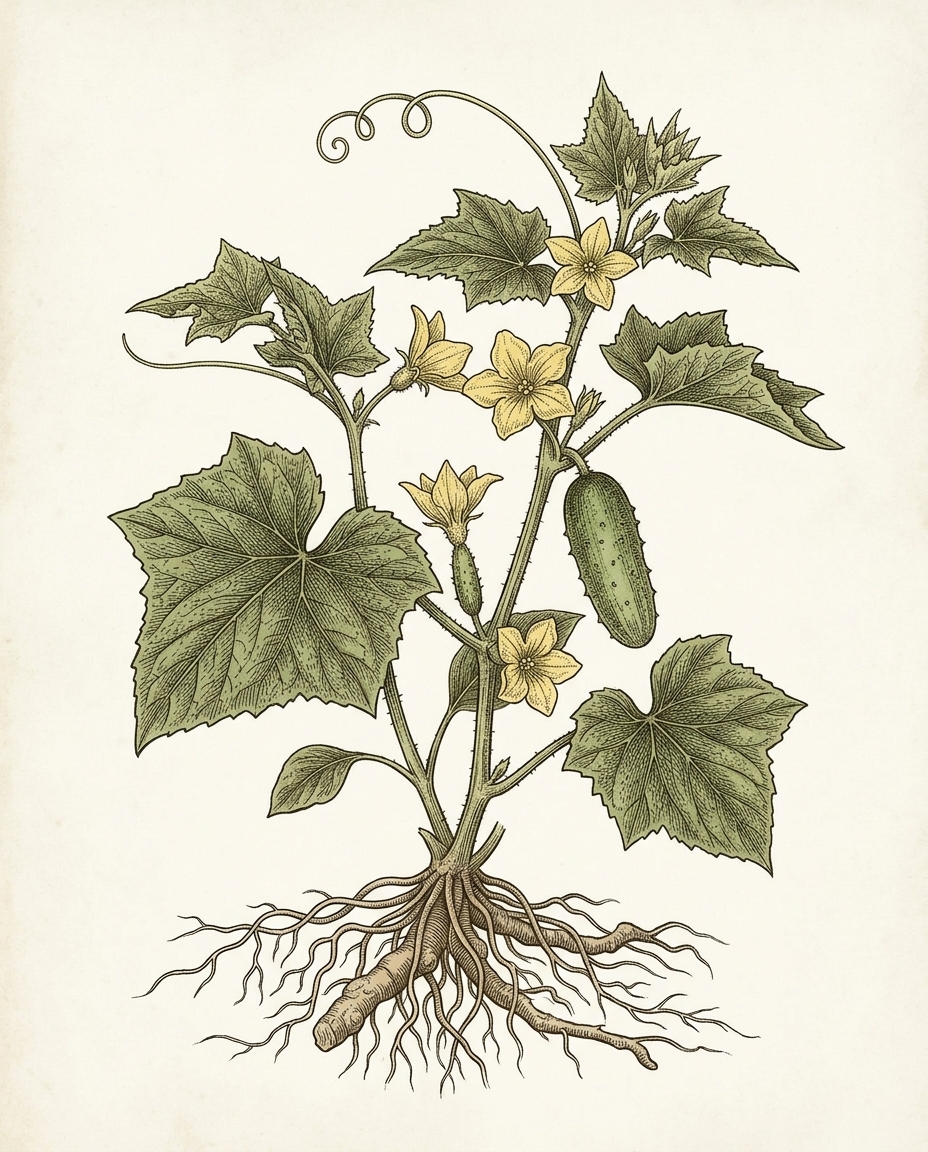
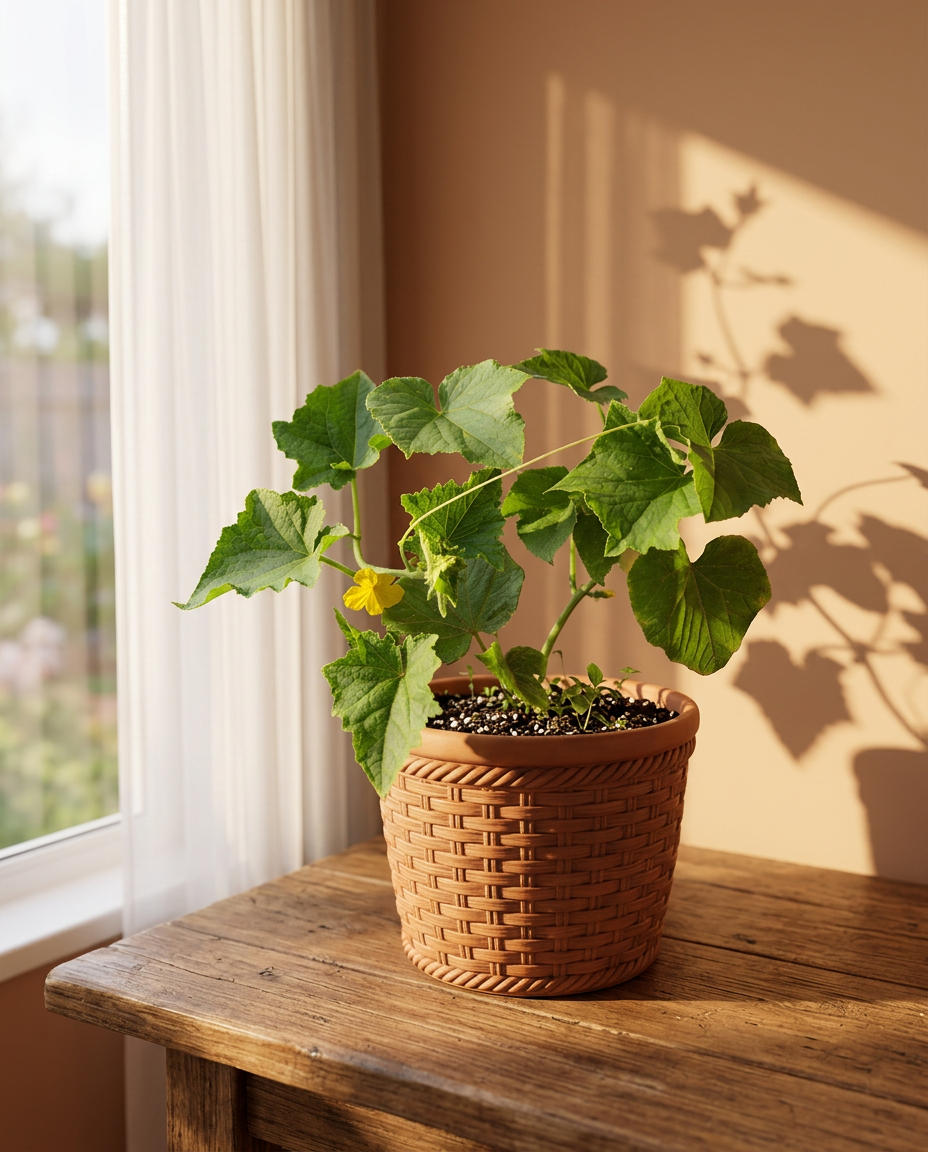
Plate ICucumis sativus — the garden cucumber. Vine, leaves, flowers, and fruit are all non-toxic to cats per the ASPCA.
Cucumber is safe— so please don't use it to scare your cat.
Yes — cucumber is safe for cats. The ASPCA lists it as "Non-Toxic to Dogs, Non-Toxic to Cats, Non-Toxic to Horses." The plant and the fruit are non-toxic.
Cucumber (Cucumis sativus) is a climbing or trailing vine in the gourd family (Cucurbitaceae). A cat that nibbles a leaf or a dropped slice of cucumber faces no poisoning risk.
ASPCA Data
According to the ASPCA, cucumber is listed under plants non-toxic to cats:
Non-Toxic to Dogs, Non-Toxic to Cats, Non-Toxic to Horses.
There are no toxic principles. The plant is completely safe around cats.
The cucumber-startle trend — please don't
You have probably seen the videos: a cucumber placed silently behind a cat that, on turning around, leaps into the air. It looks comic, but it is a fear response, not curiosity or play.
To a cat, a sudden, silent, unfamiliar object that appeared while their back was turned reads as a possible predator. The leap is a hard-wired startle-and-flee reflex. Repeatedly triggering it:
- causes genuine stress and anxiety,
- can lead to a panicked cat injuring itself on furniture or walls, and
- can erode a cat's sense of safety in places it should feel secure, like near its food bowl.
Feline behaviourists advise against it. The cucumber is not toxic — the harm here is psychological, not chemical. If you want to interact with your cat, use toys and play that invite engagement rather than fear.
Feeding cucumber to a cat
Cucumber is a fine occasional treat:
- Small, peeled slices. Cucumber is roughly 95 percent water, so it is a hydrating, low-calorie nibble.
- Treat only. Cats are obligate carnivores with no nutritional need for vegetables.
- Moderation. Too much can cause loose stool — from volume, not toxin.
Growing cucumber around cats
Cucumbers like warmth, full sun, and steady moisture. Train vines up a trellis or grow compact bush types in patio pots. Because the plant is non-toxic, there is no need to keep cats away for safety.
The bottom line
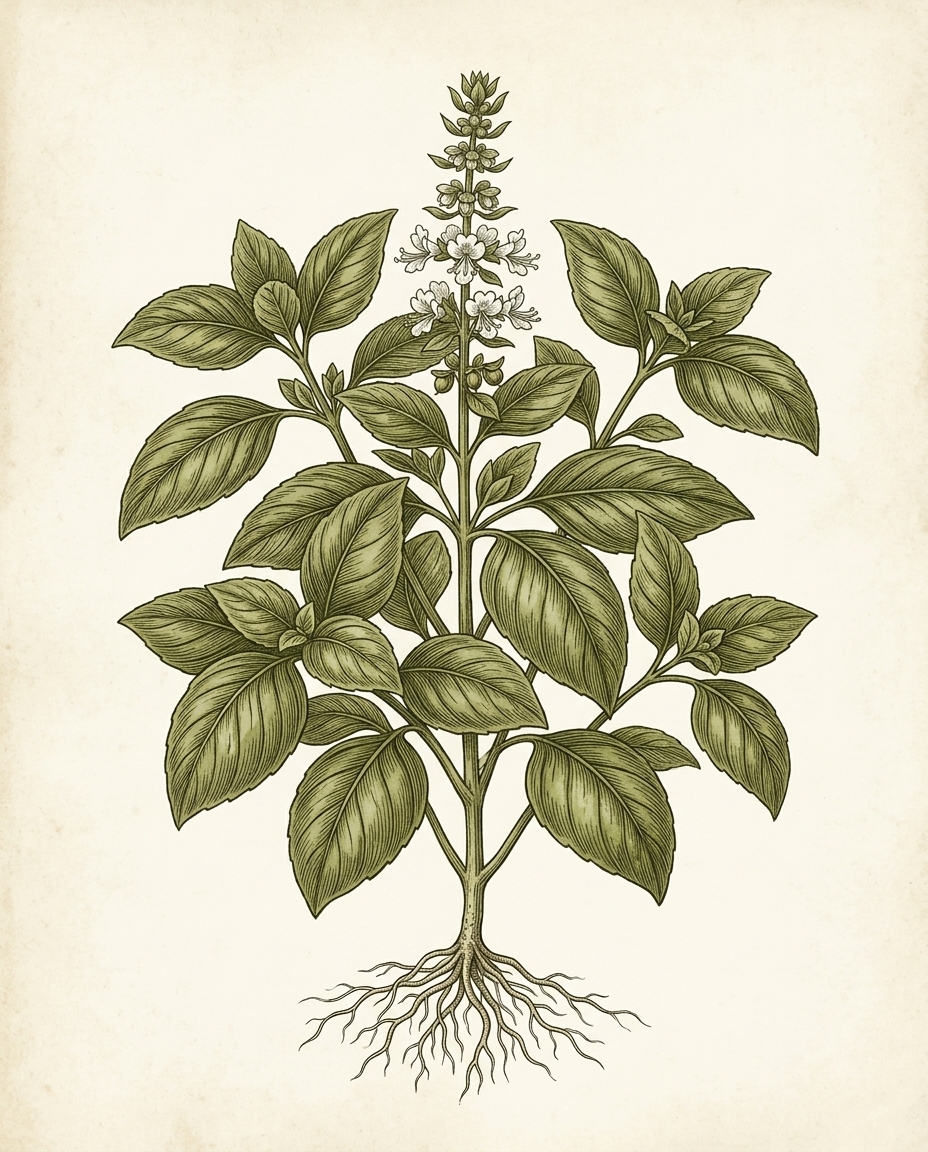
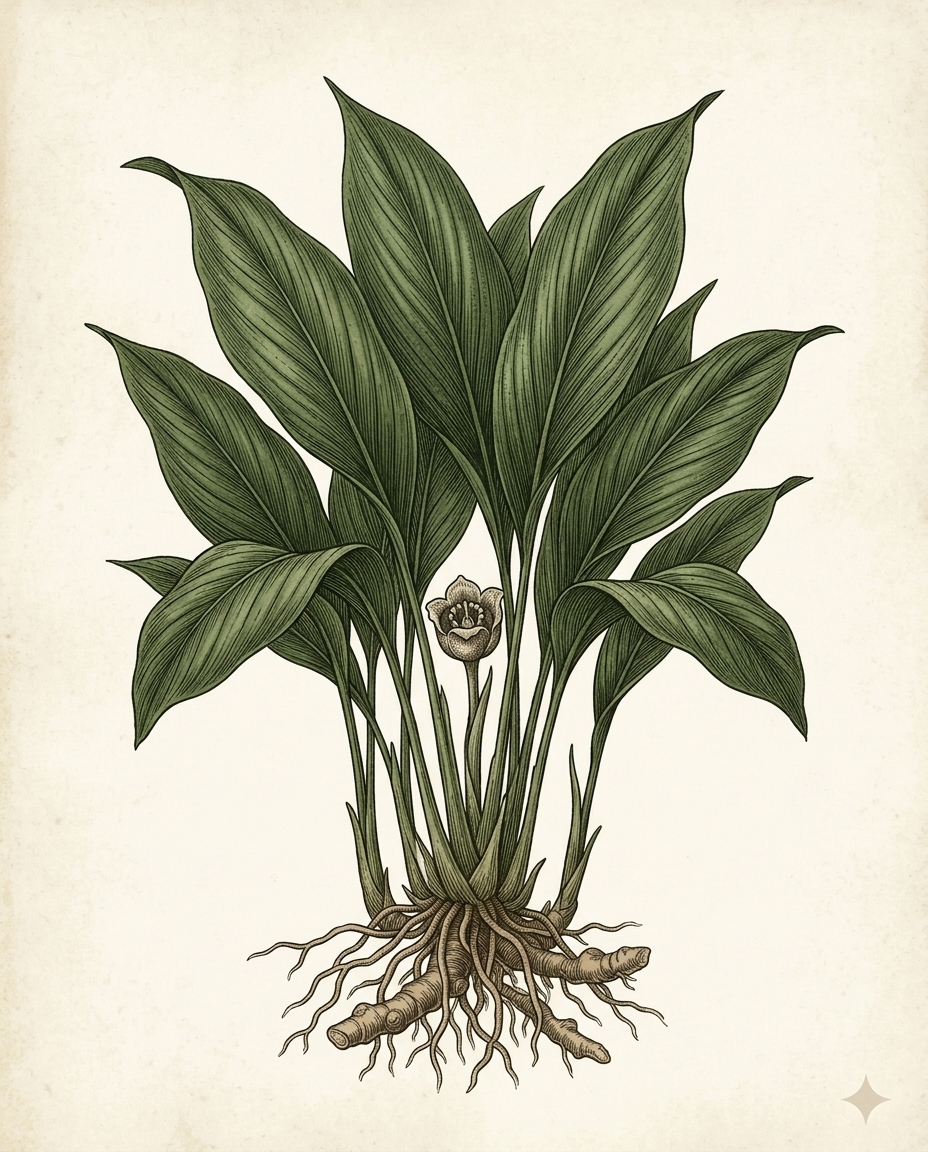
Cucumber is safe for cats to be around and a harmless treat to share in small amounts. Just skip the startle videos — they frighten the cat. For more safe edibles, see tomato plant and basil; for a tough, non-toxic houseplant, the cast-iron plant is hard to beat.
What we have actually seen.
Non-toxic plant and fruit
The cucumber vine, leaves, flowers, and fruit are all non-toxic to cats. A cat that chews a leaf or a slice of cucumber faces no poisoning risk.
Mostly water — a hydrating nibble
Cucumber is roughly 95 percent water, so a small piece is a harmless, hydrating treat. It carries almost no calories and no toxin.
The cucumber-startle response
Videos of cats leaping from cucumbers placed behind them show a fear startle, not curiosity. Cats react to a sudden unfamiliar object as a possible predator. It is stress, not play.
Digestive upset if overfed
Even non-toxic vegetables can cause loose stool if a cat eats too much. Offer only small amounts.
Four common varieties.
Cucumis sativus (Slicing and pickling types)
The common cultivated cucumber, grown as a climbing or trailing vine. All types are non-toxic to cats.
Cucumis sativus 'Bush' types (Compact, container-friendly)
Dwarf bush cultivars suited to pots and balconies. Same non-toxic status; convenient for small indoor gardens.
Keeping the plant alive.
Full sun
Cucumbers need warm, sunny conditions — 6 or more hours of direct light — to crop well.
Frequent and deep
Thirsty plants. Keep soil consistently moist; irregular watering causes bitter or misshapen fruit.
Rich, well-draining
Fertile, free-draining soil with plenty of organic matter. Feed regularly while fruiting.
Trellis or container
Train vines up a trellis to save space; bush types thrive in patio pots, keeping fruit off the ground.
- ASPCA Animal Poison Control Center. Toxic and Non-Toxic Plants: Cucumber.Accessed June 2026 · aspca.org
- International Cat Care. Stress and the feline startle response.Behaviour guidance · accessed 2026
If you liked this, also safe.