Boxwood
Buxus spp.
Boxwood is toxic to cats per the ASPCA. The most-planted hedge shrub in the US — every suburb has it, every outdoor cat encounters it. Buxine alkaloids cause vomiting and diarrhea.
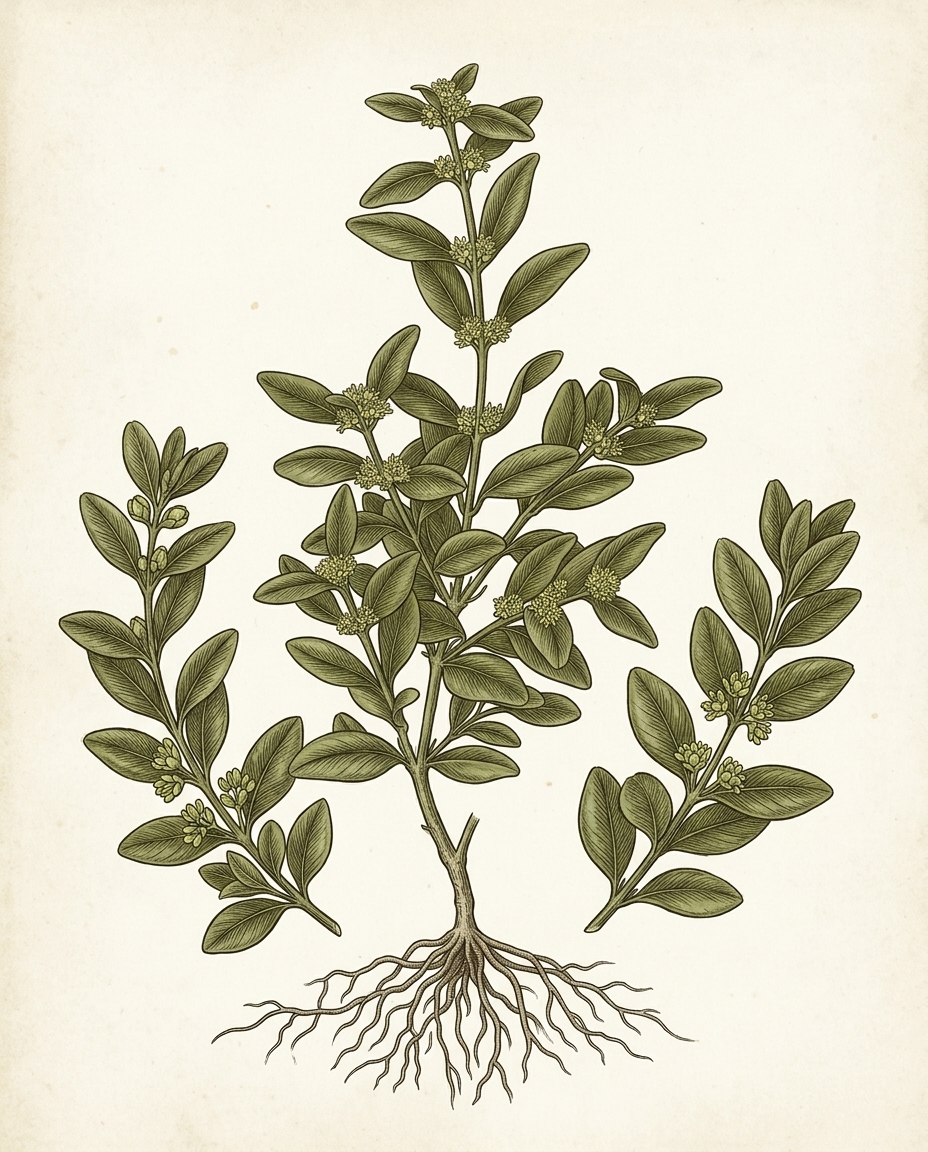
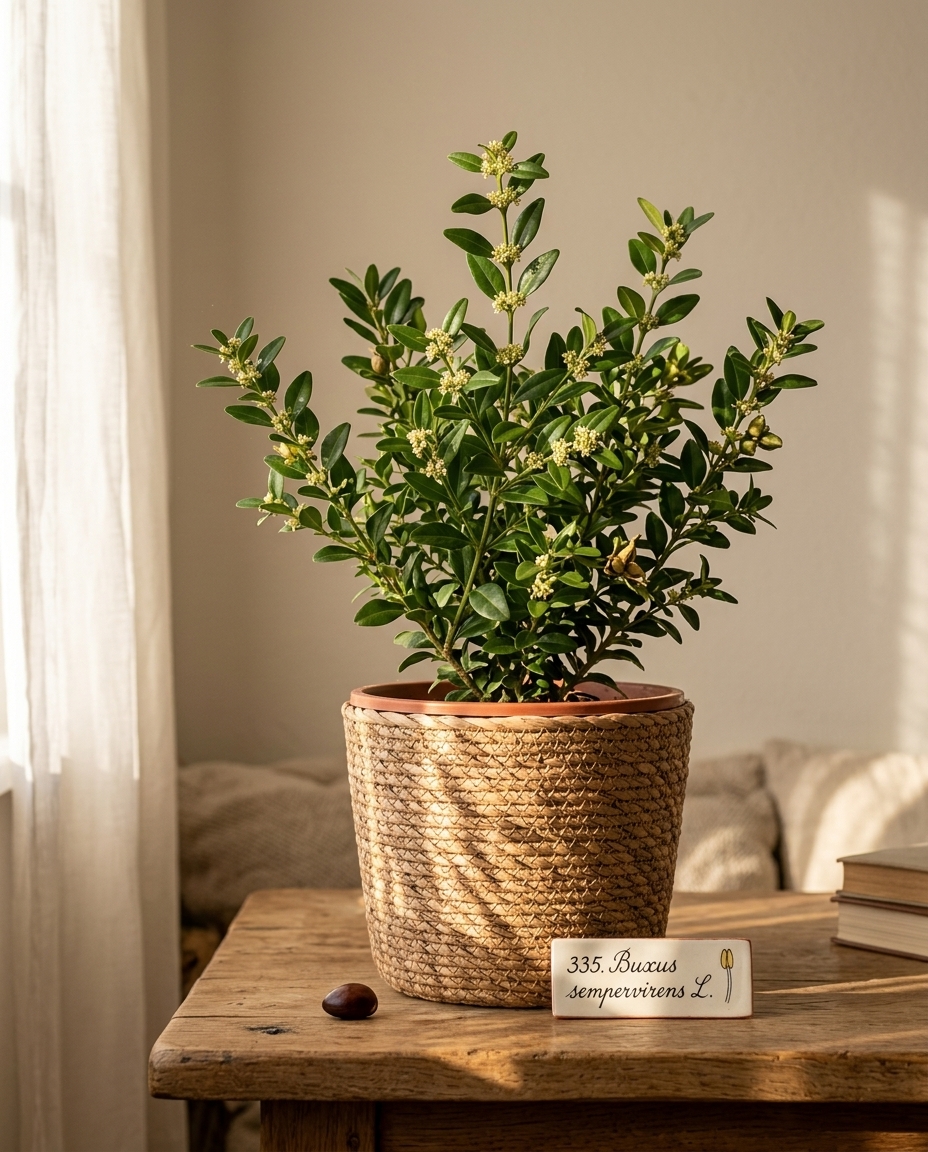
Plate IBuxus spp. — the standard formal hedge shrub. Small glossy oval evergreen leaves; dense branching; tolerates close clipping. ASPCA toxic — buxine alkaloids throughout.
Three plants that look the part, without the risk.
Same dense formal-hedge look without the buxine risk — these evergreen alternatives give the clipped-edge structure without poisoning a hedge-patrolling outdoor cat.
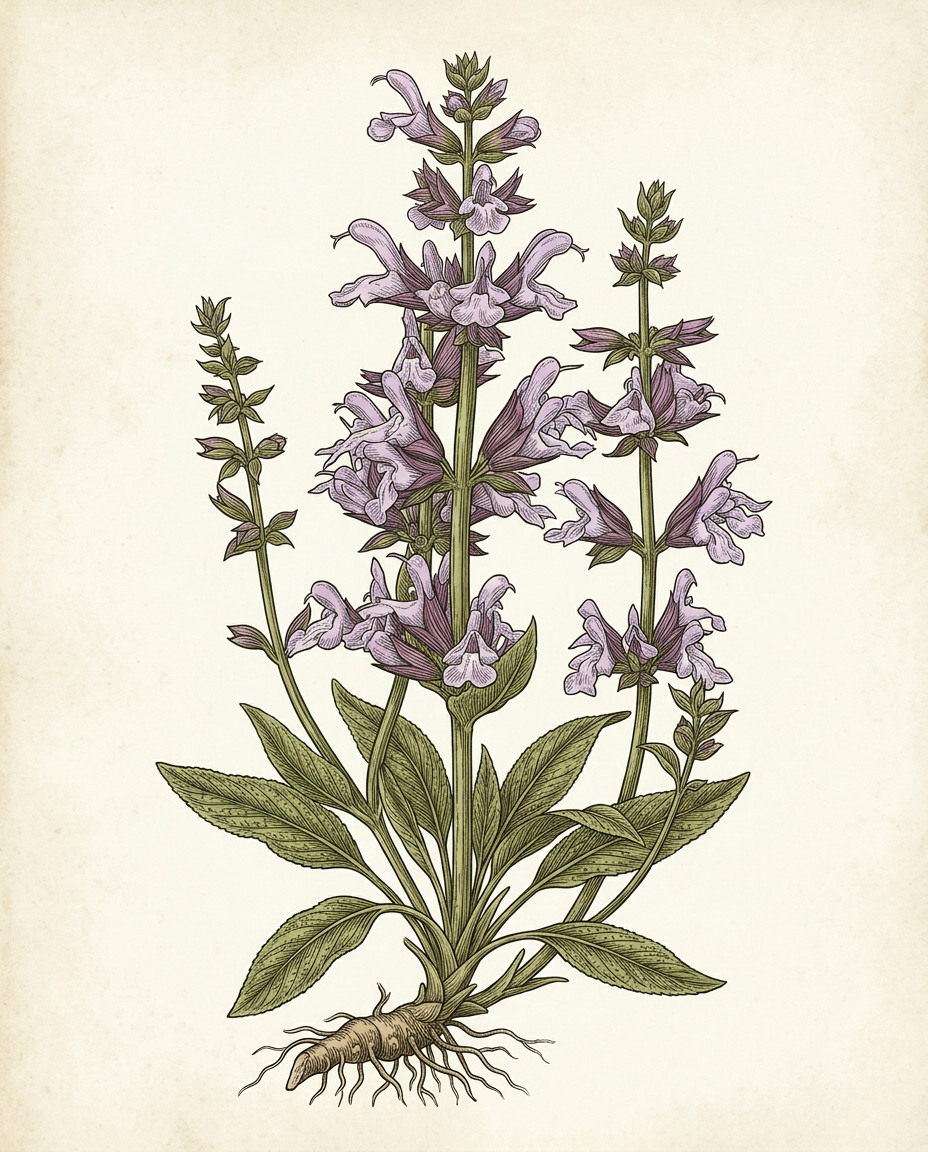
Rosemary (low hedge)
For a low informal hedge, rosemary is ASPCA non-toxic and clips well. Aromatic and pollinator-friendly. See sage for the related culinary-herb verdict.
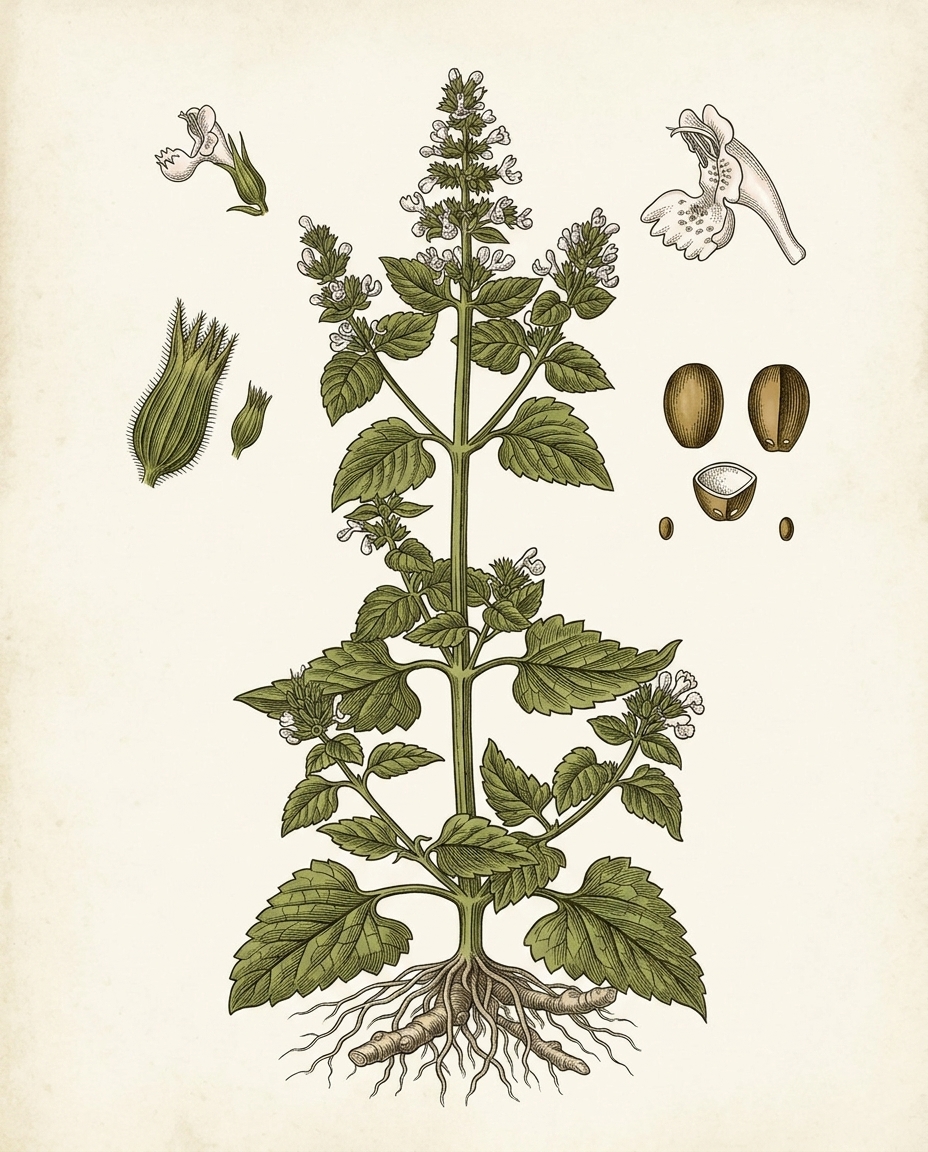
Lavender
Lavender is not on ASPCA toxic list and works as a low scented hedge. Many catnip-related aromatic alternatives are similarly safe.
Catnip
For a wilder garden border, catnip is ASPCA non-toxic and beloved by cats. Not a hedge per se but useful for the same role at the planting bed scale.
What it does to a cat.
Boxwood is toxic to cats. The ASPCA lists Buxus spp. as toxic to cats, dogs, and horses. The toxic principle is buxine alkaloids — a class of steroidal alkaloids present throughout the plant in leaves, stems, and bark.
The ASPCA's verdict, verbatim: Scientific Name: Buxus spp. · Family: Buxaceae · Toxicity: Toxic to Dogs, Toxic to Cats, Toxic to Horses · Toxic Principles: Alkaloids · Clinical Signs: Dogs and cats: vomiting, diarrhea; Horses: colic, diarrhea. The verdict is genus-wide — Buxus sempervirens (common boxwood / English box), Buxus microphylla (Japanese / Korean box), and the named cultivars are all covered.
Why boxwood matters more than most toxic plants
Most toxic houseplants get into a cat's life because someone bought one and put it in the living room. Boxwood is different: it's the most-planted hedge shrub in suburban America. Every property line, every corporate landscaping bed, every formal garden has it. An indoor-outdoor cat or a cat who escapes onto the porch walks past more boxwood foliage in a week than they'll meet of any houseplant in a year.
The toxin is mild — vomiting and diarrhea, resolving in a day or two — and that's the second reason it doesn't get the attention it deserves. There's no dramatic clinical sign. A cat that grazes the hedge on the way home is sick the next morning, the owner doesn't connect the dots, and the cat goes out again. Repeat exposure is the realistic harm pattern.
What it does to a cat
- Vomiting (most common): onset 1 to 4 hours after ingestion. Self-limiting in light grazing.
- Diarrhea: often follows vomiting. 24–48 hour course.
- Anorexia: cats may refuse food for a day after a moderate dose.
- Cardiac effects (very rare): the steroidal-alkaloid mechanism can produce cardiac signs at high dose. Documented in horses (which eat much larger quantities of hedge); rare in cats.
If your cat is lethargic for more than 24 hours, dehydrated, or shows any neurological or cardiac signs, go to the vet. Call the ASPCA Animal Poison Control Center at 888-426-4435 for dose-based guidance.
The clippings trap
A specific risk worth flagging: boxwood hedge clippings. Trimmed boxwood foliage is more accessible than the standing hedge — cats can graze a pile dumped at the back of a bed without having to push past the dense outer leaves. If you have outdoor cats or wandering neighbour cats, bag clippings and bin them. Do not compost in an accessible heap.
Cat-safe alternatives to a boxwood hedge
The "formal evergreen hedge" role is hard to substitute on the ASPCA non-toxic list — most candidates (yew, holly, privet, laurel) are also toxic. Options that work at smaller scales:
- Rosemary for a low informal hedge — ASPCA-safe, clips well, aromatic.
- Lavender for a low scented edge.
- Bamboo (true bamboo, Bambusoideae) is ASPCA non-toxic and works as a tall screening hedge in the right zone — but check the species, since some so-called "bamboos" (sacred bamboo, Nandina) are toxic and unrelated.
- Catnip for a wilder garden border at planting-bed scale.
For the full toxic-plants reference, browse the toxic plants list.
What we have actually seen.
Vomiting
Most common sign in cats. Onset 1–4 hours after ingestion. Self-limiting in mild exposures.
Diarrhea
Often follows vomiting. Resolves within 24–48 hours in mild cases.
Anorexia
Cats may go off food for a day after a moderate ingestion.
Cardiac signs (very rare, high dose)
Large ingestion (more than typical chew-a-leaf exposure) can produce cardiac effects via the steroidal alkaloid mechanism. Documented in horses; rare in cats.
- ASPCA Animal Poison Control Center. Toxic and Non-Toxic Plants: Boxwood.Accessed June 2026 · aspca.org · Buxus spp. · Toxic Principles: Alkaloids
- Pet Poison Helpline. Buxus ingestion in companion animals.Clinical reference · 2024
- Merck Veterinary Manual. Buxine alkaloid toxicosis.Standard veterinary toxicology reference