Borage
Borago officinalis
Borage is toxic to cats. The ASPCA lists it as causing vomiting, diarrhea, and dermatitis. The bristly leaves can irritate skin on contact, and the seeds and borage oil contain pyrrolizidine alkaloids that are hepatotoxic. It is rarely fatal, but it does not belong on the menu.
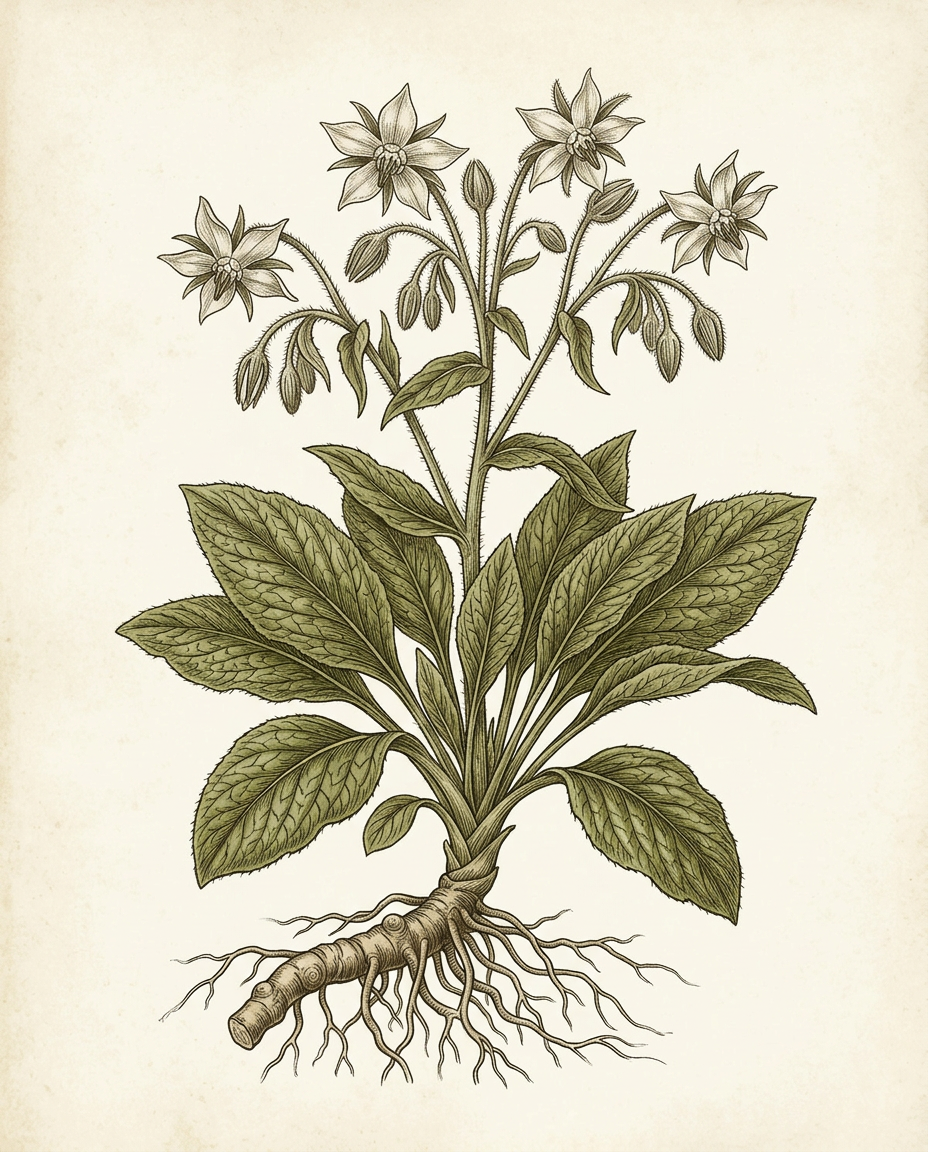
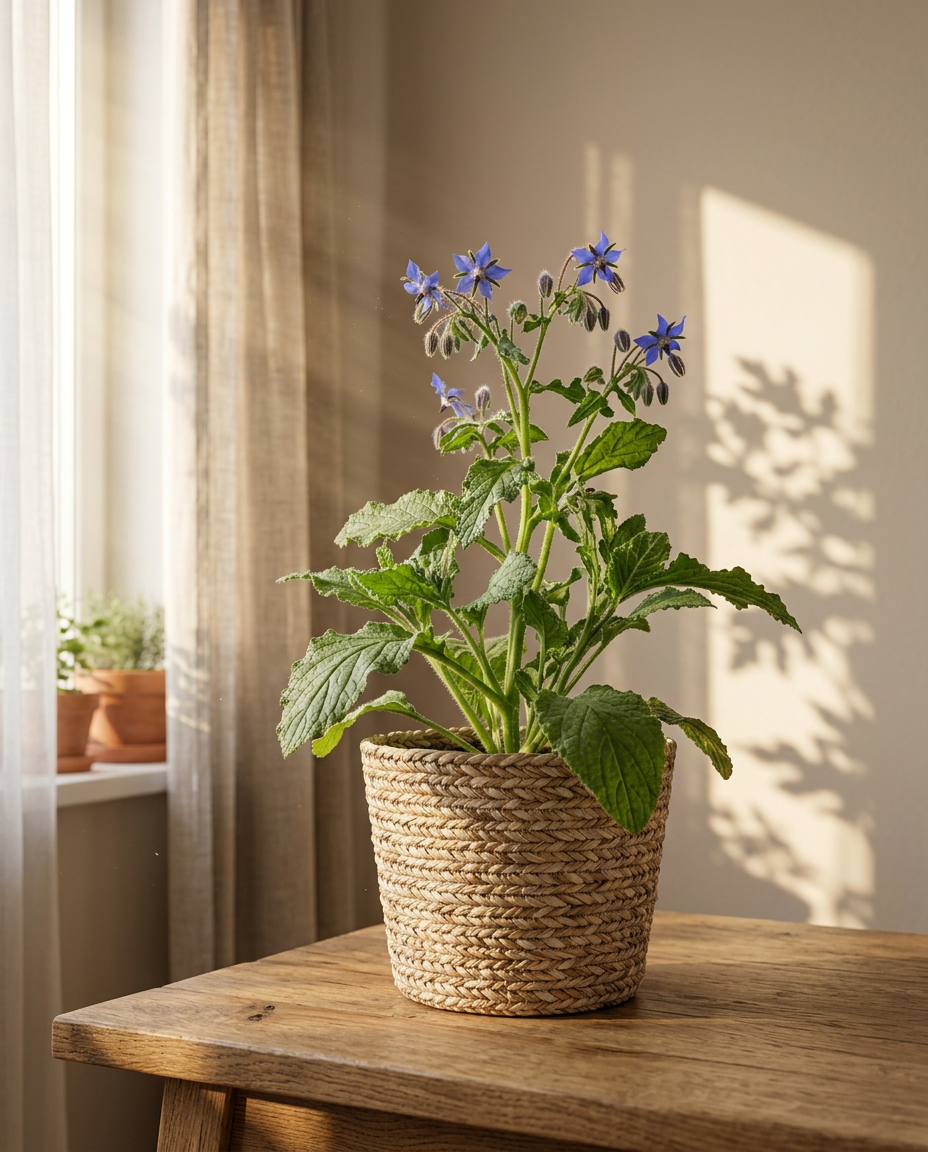
Plate IBorago officinalis — borage. The ASPCA lists it as toxic to cats: vomiting, diarrhea, and dermatitis.
Three plants that look the part, without the risk.
Borage is grown as a culinary and bee-friendly herb. If you want that cottage-garden herb look without the toxicity, these ASPCA non-toxic herbs are safe around cats.
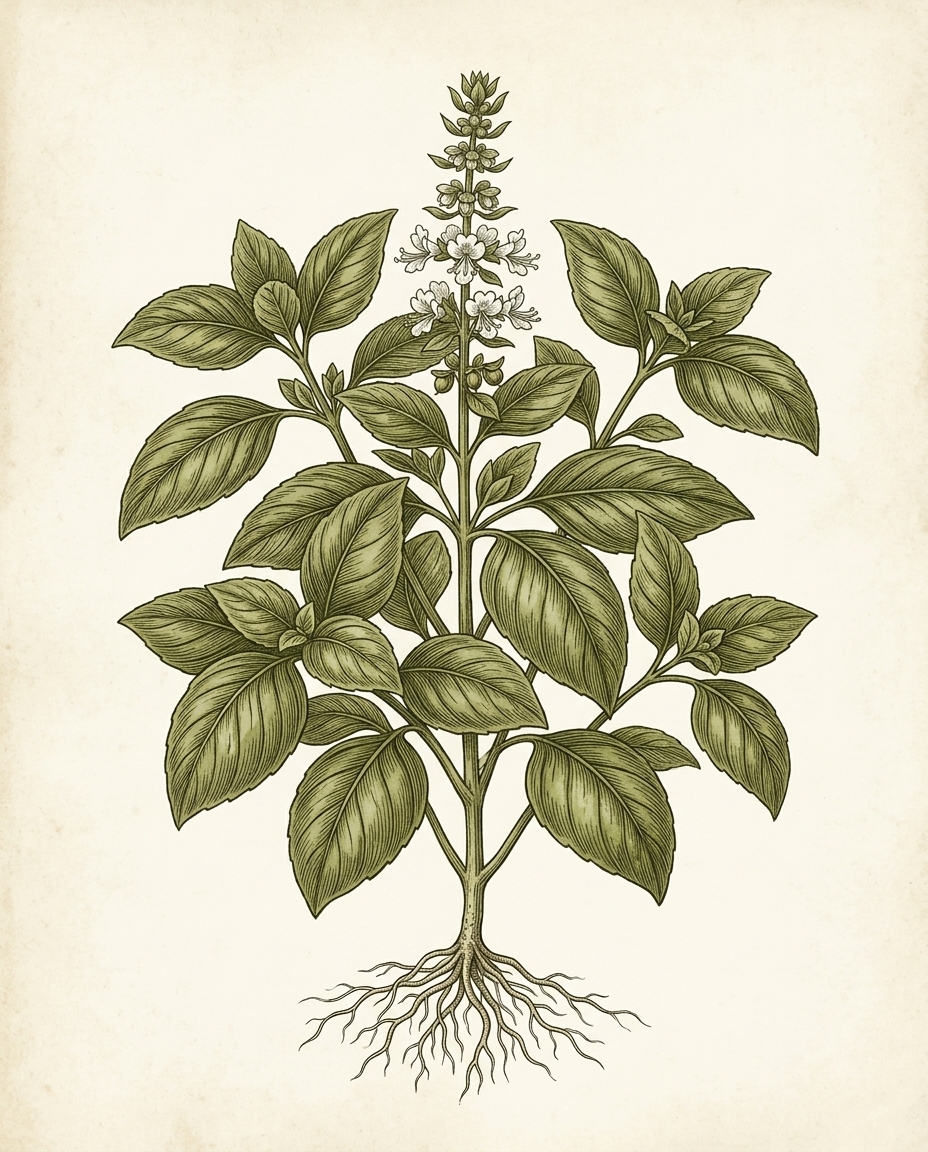
Basil
A non-toxic kitchen herb that gives the same fresh, leafy harvest with none of borage's irritant bristles or alkaloids.
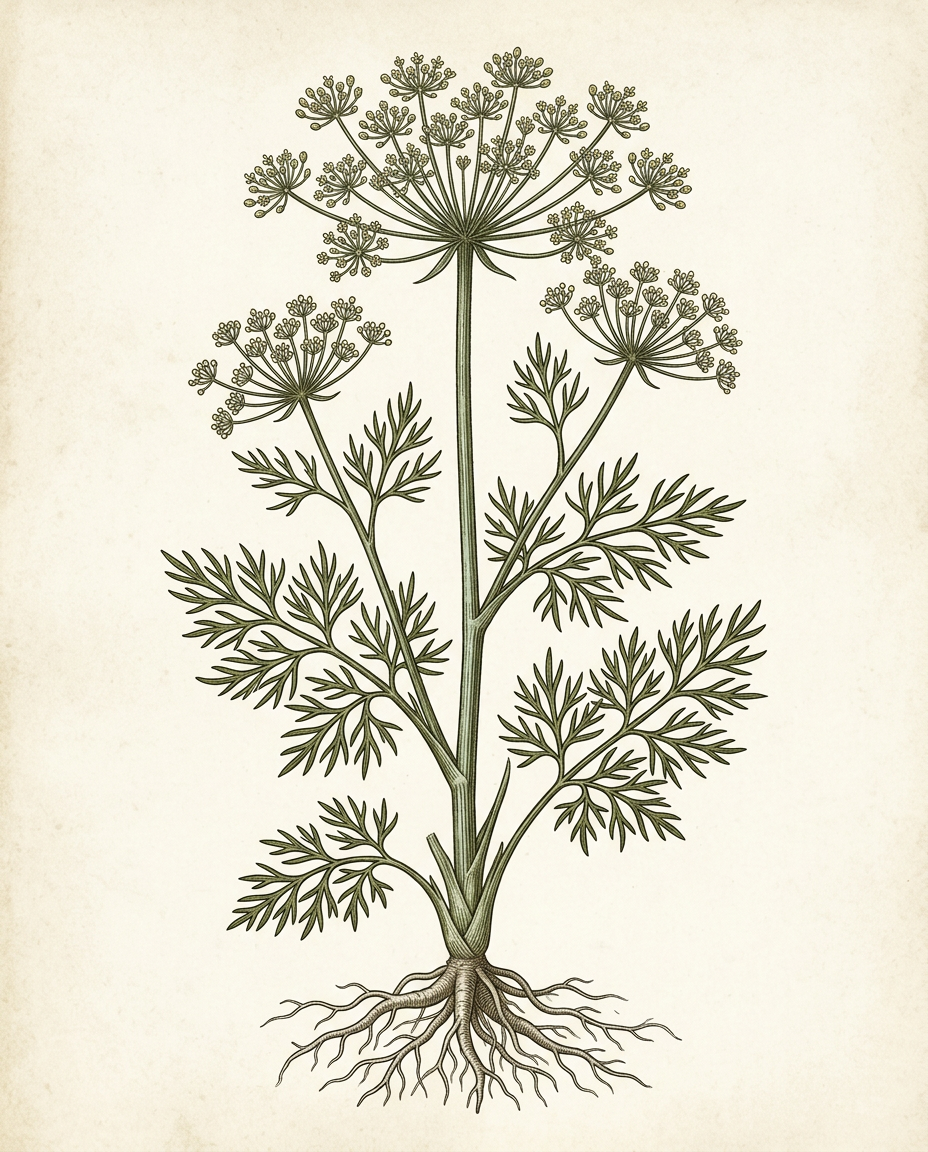
Dill
A feathery, bee-friendly culinary herb that is ASPCA non-toxic — a safe stand-in for the herb-garden role.
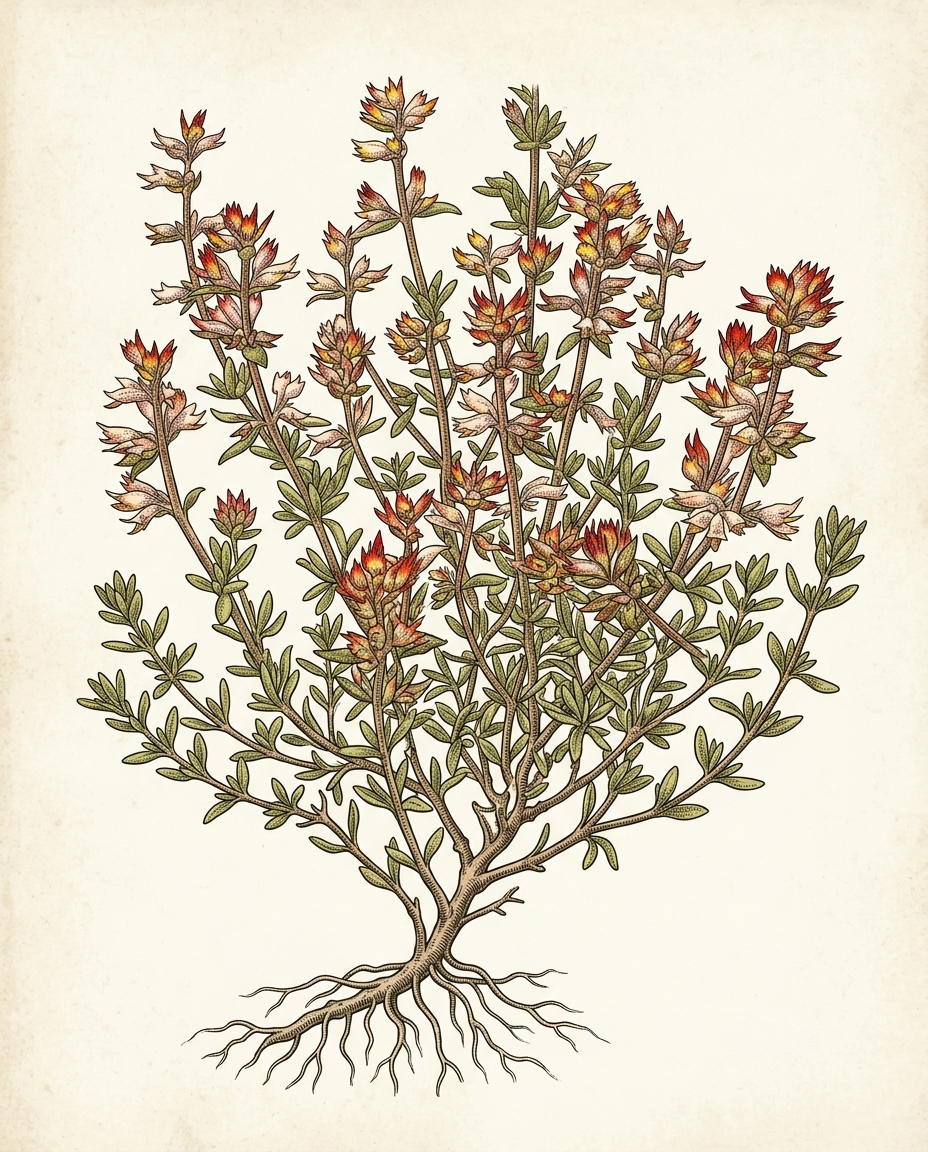
Thyme
A tough, aromatic non-toxic herb for borders and pots, safe for a cat to brush against or nibble.
What borage does to a cat.
Borage is toxic to cats. The ASPCA lists it as toxic, with the clinical signs: "Vomiting, diarrhea, dermatitis." It is usually a mild-to-moderate upset rather than a life-threatening poisoning — but between the irritant bristles and the alkaloids in its seeds, borage is firmly a herb for people, not for cats.
Borage (Borago officinalis) is a bristly, blue-flowered annual in the family Boraginaceae, grown as a culinary herb (its leaves taste faintly of cucumber) and as a bee plant. The pressed seed oil is sold as "starflower oil."
ASPCA Data
According to the ASPCA, borage is listed under plants toxic to cats, with the signs:
Vomiting, diarrhea, dermatitis.
There are three distinct ways this plant troubles a cat, and they are worth separating.
Why borage is toxic
1. Contact dermatitis from the bristly leaves
Borage leaves and stems are densely covered in stiff bristly hairs. Simple contact — brushing against the plant or mouthing a leaf — can irritate a cat's skin and mouth, which is the "dermatitis" the ASPCA notes. This happens before any toxin is even absorbed.
2. Gastrointestinal upset
Eaten, borage causes vomiting and diarrhea. For most cats this is self-limiting and settles once the plant is out of the system, but it is unpleasant and can lead to dehydration if it drags on.
3. Pyrrolizidine alkaloids in the seeds and oil
The more serious concern is chemical. Borage seeds and the pressed borage (starflower) oil contain pyrrolizidine alkaloids (PAs) — compounds that are hepatotoxic, meaning they can damage the liver with significant or repeated exposure. The leaves contain much less, but this is the reason borage oil supplements should never be given to a cat and should be stored out of reach.
What to do if your cat eats borage
A single curious nibble usually means a bit of drooling or a bout of stomach upset rather than a crisis. Still, do not wait it out blindly:
- Remove any remaining plant and rinse the mouth if your cat will allow it.
- Watch for vomiting, diarrhea, skin redness, and lethargy.
- Call your vet or ASPCA Animal Poison Control at (888) 426-4435 if a large amount was eaten, if the seeds or borage oil were involved, or if symptoms persist or worsen.
Safe herb alternatives
If you grew borage for the kitchen or for the bees, several ASPCA non-toxic herbs give you the same cottage-garden harvest without the toxicity: basil, dill, and thyme are all safe around cats.
The bottom line
Borage is toxic to cats — irritant bristles, vomiting and diarrhea, and hepatotoxic alkaloids in its seeds and oil. It is rarely fatal, but it has no place within a cat's reach. Grow a safe herb instead, and keep any starflower-oil supplements firmly out of paw's way.
What we have actually seen.
Vomiting, diarrhea, dermatitis
Per the ASPCA, borage causes vomiting, diarrhea, and dermatitis in cats. The signs are usually mild to moderate and self-limiting, but they are unpleasant and worth a vet call if they persist.
Contact dermatitis from bristly leaves
Borage leaves and stems are covered in stiff bristly hairs. Contact can irritate a cat's skin and mouth even before any toxin is absorbed.
Pyrrolizidine alkaloids in seeds and oil
The seeds and pressed borage (starflower) oil contain pyrrolizidine alkaloids — compounds that are hepatotoxic, meaning they can damage the liver with significant or repeated exposure. The leaves contain far less, but the seeds and oil are the real concern.
Rarely an emergency, never a snack
A single nibble usually means a bout of drooling or stomach upset rather than a crisis. Still, with hepatotoxic alkaloids in the picture, borage is not a plant to leave within a cat's reach.
- ASPCA Animal Poison Control Center. Toxic and Non-Toxic Plants: Borage.Accessed June 2026 · aspca.org
- Pet Poison Helpline. Pyrrolizidine Alkaloid-Containing Plants.Clinical reference · 2024 ed.