Baby's
Breath.
Gypsophila paniculata
Baby's Breath (Gypsophila paniculata) is non-toxic to cats per the ASPCA. Third-party blogs frequently call it 'mildly toxic' via saponins — ASPCA disagrees, and ASPCA is the authority.
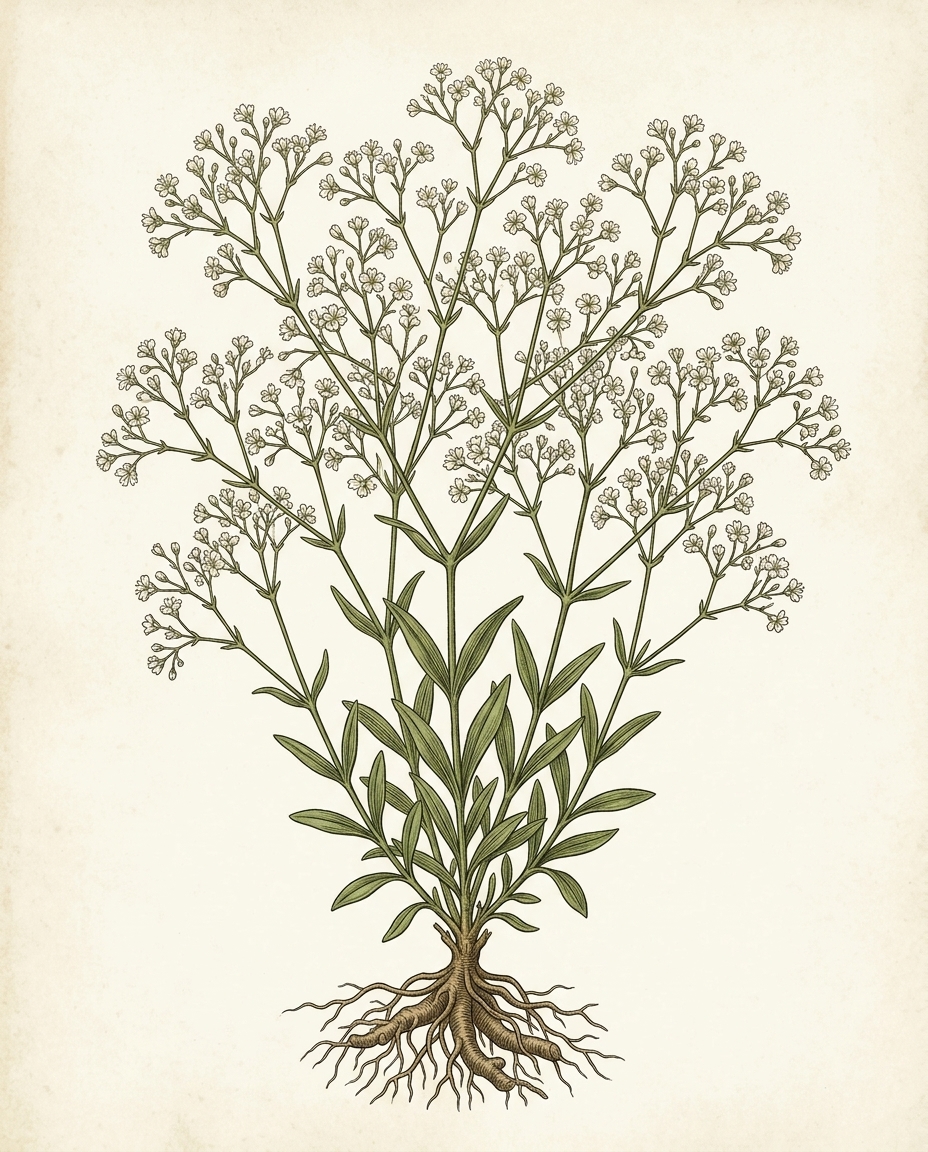
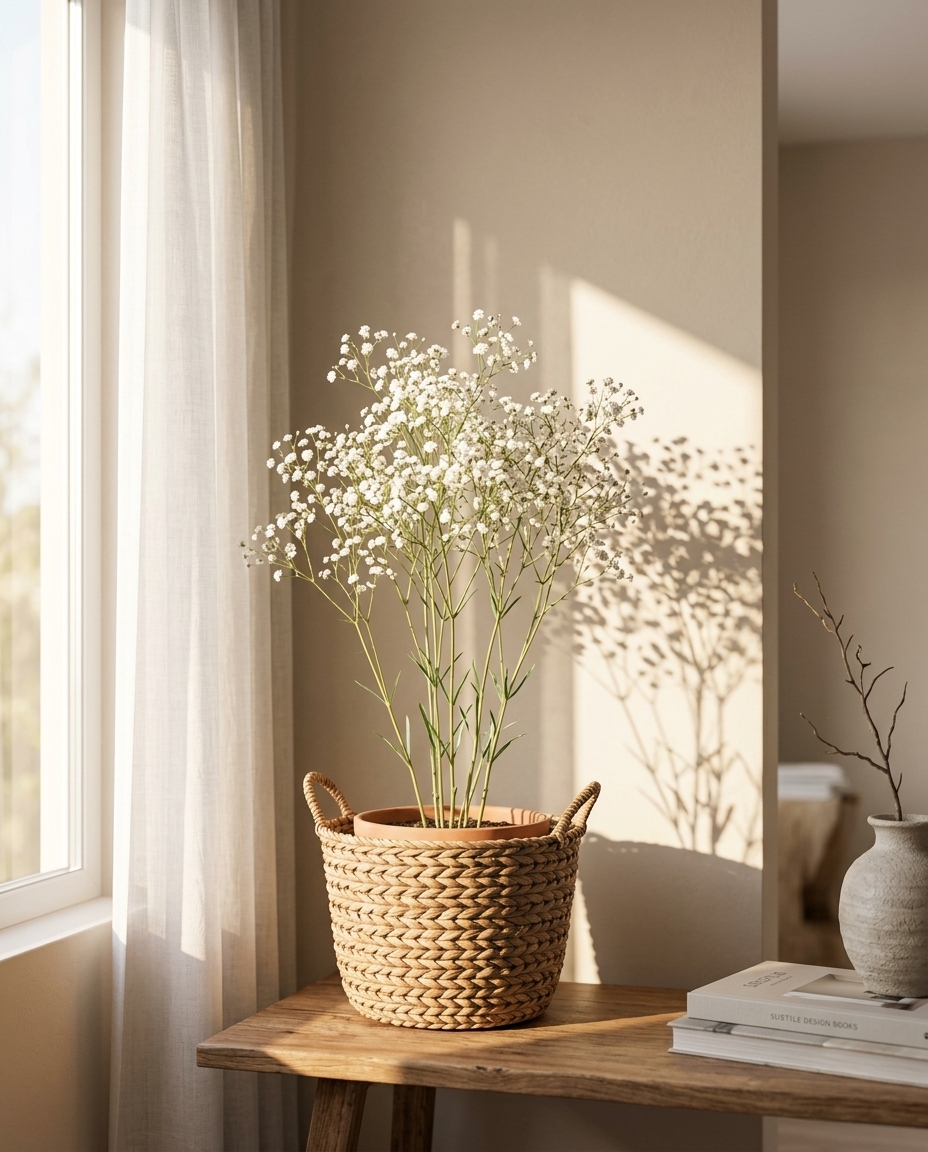
Plate IGypsophila paniculata — Baby's Breath. Airy cloud of tiny white double flowers on wiry, much-branched stems above narrow grey-green leaves. ASPCA non-toxic.
How to read the contradictory advice.
Baby's Breath is safe for cats. The ASPCA lists Gypsophila paniculata (Baby's Breath, also called Maiden's Breath) as non-toxic to cats, dogs, and horses. Their literal listing for Toxic Principles is the word "Non-toxic," and the only clinical signs noted are mild GI upset such as vomiting and diarrhea on a large ingestion — the baseline for any plant material, not a toxicity warning.
The ASPCA verdict, verbatim: Toxicity: Non-Toxic to Dogs, Non-Toxic to Cats, Non-Toxic to Horses · Toxic Principles: Non-toxic · Clinical Signs: Mild GI upset such as vomiting, and diarrhea may be seen if ingested.
Why the internet disagrees
Several third-party pet-safety blogs (Hepper, scraped PetMD-style summaries, and others) describe Baby's Breath as "mildly toxic," typically citing saponins as the toxic principle. The chemistry is real: Gypsophila species do contain low levels of triterpenoid saponins, which is part of why the cut stems and seeds were historically used in soap-making (the genus name comes from these compounds' lather behaviour).
But the ASPCA has weighed the actual clinical-poisoning reports — the ones that come into their poison-control phone line from real veterinarians — and classifies the species non-toxic. The saponin load is too low and too poorly absorbed to produce meaningful poisoning in a cat at any plausible bouquet-ingestion dose. The ASPCA decision is the one we follow on this site.
If you want a one-line answer for a worried friend: ASPCA says non-toxic. The internet sometimes says mildly toxic. ASPCA is the authority.
The bigger risk: what else is in the bouquet
Baby's Breath is almost never sold alone. It's the bouquet filler — the cloud of tiny white flowers around the headline blooms. Which means the practical question after "did the cat chew the gyp?" is "what else was in the vase?"
Mixed florist bouquets frequently contain genuinely dangerous flowers for cats:
- Lily — DEADLY. True lilies (Lilium, Hemerocallis) cause acute renal failure. Treat any ingestion, including vase-water exposure, as an emergency.
- Peony — toxic, mild–moderate.
- Carnation — toxic, mild.
- Tulips, daffodils, hyacinths — toxic (bulb-concentrated, but stems carry some).
If your cat has chewed a bouquet, the Baby's Breath itself is not the worry — identify the other flowers in the bunch. If anything from the toxic list is in there, call the ASPCA Animal Poison Control Center at 888-426-4435 or your vet.
Why we list it safe
The ASPCA's classification, not the blog claims. The ASPCA pulls from clinical poisoning reports across thousands of US vet practices and runs the largest pet-poison-control database in the world. When ASPCA says "Non-toxic," that's the answer we run with.
Growing and using it
Baby's Breath is a hardy perennial from Eurasian limestone country — full sun, free-draining alkaline soil, minimal water. Plant once and it lives for years. As a cut flower it lasts 7–14 days in fresh water and dries cleanly hung upside down. Both forms are equally safe around cats.
Disclosure
We include Amazon affiliate links on safe-plant pages. As an Amazon Associate, we earn from qualifying purchases. We never affiliate-link a plant we have not ASPCA-verified.
What we have actually seen.
Casual chewing
Cats sometimes nibble at the airy stems. ASPCA classifies the plant non-toxic — expect nothing or mild GI on a big chew. The 'mildly toxic' blog claims do not match ASPCA's verdict.
Vase-water sips
Baby's Breath itself contributes no toxin to the water. The risk in bouquet water is anything else in the vase — lilies, tulips, peonies, daffodils — which can leach genuinely dangerous compounds.
Mild GI upset
ASPCA lists 'mild GI upset such as vomiting and diarrhea may be seen if ingested' as the only clinical sign. This is plant-material baseline, not a toxicity warning.
Four common varieties.
Bristol Fairy (classic double white)
The florist standard — tight double white flowers, masses of bloom. The variety that turns up in every bouquet.
Perfekta (larger flowers)
Larger individual flowers than Bristol Fairy, denser appearance. Same ASPCA profile, same care.
Pink Festival (soft pink alternative)
Soft pink cultivar for owners wanting a less stark bouquet filler. Same family, same non-toxic status.
Keeping the plant alive.
Full sun
Full sun is essential — six or more hours of direct light for the airy bloom cloud the plant is known for. Shade produces sparse, leggy stems.
Sparing
Drought tolerant once established. Likes a soak then a dry-down; hates wet feet. Overwatering is the main way garden plants rot out.
Alkaline, free-draining
Prefers alkaline to neutral soil; tolerates poor or stony ground. Heavy clay kills it. The genus name 'Gypsophila' literally means 'gypsum-loving' — limestone country plant.
Border or container
Hardy perennial across most temperate zones. Plant once, divide every few years. As a cut flower, it lasts 7–14 days in fresh water and dries cleanly.
- ASPCA Animal Poison Control Center. Toxic and Non-Toxic Plants: Baby's Breath.Accessed June 2026 · aspca.org · Gypsophila paniculata · Non-Toxic to cats, dogs, horses · Toxic Principles: Non-toxic · Clinical Signs: Mild GI upset such as vomiting and diarrhea may be seen if ingested
- Royal Horticultural Society. Gypsophila paniculata growing guide.Horticultural reference for garden + cut-flower care
If you liked this, also safe.