Amaryllis
Amaryllis spp.
Amaryllis is toxic to cats per the ASPCA. Every part contains lycorine and related alkaloids that cause vomiting, drooling, and tremors — and the bulb that arrives gift-wrapped in December carries the highest dose.
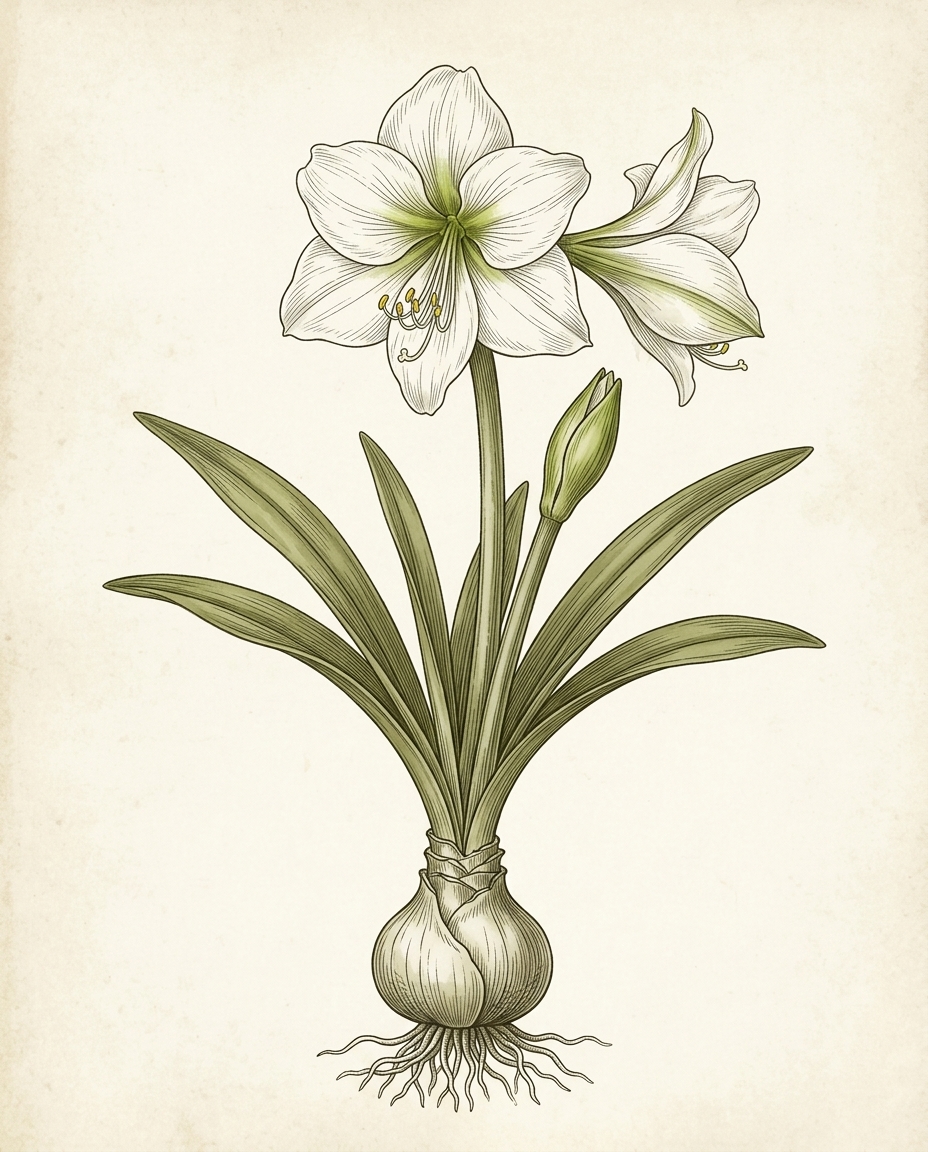
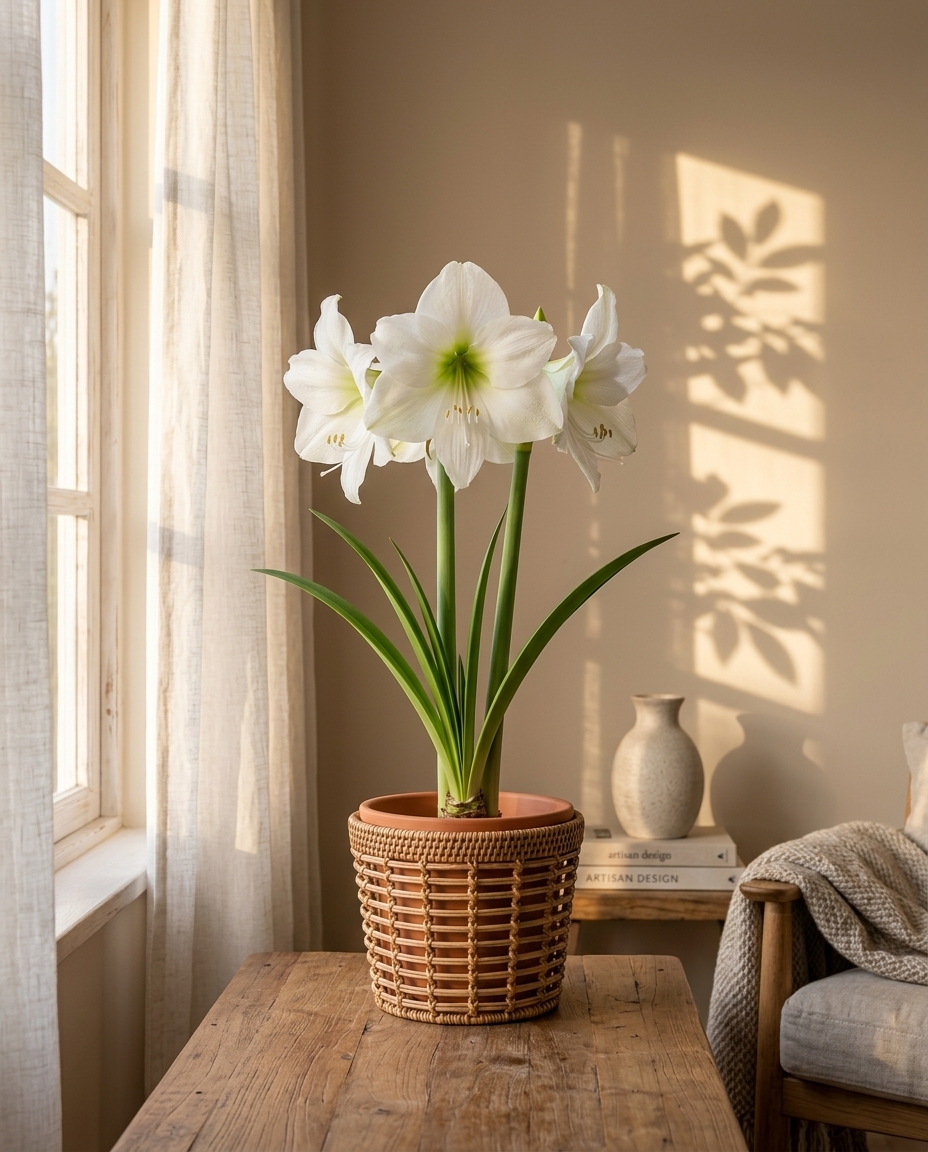
Plate IAmaryllis species — sold most often as the boxed winter-bulb gift plant. The trumpet flowers are the lure; the bulb beneath the soil is where the dose lives.
Three plants that look the part, without the risk.
Winter trumpet blooms without lycorine — these three give the same festive vertical flower without the bulb risk.
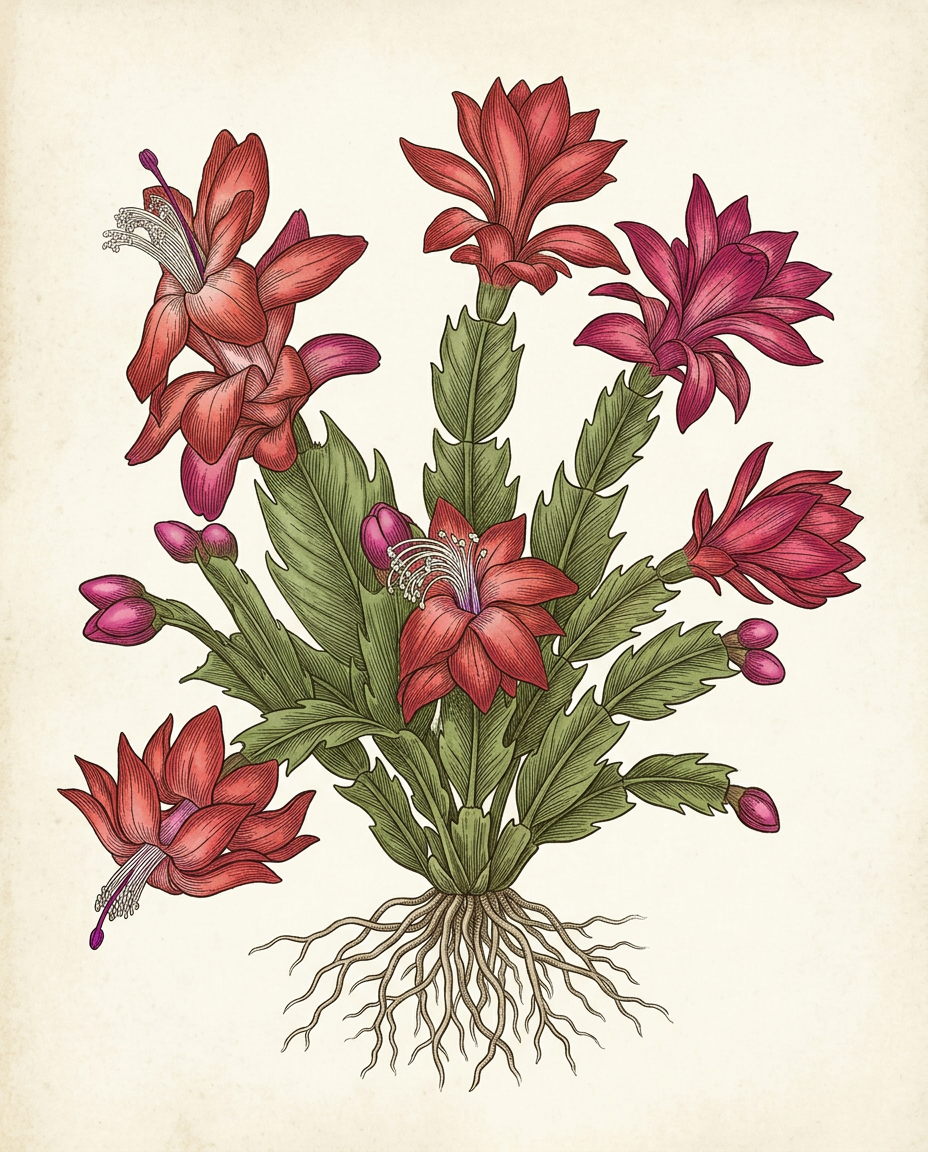
Christmas Cactus
The classic non-toxic winter bloomer. Tubular pink and red flowers exactly when amaryllis would. ASPCA non-toxic.
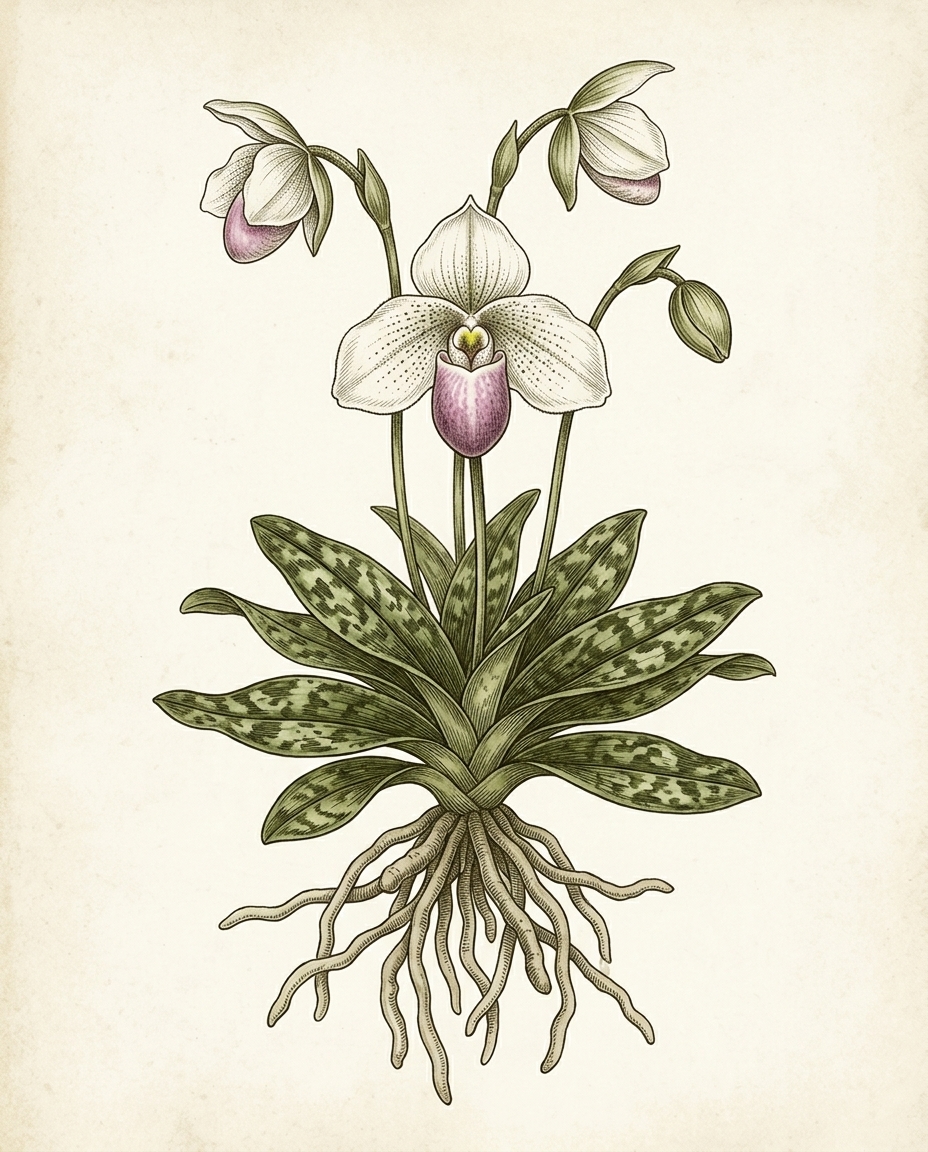
Orchid
Long-stem vertical bloom architecture for centrepieces. ASPCA non-toxic and lives for months.
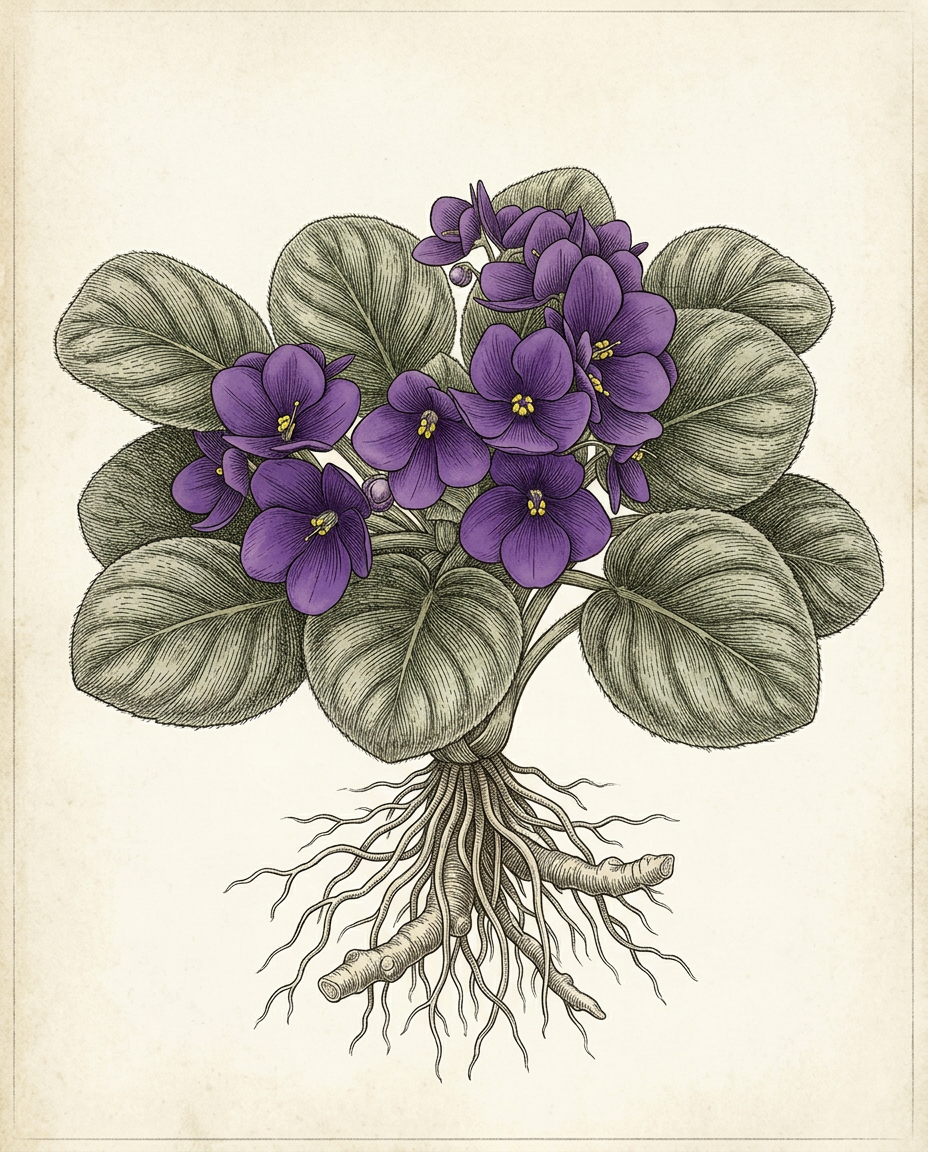
African Violet
Compact winter colour for a sill or coffee table. ASPCA non-toxic.
What it does to a cat.
Yes — amaryllis is toxic to cats. The ASPCA lists Amaryllis species as toxic to cats, dogs, and horses. The toxic principles are lycorine and related alkaloids — the same family that makes daffodils and hyacinths dangerous. The leaves and flowers carry a meaningful dose; the bulb carries much more.
The plant arrives in households in a particular way that matters for cat safety: a boxed bulb, gift-wrapped, marketed as a winter showpiece. The bulb sits half-exposed in shallow soil — visible to anyone, including a curious cat.
Lycorine, the family alkaloid
The Amaryllidaceae family — amaryllis, daffodil, snowdrop, narcissus — shares a defensive chemistry built on lycorine and its relatives. The alkaloids irritate the GI lining first, producing vomiting and drooling within hours. At higher doses they reach the nervous system: depression, lethargy, and in severe exposures tremors. ASPCA lists tremors specifically among the clinical signs for amaryllis, which marks it slightly more dangerous than its narcissus cousins for cats.
Hippeastrum vs Amaryllis
The plant marketed as "amaryllis" at Christmas is most often Hippeastrum — a close relative often grouped under the same common name and the same ASPCA listing. The two genera share the alkaloid chemistry. Treat both the same way.
What to do if your cat ate amaryllis
For leaf or flower ingestion, monitor for vomiting, drooling, lethargy, and diarrhea — most cases resolve in 24 to 48 hours. For any exposure that involves the bulb, or any case where you see tremors or unsteadiness, call a vet immediately. ASPCA Animal Poison Control is available 24/7 at (888) 426-4435.
Cat-safe substitutes
For winter blooms with none of the lycorine, Christmas cactus (Schlumbergera) is the obvious gift swap — ASPCA non-toxic and blooms in the same December window. Orchids cover the tall vertical bloom for a centrepiece, and African violets cover the compact sill role.
For the related seasonal plants we cover, see our daffodil, hyacinth, and mistletoe pages. For lily exposure specifically, follow the emergency action page.
What we have actually seen.
Vomiting and drooling
First and most common signs. Lycorine irritates the GI lining; many cats salivate before vomiting.
Diarrhea
Often follows vomiting within the first day. May be loose to watery in significant exposures.
Depression and lethargy
Reduced activity and appetite. Brief in mild cases; longer with bulb ingestion.
Tremors
ASPCA lists tremors as a clinical sign in serious exposures. More likely with bulb ingestion. Warrants emergency care.
- ASPCA Animal Poison Control Center. Toxic and Non-Toxic Plants: Amaryllis.Accessed June 2026 · aspca.org · Toxic Principles Lycorine and others
- Pet Poison Helpline. Amaryllis (Hippeastrum/Amaryllis) toxicity in cats.Clinical reference · 2024
- Merck Veterinary Manual. Lycorine-containing bulbs in companion animals.Standard small-animal toxicology reference