Tiger
Lily.
Lilium tigrinum
Tiger lily is a true lily and is deadly to cats. Every part — petals, leaves, stem, pollen, and even vase water — can cause fatal kidney failure. There is no safe amount. Treat any exposure as an emergency.
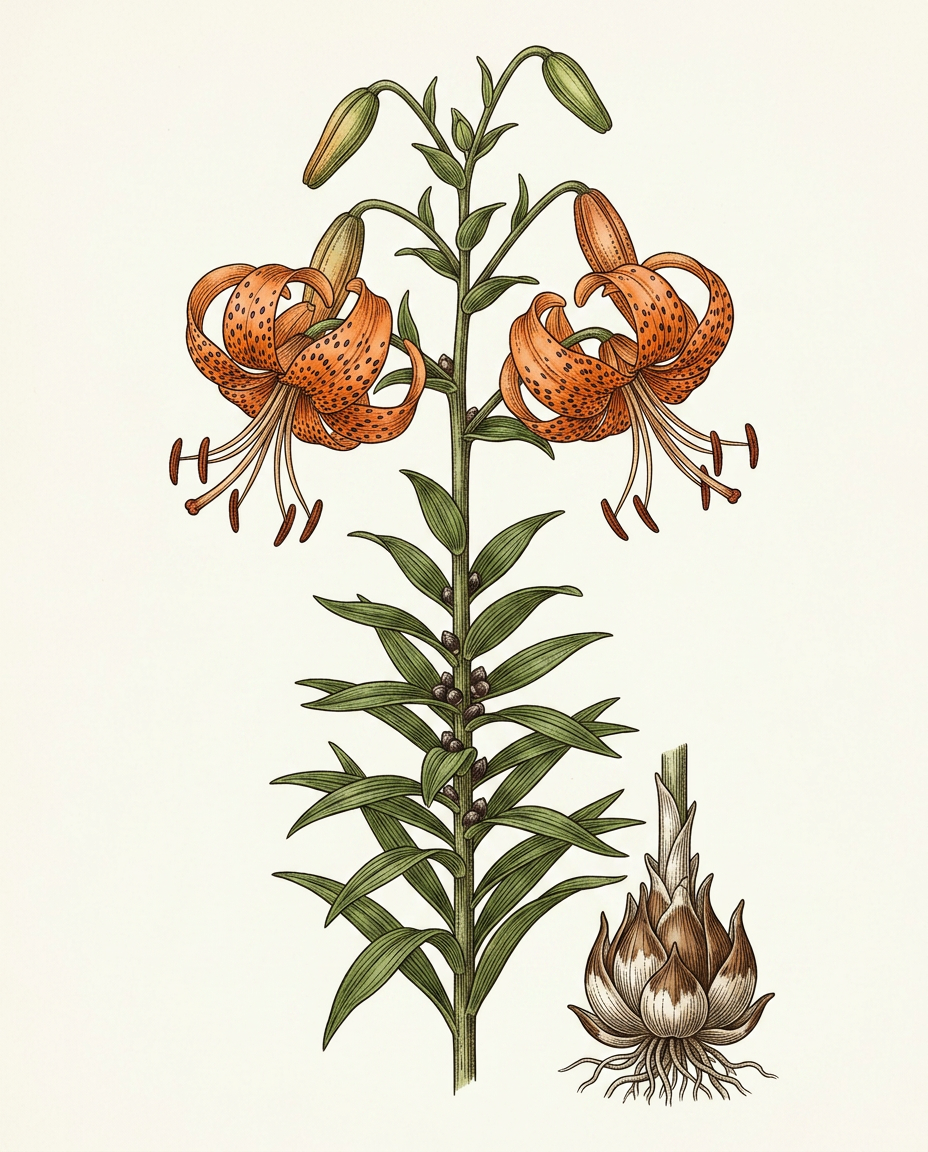

Plate ILilium tigrinum — the spotted orange tiger lily. Like all true lilies, every part carries a renal toxin that is fatal to cats.
Three plants that look the part, without the risk.
Never substitute one lily for another — daylilies are equally deadly. These three flowering plants are ASPCA non-toxic and carry no renal toxin.
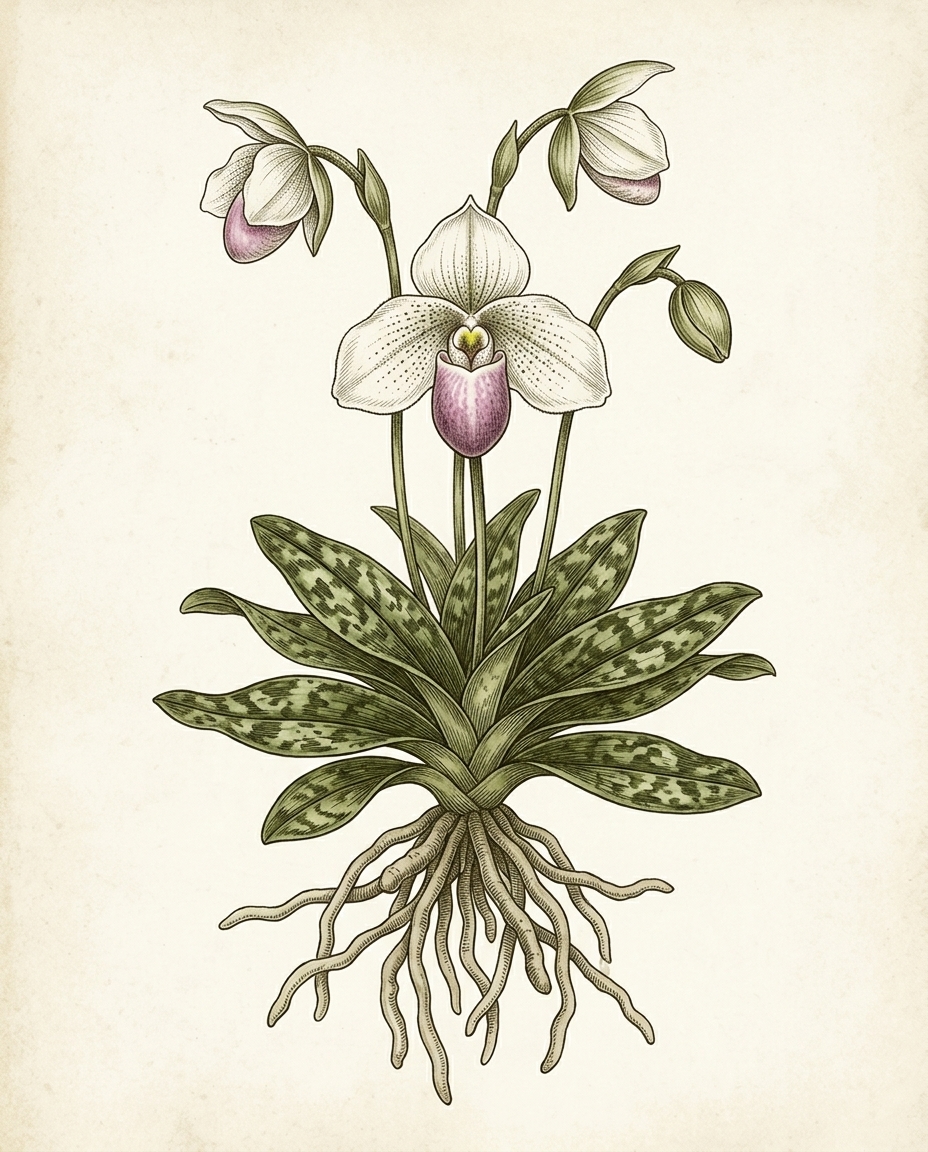
Orchid
Long-lasting, elegant blooms for a tabletop with none of the lily toxin. The closest safe substitute for a cut display.

Rose
A classic cut flower that is non-toxic to cats. Strip the thorns and skip the floral preservative in the water.

African Violet
Compact, colourful blooms year-round on a windowsill. No kidney toxin, safe around cats.
What it does to a cat.
If your cat has eaten any part of this plant, call ASPCA Poison Control (888) 426-4435 NOW. Do not wait for symptoms. Tiger lily is a true lily, and true lilies are among the deadliest plants a cat can encounter. Our step-by-step emergency plan walks you through the critical first hour.
Yes — tiger lily (Lilium tigrinum, also classified as Lilium lancifolium) is toxic to cats. The ASPCA states: "Vomiting, inappetence, lethargy, kidney failure, and death is possible. Cats are only species known to be affected."
Why tiger lilies are deadly
Tiger lily belongs to the genus Lilium — the true lilies — in the family Liliaceae. Every true lily contains a toxin that is specifically and severely nephrotoxic to cats: it attacks the kidneys. Following ingestion, cats can develop acute renal failure within 24 to 72 hours, and without prompt veterinary treatment mortality approaches 100 percent. Dogs and other animals do not suffer the same kidney injury; cats are uniquely vulnerable.
There is no established safe dose. Documented cases of fatal poisoning have involved as little as a few leaves, a small amount of pollen, or a sip of vase water.
Every part — and the water — is dangerous
The toxin is present throughout the plant: petals, leaves, stem, pollen, and the water a cut lily has stood in.
- Pollen — a cat that brushes past the flower picks up the bright orange pollen on its coat, then swallows it while grooming. No chewing is required.
- Vase water — water from a lily arrangement concentrates the toxin; a cat drinking from the vase can be poisoned without touching the flower.
- Fallen petals and leaves — dropped plant material on the floor or counter is within easy reach of a curious cat.
What to watch for
Early signs are vomiting, drooling, loss of appetite (inappetence), and lethargy, often within a few hours. As the kidneys are injured, you may see changes in thirst and urination, progressing to no urine output — a sign the kidneys are shutting down. Do not wait for symptoms to appear or worsen before seeking help.
What to do right now
- Call ASPCA Animal Poison Control at (888) 426-4435 or your veterinarian immediately.
- Do not induce vomiting unless a professional directs you to.
- If there is visible pollen on your cat's fur, wipe and wash it off so it cannot be groomed and swallowed.
- Bring the plant (or a photo) to the vet to confirm the species.
Follow our full emergency guide for a cat that ate a lily for what happens at the clinic and why time matters.
Safe flowering alternatives
If you love flowers but live with cats, avoid all true lilies and daylilies. Safe, ASPCA-listed alternatives include orchids, roses, and African violets. For the wider lily family and which "lilies" are and are not dangerous, see our general lily guide and the Easter lily page.
What we have actually seen.
Acute renal (kidney) failure
The defining and lethal risk. Toxins damage the kidney tubules, causing acute renal failure within 24 to 72 hours. Untreated, mortality approaches 100 percent.
Early vomiting, inappetence, lethargy
Often within hours of exposure. Per the ASPCA — vomiting, inappetence, lethargy, kidney failure, and death is possible. Do not wait for these to worsen.
Pollen on the coat
A cat brushing past the flower picks up orange pollen, then grooms it off and swallows it. No chewing of the plant is required to be poisoned.
Vase water ingestion
Water from a lily arrangement concentrates the toxin. A cat drinking from the vase can be poisoned without ever touching the flower.
- ASPCA Animal Poison Control Center. Toxic and Non-Toxic Plants: Tiger Lily.Accessed June 2026 · aspca.org
- Pet Poison Helpline. Lily Toxicosis in Cats.Clinical brief · 2024 ed.