Living
Stones.
Lithops naureeniae
Yes — living stones are safe for cats. The ASPCA lists them as non-toxic. A succulent plant with stone-like leaves resembling pebbles. Also called lithops or pebble plants. NOTE: ASPCA data includes erroneous alt names (Kiawe, Mesquite); these do not apply to Lithops — those are different plants.
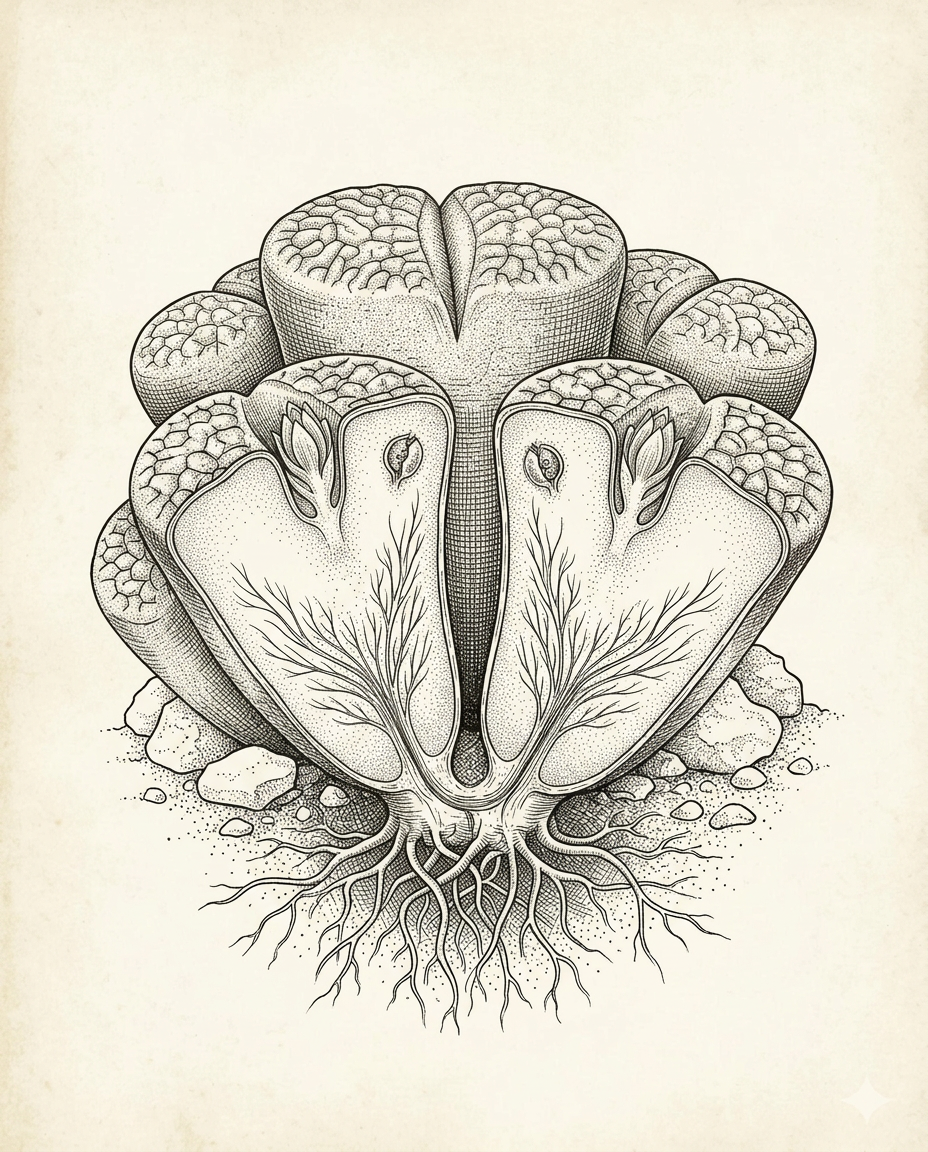
Plate ILiving stones (Lithops naureeniae) — a succulent with paired leaves resembling pebbles. Completely non-toxic to cats per ASPCA.
Living stones are— safe and bizarre-looking.
Yes — living stones are safe for cats. The ASPCA lists them as non-toxic.
Living stones (Lithops) are one of nature's most bizarre plants — they genuinely look like small pebbles. The resemblance is no accident; these succulents evolved in the deserts of southern Africa, where mimicking stones provides camouflage from grazing animals.
ASPCA Data
According to the ASPCA:
Toxic Principles: Non-toxic. (Listed under Plants Non-Toxic to Cats.)
Living stones are completely safe for homes with cats.
Note on ASPCA alt names: ASPCA lists erroneous alternative names for Living Stones, including "Kiawe" and "Mesquite." These do NOT apply to Lithops. Kiawe (Prosopis pallida) and Mesquite (Prosopis spp.) are completely different plants — shrubs native to Mexico and Hawaii. These names are data errors and should be ignored. Living stones = Lithops only.
What You're Growing
Living stones are succulents featuring:
- Pebble-like leaf pairs — Two thick, fleshy leaves resembling stones or pebbles
- Mimicry colouration — Grey, tan, brown, or marbled patterns matching desert soil
- Compact size — Rarely exceed 3 inches tall; clumping, spreading slowly
- Daytime flowers — Daisy-like blooms in yellow, white, or orange (autumn)
- Extreme longevity — Can live for decades with minimal care
It's a conversation-starter plant — people often mistake the leaves for actual pebbles until they realize it's alive.
Growing Living Stones
Light: This is the KEY requirement. Living stones must have bright, direct sunlight — full sun on a south or west-facing windowsill. Without intense light, they become weak, pale, and fail to flower. No shade; no "bright indirect." They evolved in the desert and need that intensity.
Water: Water very sparingly. In spring and summer, water lightly once a month (or even less frequently). In autumn and winter, do not water at all — stop entirely Oct–Feb. This dormancy is essential for the plant's survival and blooming. Overwatering is the #1 killer of Lithops.
Soil: Use gritty, extremely well-draining soil. Mix 70% cactus/succulent potting soil with 30% perlite or coarse sand. Standard potting soil retains too much moisture and will rot the roots.
Temperature: Prefer cool to moderate (50–70°F). Cold dormancy in winter is natural and necessary.
Dormancy & Flowering
Living stones have a pronounced dormancy cycle:
- Spring/Summer: Active growth, sparse watering
- Autumn: Flowers appear; beautiful daisy-like blooms
- Winter: Complete dormancy; no watering; no growth
This cycle is natural and required. Don't try to keep them growing year-round. The dormancy period actually triggers flowering when dormancy ends.
Care Summary
- Minimum watering — Arguably the easiest houseplant to care for (because you do almost nothing)
- Maximum light — The only demand is full sun
- Gritty soil — Standard soil is too wet for these desert plants
- Natural dormancy — Stop watering in winter; this is healthy
Once established, living stones are nearly impossible to kill — as long as light and drainage are adequate.
Safe for Cats
Your cat can brush against living stones, chew on the tough leaves (which taste bad and will deter most cats), or knock over the pot without any toxin risk. These are hardy, compact plants that handle casual cat interactions well.
The main risk: a pot knocked over in a low-light spot might cause the plant to weaken — but that's about plant health, not cat safety.
The Bottom Line
Living stones are safe, bizarre, nearly unkillable succulents. They look like pebbles, need almost no water, and require only bright light and gritty soil. Grow them freely around cats with no toxin concern.
All parts of Lithops are non-toxic — leaves, stems, and roots.
What we have actually seen.
Stone-like appearance
Natural mimicry of desert pebbles — genuinely deceptive. A visual marvel and conversation starter.
Extreme drought tolerance
One of the least demanding succulents. Thrives on neglect. Perfect for busy people or forgetful waterers.
Seasonal dormancy
Winter rest is natural and healthy. Stop watering entirely in autumn/winter. This dormancy is required for flowering.
Daisy-like autumn flowers
After dormancy, blooms appear — usually yellow or orange daisy-like flowers. Sign of a mature, well-cared-for plant.
Four common varieties.
Lithops naureeniae (Pebble-coloured form)
Classic form with grey-tan leaf pairs and yellow flowers. The most common Lithops in cultivation.
Lithops dorotheae (Orange-brown form)
Orange-brown leaf pairs with orange-yellow flowers. Different colouration, same care and non-toxicity.
Lithops marmorata (Marbled form)
Marbled grey-brown leaves with daisy-like white or yellow flowers. Larger and more patterned.
Keeping the plant alive.
Bright, direct sunlight
Full sun on a south or west-facing windowsill. Lithops must have intense light to thrive. Insufficient light causes weak, pale growth.
Very sparing, almost negligible
Water only in spring and summer, lightly. Stop watering in autumn/winter entirely. Living stones are drought-tolerant succulents — overwatering kills them.
Gritty, extremely well-draining
Use 70% gritty cactus/succulent soil + 30% perlite or coarse sand. These plants are adapted to desert conditions.
Winter rest is natural
Lithops naturally rest in winter. Stop watering entirely Oct–Feb. This dormancy is required for healthy growth and flowering.
- ASPCA Animal Poison Control Center. Toxic and Non-Toxic Plants: Living Stones.Accessed June 2026 · aspca.org
If you liked this, also safe.