Crepe
Myrtle.
Lagerstroemia indica
Yes — crepe myrtle is safe for cats and dogs. The ASPCA lists it as non-toxic. A deciduous ornamental tree/shrub with crinkled flowers and colorful bark. Note: Both "crepe" and "crape" spellings are used (ASPCA canonical is "Crepe"); both refer to the same plant.
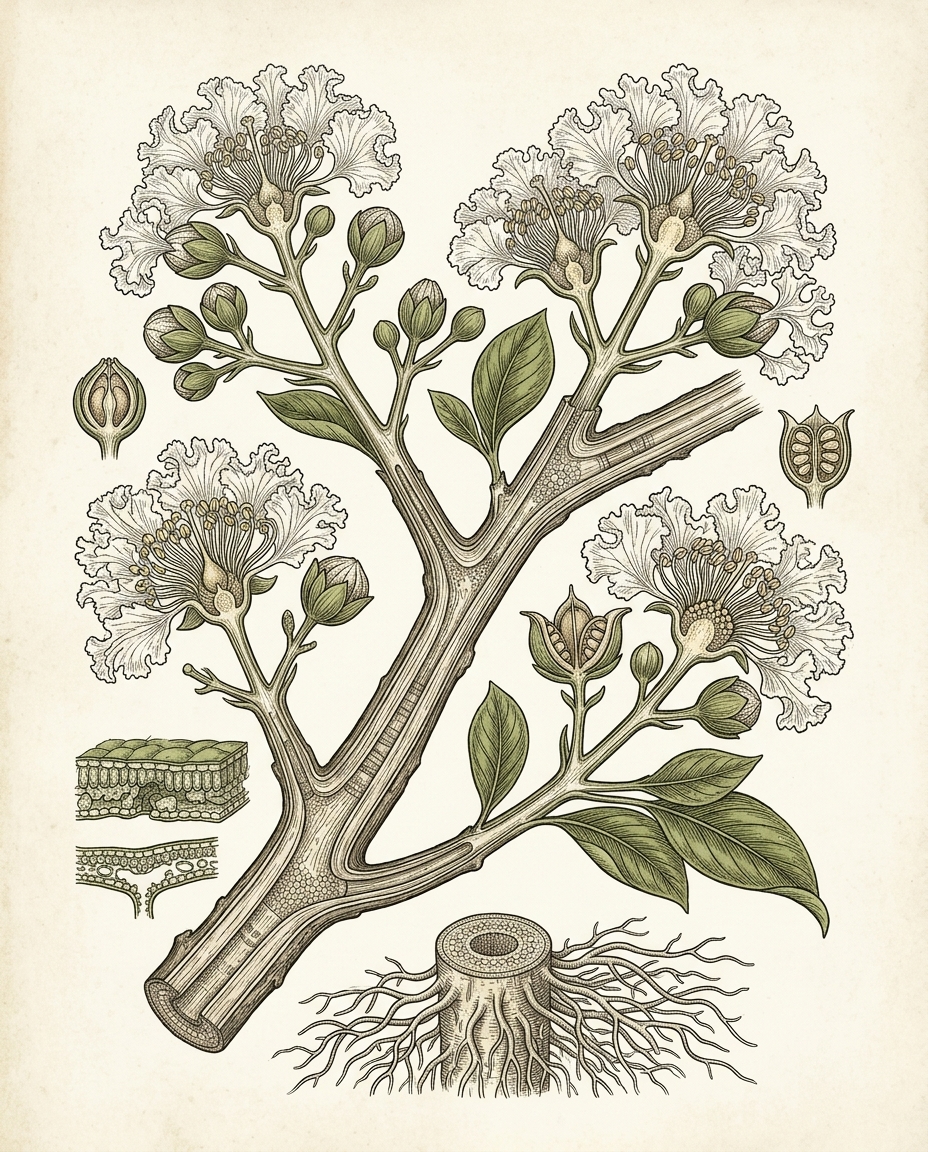
Plate ICrepe myrtle (Lagerstroemia indica) — a deciduous ornamental tree with distinctive crinkled paper-like flowers. Completely non-toxic to cats per ASPCA.
Crepe myrtle is safe— for outdoor gardens with cats.
Yes — crepe myrtle is safe for cats. The ASPCA lists it as non-toxic to cats and dogs.
Crepe myrtle (Lagerstroemia indica) is one of the most popular ornamental trees in warm climates. It's prized for its distinctive crinkled paper-like flowers (the "crepe" name refers to the crepe paper texture), summer-to-autumn blooms, and beautiful exfoliating bark visible year-round.
ASPCA Data
According to the ASPCA:
Toxic Principles: Non-toxic. (Listed under Plants Non-Toxic to Cats — no specific toxicity fields; completely safe.)
Crepe myrtle is completely safe for homes and gardens with cats.
The Spelling Note: Crepe vs Crape
Both "crepe" and "crape" spellings are used interchangeably for this plant. ASPCA uses "Crepe Myrtle" as the canonical name. The plant name comes from the paper-like texture of the flowers (crêpe paper). Both spellings are correct; use whichever you prefer.
What You're Growing
Crepe myrtle is a deciduous tree/shrub featuring:
- Crinkled paper-like flowers — Clusters of pink, red, purple, or white blooms resembling crepe paper
- Extended blooming — Summer through early autumn (months of colour, not just weeks)
- Exfoliating bark — Mottled, colourful bark that peels naturally; winter visual interest
- Deciduous foliage — Orange-red autumn colours before dropping in winter
- Low maintenance — Thrives in hot, sunny locations; drought-tolerant once established
- Multiple sizes — Cultivars range from 10 feet to 25+ feet tall
It's the standout tree for hot-climate gardens.
Growing Crepe Myrtle
Light: Full sun is essential. Crepe myrtle needs 6+ hours of direct sunlight daily. Shade significantly reduces flowering and increases powdery mildew problems.
Water: Water regularly during the growing season, roughly weekly. Once established, crepe myrtle is remarkably drought-tolerant and thrives in hot, dry locations. Reduce watering in winter when the plant is dormant.
Soil: Well-draining soil is important. Crepe myrtle prefers slightly acidic to neutral pH but tolerates a range. Avoid waterlogging; poor drainage causes root rot and disease.
Pruning: Prune in late winter (before growth resumes) to remove dead wood and old seed heads. Remove lower branches to enhance the attractive bark. Avoid "crepe murder" — a harmful practice of cutting the main branches back hard. Let the tree grow naturally with its natural form.
Hardiness: Hardiness varies by cultivar (zone 6–11). Dwarf and southern cultivars are hardier; tender cultivars need zone 8+.
Three-Season Interest
Crepe myrtle earns its place in gardens year-round:
- Spring: New foliage emerges; subtle interest
- Summer & Early Autumn: Months of crinkled paper-like flowers (pink, red, purple, white depending on cultivar)
- Autumn: Orange-red to deep purple foliage before dropping
- Winter: Exfoliating bark in mottled tan, grey, cinnamon, and rust colours — the most visually striking season
Few trees offer such extended visual interest.
Popular Cultivars
- Natchez — White flowers, cinnamon exfoliating bark; one of the most ornamental
- Dynamite — Deep red flowers, compact growth, excellent autumn colour
- Pink — Standard pink form; the most common colour
- Purple — Purple-pink flowers with great autumn foliage
All cultivars are ASPCA safe.
Safe for Cats
Crepe myrtle provides a safe outdoor structure for cats to climb, perch in, and shelter under. All parts of the tree — flowers, foliage, bark, and stems — are non-toxic. Cats can nibble leaves, chew flowers, or brush against branches without risk.
The main consideration is outdoor safety (traffic, predators, weather) — not toxicity.
The Bottom Line
Crepe myrtle is a safe, beautiful, low-maintenance tree for gardens with cats. It offers summer-to-autumn blooms, dramatic autumn colour, and year-round bark interest. Plant it freely in yards where cats roam, knowing they face no toxin risk.
All parts of crepe myrtle are non-toxic — flowers, leaves, bark, and stems.
What we have actually seen.
Distinctive crinkled flowers
Paper-like texture on petals. Clusters bloom continuously from summer through autumn. Pink, red, purple, or white depending on cultivar.
Exfoliating bark colour
Bark peels naturally in mottled patterns, revealing cinnamon, tan, grey, and rust tones. Winter visual interest without flowers.
Orange-red autumn foliage
Deciduous tree with dramatic orange-red to deep purple leaf colour in autumn before dropping. Adds fall landscape drama.
Extended blooming period
Flowers persist from summer through autumn — months of colour. Most trees bloom for only weeks; crepe myrtle blooms for months.
Four common varieties.
Lagerstroemia indica (Multiple colours available)
The standard species form. Available in pink, red, purple, and white flowers. Deciduous, hardy to zone 6 depending on cultivar.
Lagerstroemia indica 'Natchez' (White flowers, exfoliating bark)
White flowers with striking cinnamon-coloured exfoliating bark. One of the most ornamental cultivars.
Lagerstroemia indica 'Dynamite' (Deep red flowers)
Deep red/crimson flowers. Compact grower. Excellent autumn foliage.
Keeping the plant alive.
Full sun
Crepe myrtle thrives in full sun (6+ hours daily). Shade reduces flowering and promotes disease (powdery mildew).
Regular, moderate
Water weekly during growth season. Drought-tolerant once established. Reduce watering in winter when dormant.
Well-draining, neutral to acidic
Crepe myrtle prefers slightly acidic soil but tolerates a range. Ensure good drainage; they dislike waterlogging.
Prune in late winter
Remove dead wood and old seed heads in late winter before growth resumes. Avoid "crepe murder" — don't cut high main branches.
- ASPCA Animal Poison Control Center. Toxic and Non-Toxic Plants: Crepe Myrtle.Accessed June 2026 · aspca.org
If you liked this, also safe.