Bottlebrush
Callistemon spp.
Yes — the true bottlebrush (Callistemon) is safe for cats. The ASPCA lists it as non-toxic to cats, dogs, and horses. The critical catch is the name — the unrelated "buckeye bottlebrush" (Aesculus parviflora) is toxic, so confirm you have a Callistemon and not an Aesculus.
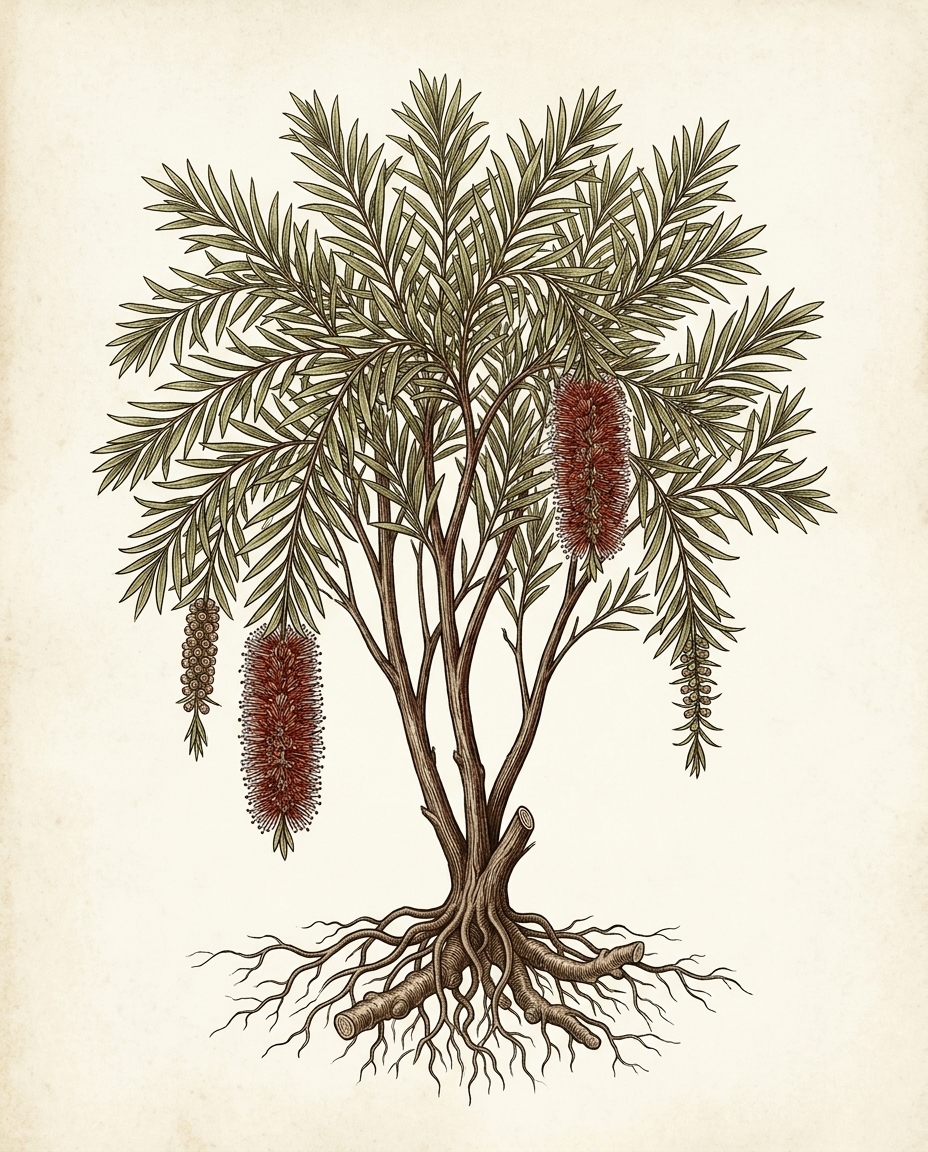
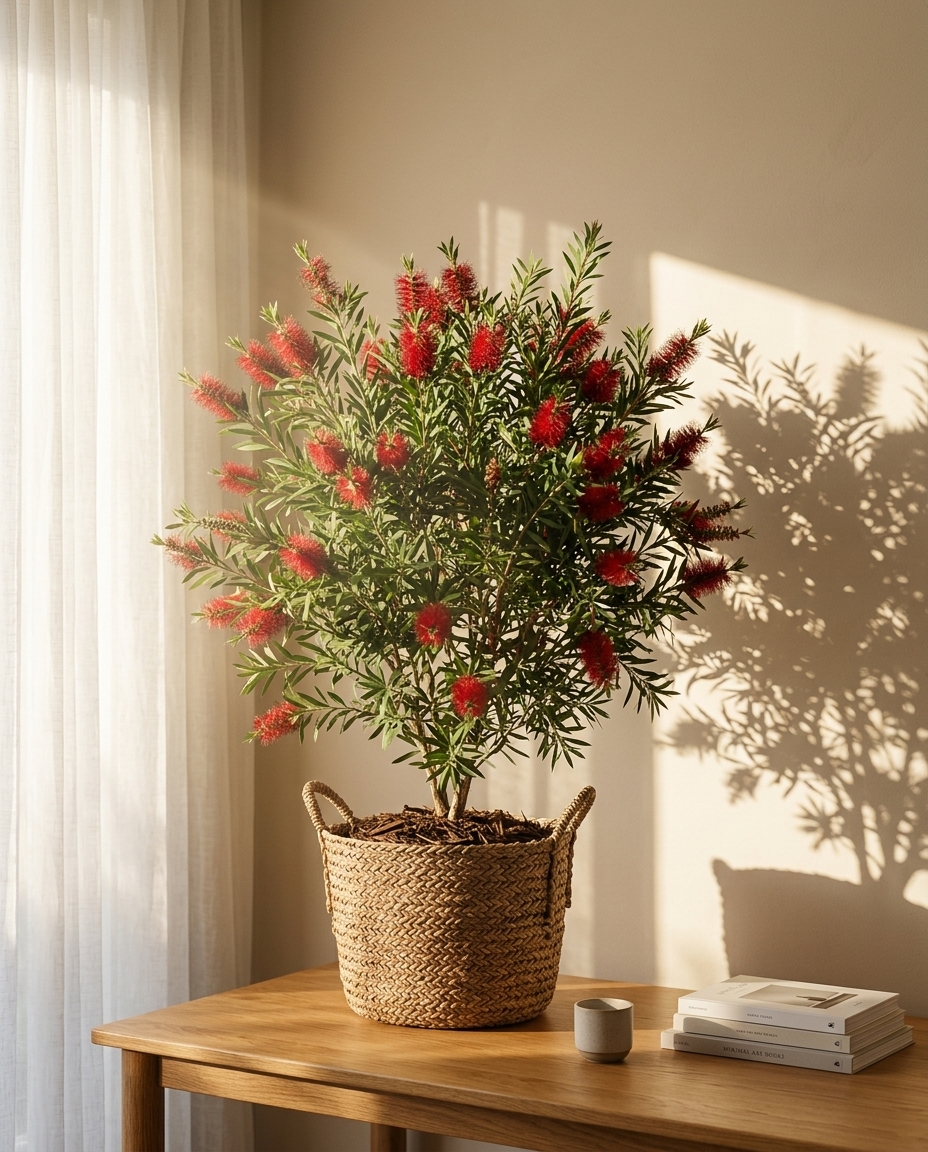
Plate ICallistemon — the true bottlebrush. The ASPCA lists it as non-toxic to cats. Not the toxic buckeye bottlebrush.
True bottlebrush is safe— the buckeye lookalike is not.
Yes — the true bottlebrush is safe for cats. The ASPCA lists bottlebrush (Callistemon) as "Non-Toxic to Dogs, Non-Toxic to Cats, Non-Toxic to Horses." The leaves, stems, and the brush-like flower spikes pose no poisoning risk.
There is one catch you must clear before relying on that verdict, and the ASPCA flags it directly: the name "bottlebrush" is shared by a toxic plant.
⚠ The critical catch: buckeye bottlebrush is toxic
Two very different plants are called some form of "bottlebrush," and only one is the safe, ASPCA-listed plant:
- True bottlebrush — Callistemon — SAFE (this page). The familiar garden shrub with cylindrical, brush-like red flower spikes, in the family Myrtaceae. This is the ASPCA-listed non-toxic plant.
- Buckeye bottlebrush — Aesculus parviflora — TOXIC. Also called the "bottlebrush buckeye," this is an entirely unrelated plant in the buckeye/horse-chestnut genus Aesculus. It contains aesculin and is toxic to cats. The ASPCA flags this confusion on the bottlebrush entry itself.
So the verdict depends entirely on the genus, not the common name. If the plant is a Callistemon, it is safe. If it is an Aesculus, it is not — see our horse chestnut page for the toxic Aesculus picture.
ASPCA Data
According to the ASPCA, the true bottlebrush is listed under plants non-toxic to cats:
Non-Toxic to Dogs, Non-Toxic to Cats, Non-Toxic to Horses.
There are no toxic principles in Callistemon — it is completely safe around cats.
Same family as eucalyptus — but still safe
Bottlebrush belongs to the family Myrtaceae, the same family as eucalyptus, which is toxic to cats. This is a useful reminder that family kinship does not determine the verdict. Callistemon has been individually assessed and ASPCA-verified non-toxic, even though a notable relative is not. Reason from the species, never from the family.
Growing bottlebrush around cats
Bottlebrush wants full sun, free-draining slightly acidic soil, and moderate water — it is drought-tolerant once established and quite heat-hardy, though frost-tender in cold climates. It grows as a patio shrub, an informal hedge, or a small tree. Because the true bottlebrush is non-toxic, there is no safety reason to keep a cat away.
The bottom line
The true bottlebrush (Callistemon) is a safe, ASPCA-verified plant for cat households — just be certain you have a Callistemon and not the toxic buckeye bottlebrush (Aesculus parviflora), and remember that its relative eucalyptus is toxic despite the shared family. For another fragrant shrub often grown nearby, see lavender — though note it, too, is toxic to cats.
What we have actually seen.
Non-toxic plant
True bottlebrush (Callistemon) — leaves, stems, and the brush-like flowers — is non-toxic to cats. A cat that nibbles a leaf or bats at a flower spike faces no poisoning risk.
Do not confuse with buckeye bottlebrush
Aesculus parviflora, the "bottlebrush buckeye," is an entirely different plant that contains aesculin and is toxic. The ASPCA flags this confusion directly. Confirm you have a Callistemon.
Same family as eucalyptus
Bottlebrush sits in Myrtaceae alongside eucalyptus, which is toxic to cats. Family kinship does not transfer the verdict — Callistemon is individually ASPCA-verified safe.
Bulk plant matter can upset digestion
As with any non-toxic plant, eating a large amount of leaves or flowers may cause mild, self-limiting stomach upset — from volume, not from any toxin.
Four common varieties.
Callistemon citrinus (The classic red-spiked shrub)
The familiar garden bottlebrush with bright crimson flower spikes and lemon-scented foliage. Non-toxic to cats.
Callistemon viminalis (Graceful arching habit)
A larger, weeping form often grown as a small tree. Same genus and the same safe verdict.
Keeping the plant alive.
Full sun
Bottlebrush flowers best in full sun. It is happiest with all-day light and tolerates heat well.
Moderate, drought-tolerant
Water regularly while establishing; mature plants tolerate dry spells. Avoid waterlogged soil.
Free-draining, slightly acidic
Prefers free-draining, slightly acidic soil. Dislikes lime-heavy and waterlogged ground.
Sunny shrub or small tree
Grows as a patio shrub, hedge, or small tree. Frost-tender in cold climates — bring containers under cover in winter.
- ASPCA Animal Poison Control Center. Toxic and Non-Toxic Plants: Bottlebrush.Accessed June 2026 · aspca.org