Phalaenopsis
Orchid.
Phalaenopsis sp.
Yes — phalaenopsis orchids are safe for cats. The ASPCA lists them as non-toxic. Phalaenopsis is the most common orchid in US grocery stores, garden centres, and online retailers. Moth orchid, moon orchid; all Phalaenopsis species are safe.
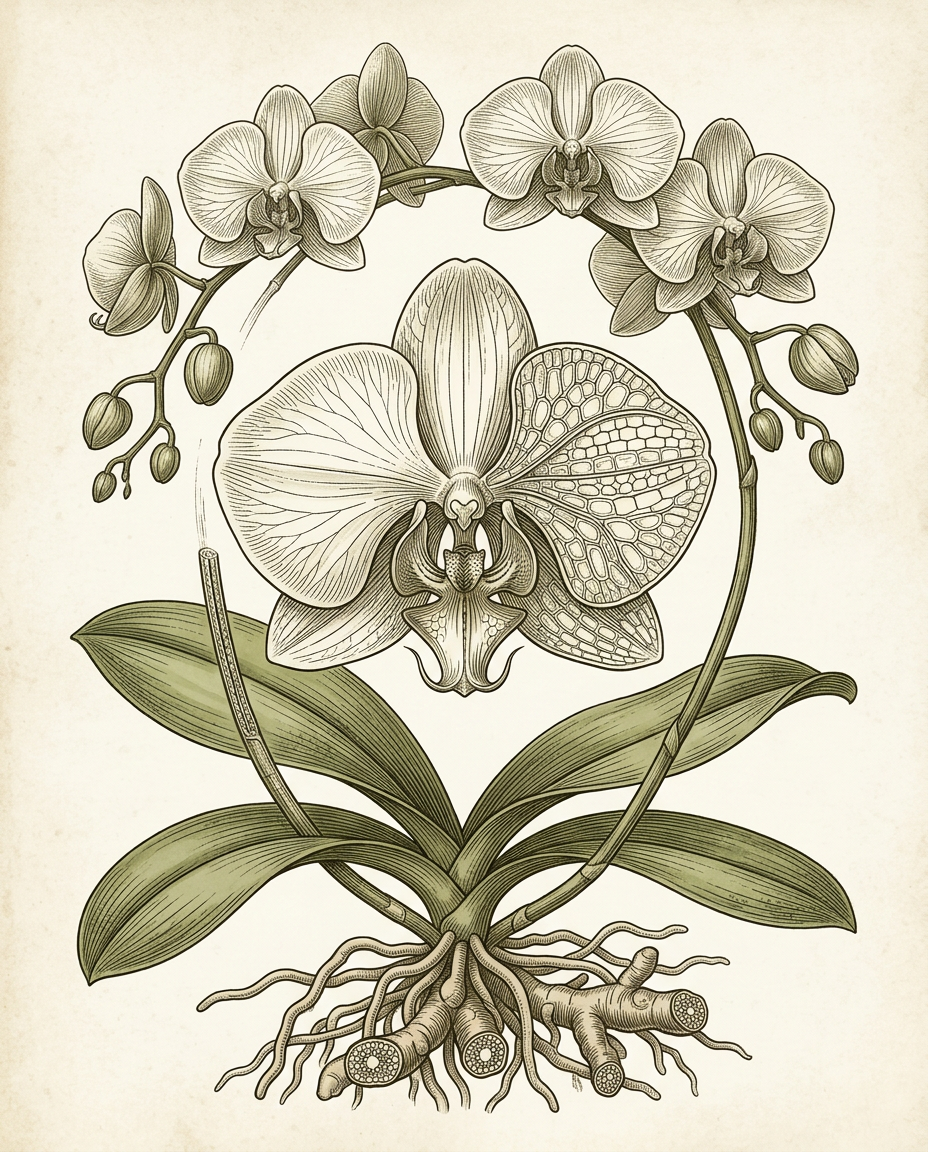
Plate IPhalaenopsis orchid — the moth orchid. Arching spikes of white or pink flowers. Completely non-toxic to cats per ASPCA.
Phalaenopsis orchid— safe and beginner-friendly.
Yes — phalaenopsis orchids are safe for cats. The ASPCA lists them as non-toxic to cats.
Phalaenopsis (moth orchid) is by far the most common orchid in the United States — roughly 80% of grocery store, garden centre, and online orchids are Phalaenopsis. If you have a "grocery store orchid," it's almost certainly a phalaenopsis, and it's safe for cats.
ASPCA Data
According to the ASPCA:
Toxic Principles: Non-toxic. (Listed under Plants Non-Toxic to Cats.)
Phalaenopsis carries no toxins and is completely safe for homes with cats.
What Makes Phalaenopsis So Common
Phalaenopsis dominates the market because it's the easiest orchid to grow indoors:
- Tolerates typical home light — Not as demanding as other orchids
- Reblooms reliably — With decent light, blooms season after season
- Forgiving of occasional neglect — Tough orchid; survives mistakes
- Beautiful, long-lasting flowers — Arching spikes of white, pink, or purple blooms
- Wide colour range — Breeders have created countless hybrids
- Affordable — Cheap to propagate and ship; widely available
Phalaenopsis is the gateway orchid. If you've ever bought an orchid at a supermarket or online, it was likely a phalaenopsis.
Growing Phalaenopsis
Light: Bright, indirect light is the single most important factor. East or west-facing windows work well. Aim for 12–14 hours of light daily. Without sufficient light, phalaenopsis will not bloom, even if care is otherwise perfect.
Water: Water weakly and infrequently — roughly once a week. Soak the pot in water for 5–10 minutes, then drain thoroughly. Never let a phalaenopsis sit in standing water. Root rot is the #1 killer of orchids.
Humidity: Phalaenopsis is tropical and loves humidity (50–70%). Mist the leaves daily or use a humidifier. In very dry homes (winter with heating), humidity drops and causes bud drop and reduced blooming.
Air circulation: Stagnant air invites fungal and bacterial issues. A gentle fan or open window helps. Do not seal a phalaenopsis in a closed terrarium.
Temperature: Prefer warm (65–75°F). Protect from cold drafts and sudden temperature swings.
Reblooming
With good care, phalaenopsis can rebloom year-round. Once flowers drop, the spike may branch and produce new flowers, or the plant will rest and rebloom later. Consistent light, humidity, and weak fertiliser encourage reliable reblooming.
Common Phalaenopsis Varieties
- Phalaenopsis hybrid — Standard form with arching spikes; available in nearly every colour
- Phalaenopsis amabilis (Moon Orchid) — Pure white, large flowers; elegant and easy
- Phalaenopsis stuartiana (Spotted Moth Orchid) — White with burgundy-spotted bases; intermediate care
All varieties are ASPCA safe for cats.
Safe for Cats
Your cat can brush against the plant, nibble leaves or flowers, or be around a phalaenopsis without any toxin risk. All parts are non-toxic.
The caveat: Cats may knock over potted orchids out of curiosity. Secure the pot or place it on a stable, high shelf to prevent damage to the plant.
The Bottom Line
Phalaenopsis orchids are safe, beginner-friendly, and the most common orchid for sale. They rebloom reliably with bright light and humidity. Grow one freely around cats with no toxin concern.
All parts of phalaenopsis are non-toxic — leaves, stems, roots, and flowers.
What we have actually seen.
Arching flower spikes
Graceful arching stems with flowers along the entire spike. Long-lasting blooms — weeks to months if light is adequate.
Reliable reblooming
With good light and humidity, phalaenopsis rebloom year-round or seasonally. The orchid that keeps giving.
Easy for beginners
Most forgiving of all orchids. Tolerates typical home humidity and light better than Cattleya, Paphiopedilum, or Dendrobium.
High humidity preference
Tropical orchid — prefers 50–70% humidity. Dry air (winter heating) causes bud drop. Misting or humidifiers help.
Four common varieties.
Phalaenopsis hybrid (Various colours)
The standard hybrid form with arching flower spikes. White, pink, purple, or bicolour blooms. Most common type sold.
Phalaenopsis stuartiana (White with spotted base)
White flowers with burgundy-spotted bases. Arching inflorescence. Intermediate difficulty.
Phalaenopsis amabilis (Pure white form)
Large pure-white flowers on strong spikes. Classic, elegant variety. Easier than some orchids.
Keeping the plant alive.
Bright, indirect light
East or west-facing windows ideal. 12–14 hours of light daily encourages blooming. Too little light = no flowers.
Water weakly, infrequently
Soak the pot weekly or every other week. Let water drain fully. Never let phalaenopsis sit in water — root rot kills these orchids.
High humidity — 50–70%
Tropical orchid. Mist daily or use a humidifier. Dry air causes bud drop and reduces blooming.
Good airflow
Stagnant air invites fungal issues. A gentle fan or open window helps. Don't seal phalaenopsis in a terrarium.
- ASPCA Animal Poison Control Center. Toxic and Non-Toxic Plants: Phalaenopsis Orchid.Accessed June 2026 · aspca.org
If you liked this, also safe.