Mountain
Laurel.
Kalmia latifolia
Yes — mountain laurel is toxic to cats. The ASPCA lists it as poisonous to cats, dogs, and horses due to grayanotoxins, which disrupt cardiac and digestive function. Vomiting, diarrhea, weakness, and potentially fatal cardiac failure can result from ingestion of even small amounts.
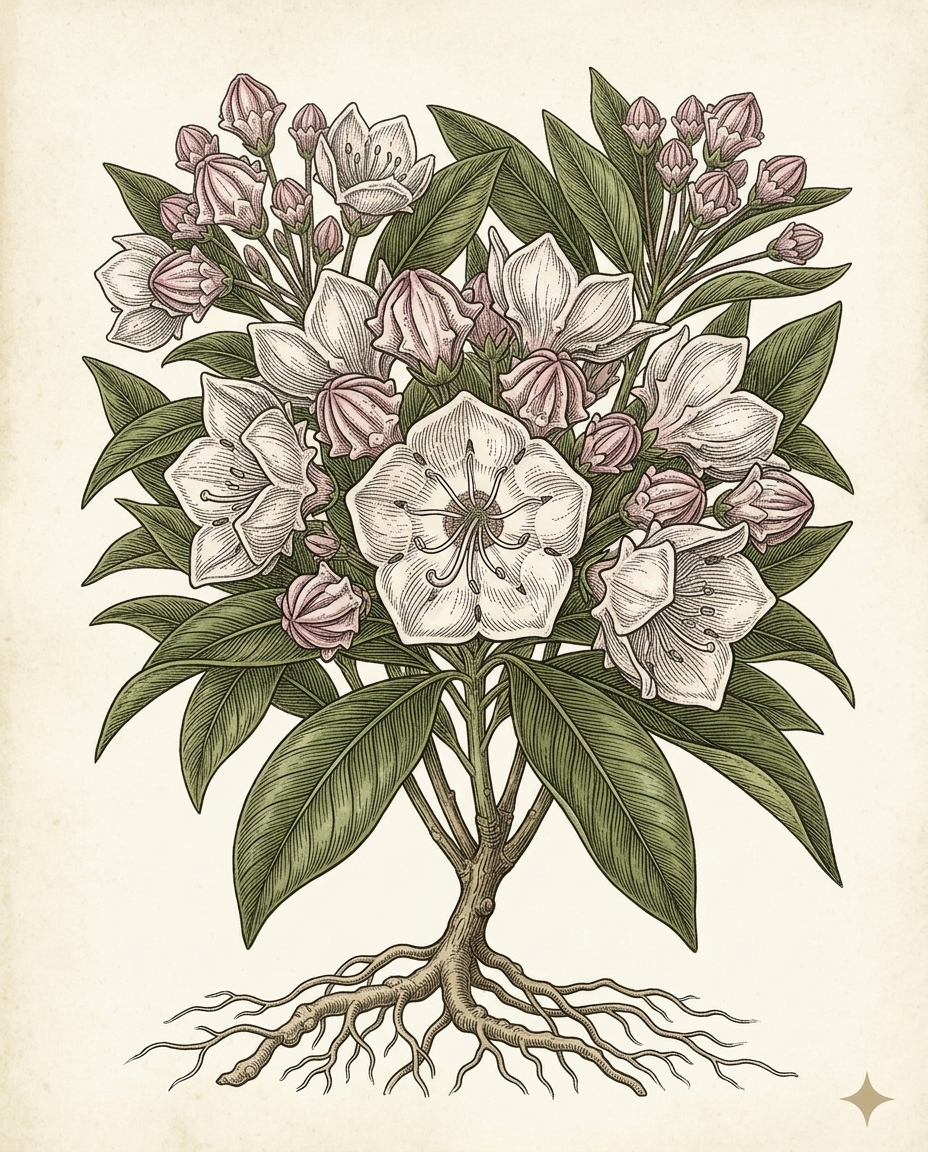
Plate IMountain laurel (Kalmia latifolia) — a native North American shrub prized for its spring flowers. All parts — leaves, flowers, stems — contain grayanotoxins.
Three plants that look the part, without the risk.
Safe flowering shrubs for the garden without Ericaceae grayanotoxins — choose these over mountain laurel if cats roam your yard.
Hydrangea
Similar size, spring blooms, garden shrub role. Many species are ASPCA non-toxic to cats.
Serviceberry
Deciduous shrub with white spring flowers and edible berries. Completely safe for cats.
Spirea
Delicate white or pink flowering shrub, full sun. ASPCA non-toxic and lower toxin risk than Ericaceae.
What it does to a cat.
Yes — mountain laurel is toxic to cats. The ASPCA lists it as poisonous to cats, dogs, and horses due to grayanotoxins — compounds that disrupt both digestive and cardiac function. This is not a "minor toxin" situation; cardiac failure has been documented.
ASPCA Data
According to the ASPCA:
Toxicity: Toxic to Dogs, Toxic to Cats, Toxic to Horses. Toxic Principles: Grayanotoxins. Clinical Signs: Vomiting (not in horses), diarrhea, weakness, cardiac failure.
Mountain laurel belongs to the Ericaceae family — a large plant family many of whose members are toxic. This family includes rhododendron, azalea, and pieris, all carrying similar grayanotoxins.
How Grayanotoxins Work
Grayanotoxins are diterpenoid glycosides found in all parts of mountain laurel — leaves, flowers, stems, buds, and even pollen. When ingested:
- Digestive onset — Toxins irritate the mouth and GI tract, causing vomiting and diarrhea within 6–24 hours
- Systemic phase — Grayanotoxins bind to sodium-potassium channels in cells, disrupting electrical signalling
- Muscular effects — Weakness, incoordination, and hypotension follow as muscles lose ion balance
- Cardiac phase — In severe ingestions, the heart's electrical system is compromised, leading to arrhythmia and potentially fatal cardiac failure
Even small amounts — a few leaves or flowers — can trigger symptoms. Fresh or dried plant material is equally toxic.
What to Do If Your Cat Eats It
This is a medical emergency. Do not wait to see if symptoms develop.
- Call your vet or poison control immediately — ASPCA: +1 (888) 426-4435 · $95 consult
- Provide the plant name, estimated amount eaten, and time of ingestion
- Do not induce vomiting — Your vet will advise on treatment
- Transport to the vet for monitoring — IV fluids and cardiac monitoring may be needed
- Watch for alarming signs — Rapid or irregular heartbeat, difficulty breathing, collapse
Prognosis depends on the amount ingested and how quickly treatment begins. Early intervention saves lives.
Safe Alternatives
If you love flowering shrubs for your garden:
- Hydrangea — Similar size and structure, spring blooms, completely non-toxic to cats
- Serviceberry — Deciduous shrub with white flowers, edible berries, and zero toxin risk
- Spirea — Delicate white or pink flowers in full sun; ASPCA safe and lower toxin profile
If mountain laurel is already in your yard and you have cats, the safest option is removal. Relocating it to a space cats cannot access is not reliable — cats climb, jump, and knock things over.
The Bottom Line
Mountain laurel is incompatible with cat-owning households. Its spring flowers are beautiful, but grayanotoxins pose a genuine risk of death. Remove it entirely or choose a cat-safe flowering shrub instead.
All parts of the plant are toxic. There is no safe amount or safe way to keep it if a cat lives in the home.
What we have actually seen.
Vomiting
Grayanotoxins trigger nausea and vomiting within hours — not as severe in horses but common in cats and dogs.
Diarrhea & GI upset
Gastrointestinal irritation and diarrhea follow vomiting. Fluid loss can lead to dehydration.
Weakness & incoordination
Grayanotoxins disrupt sodium-potassium channels in muscles. Cats may be lethargic, wobbly, or collapse.
Cardiac failure & death
In severe cases, toxins affect heart rhythm and contractility. Cardiac arrhythmia, heart failure, and death are rare but documented. This is a medical emergency.
- ASPCA Animal Poison Control Center. Toxic and Non-Toxic Plants: Laurel.Accessed June 2026 · aspca.org
- Pet Poison Helpline. Grayanotoxins in Ericaceae Plants.Reference · 2024 ed.