Marjoram
Origanum majorana
Yes — marjoram is toxic to cats. The ASPCA lists it as poisonous to cats and dogs (but notably NOT horses, unlike most herbs). Marjoram and oregano are sister species in the same genus, but ASPCA lists marjoram as toxic and oregano as non-toxic—a crucial distinction.
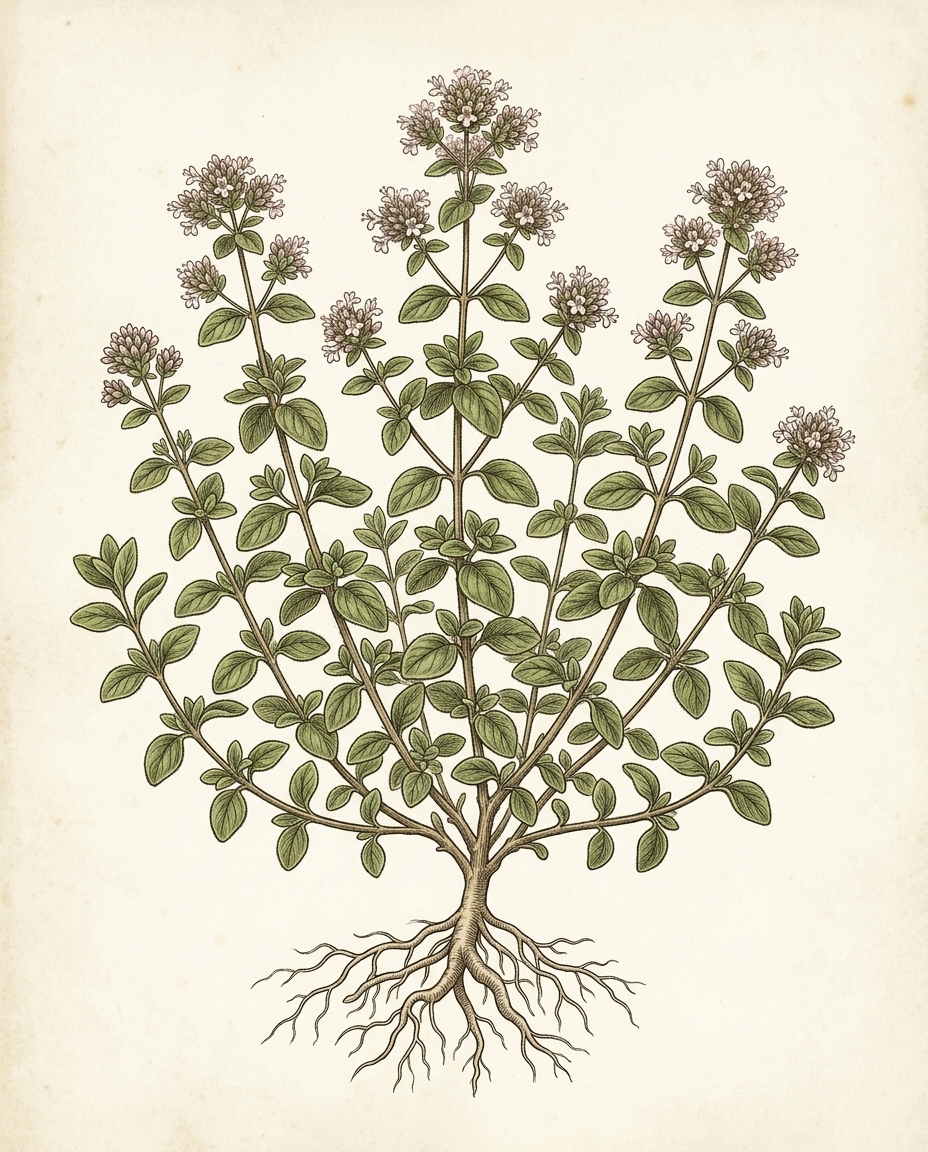
Plate ISweet marjoram (Origanum majorana) — a culinary herb similar in appearance to oregano. Despite their resemblance and shared genus, ASPCA lists marjoram as toxic and oregano as safe.
Three plants that look the part, without the risk.
Marjoram and oregano are sister species in the same genus (Origanum). Same appearance, similar flavour — but OPPOSITE toxicity verdicts. Know the difference.
Oregano (ASPCA non-toxic)
Marjoram's sister species — nearly identical to taste and appearance, but ASPCA lists oregano as non-toxic. Verify your plant label carefully.
Basil
Similar Lamiaceae family, culinary use, windowsill growth. Completely cat-safe and does not require species verification.
Mint
Lamiaceae family member, aromatic, windowsill herb. Generally safe for cats (verify species if unsure).
What it does to a cat.
Yes — marjoram is toxic to cats. The ASPCA lists it as poisonous to cats and dogs due to gastrointestinal irritants.
But here's the critical catch: Marjoram and oregano are sister species in the same genus (Origanum). They look nearly identical, taste similar, and grow the same way. Yet the ASPCA lists marjoram as toxic and oregano as non-toxic. This is not a minor distinction — it's the difference between a safe herb garden and a toxic one.
ASPCA Data
According to the ASPCA:
Toxicity: Toxic to Dogs, Toxic to Cats. Toxic Principles: Gastrointestinal irritants. Clinical Signs: Vomiting and diarrhea.
Note the key detail: NOT listed as toxic to horses. This is unusual for an herb and suggests the toxin mechanism is specific to cats and dogs.
Marjoram vs Oregano — The Critical Distinction
| | Marjoram | Oregano | |---|---|---| | Latin name | Origanum majorana | Origanum vulgare | | Genus | Origanum | Origanum | | Appearance | Small oval leaves, delicate stems | Small oval leaves, delicate stems | | Flavour | Milder, slightly sweet | More pungent, oregano taste | | ASPCA verdict | TOXIC to cats | SAFE for cats | | Risk | Vomiting, diarrhea | None |
Both are Origanum. Both grow on windowsills. But only one is safe. When buying, verify the species label. If the label doesn't specify, assume it could be marjoram and err on the side of caution.
How Marjoram Toxins Work
Marjoram contains gastrointestinal irritants that disrupt the stomach and intestine:
- Digestive irritation — Compounds irritate the stomach lining
- Nausea & vomiting — Usually within hours of ingestion
- Diarrhea — Secondary GI upset, usually mild
- Self-resolution — Symptoms pass within 24 hours in most cases
The toxicity is mild — no deaths are documented — but any vomiting or diarrhea warrants monitoring.
What to Do If Your Cat Eats It
Monitor and contact your vet if symptoms persist.
- Remove the plant immediately
- Offer fresh water — Dehydration from vomiting or diarrhea is the main concern
- Watch for vomiting or diarrhea — Expected and usually brief
- Contact your vet if — Symptoms persist beyond 24 hours, cat seems in pain, or you're concerned about ingestion size
- Do not induce vomiting — The upset will pass on its own
Most cases resolve without treatment. Call your vet if symptoms don't improve.
Safe Alternatives
If you want a culinary herb that is definitively safe:
- Oregano (Origanum vulgare) — Sister species, non-toxic per ASPCA, but verify the species label when buying
- Basil — Lamiaceae family, completely cat-safe, indistinguishable to new gardeners
- Mint — Aromatic, safe for most cats (verify species if unsure)
The Bottom Line
Marjoram is toxic to cats; oregano is not — despite their nearly identical appearance and shared genus. If you grow windowsill herbs, know which species you're buying. Mislabelling or careless plant shopping could introduce a toxic herb into your home.
All parts of marjoram — leaves, stems, flowers — contain GI irritants. Remove it entirely or keep it in a space your cat cannot access.
What we have actually seen.
Vomiting
GI irritants cause nausea and vomiting. Usually within a few hours of ingestion.
Diarrhea
Stomach and intestine irritation leads to loose stools or diarrhea. Usually resolves within 24 hours.
Loss of appetite
A sore stomach may reduce interest in food for a day. Offer soft food and monitor.
Lethargy
Cats may appear drowsy after ingestion. Usually brief and resolves with the GI upset.
- ASPCA Animal Poison Control Center. Toxic and Non-Toxic Plants: Marjoram.Accessed June 2026 · aspca.org